
PREVIEW
The player for this Journal volume is only available to current members or listeners with a legacy account. If you have an active membership, log in here. If you’d like to become a member — with access to all our audio programs — sign up here.
Guests heard on Volume 151
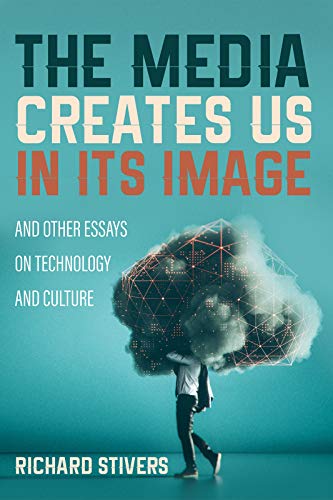
Richard Stivers, author of The Media Creates Us in Its Image and Other Essays on Technology and Culture, on lessons from Jacques Ellul about media technologies and society
read more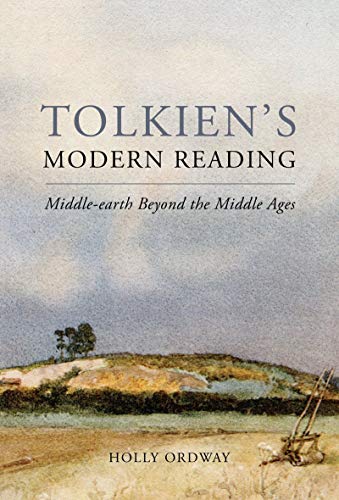
Holly Ordway, author of Tolkien’s Modern Reading: Middle-earth Beyond the Middle Ages, on the surprising reading habits of J. R. R. Tolkien
read more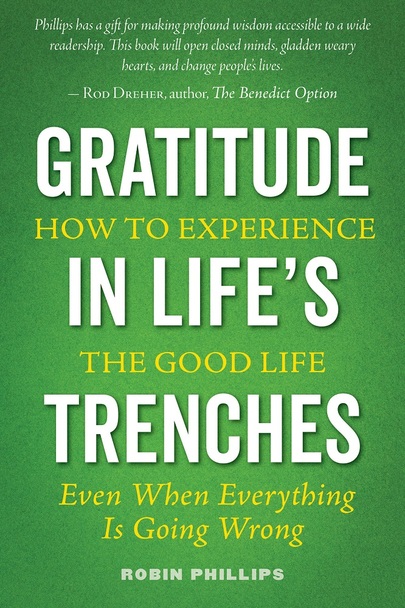
Robin Phillips, author of Gratitude in Life’s Trenches: How to Experience the Good Life Even When Everything is Going Wrong, on the challenge of sustaining a posture of gratitude in the midst of suffering
read more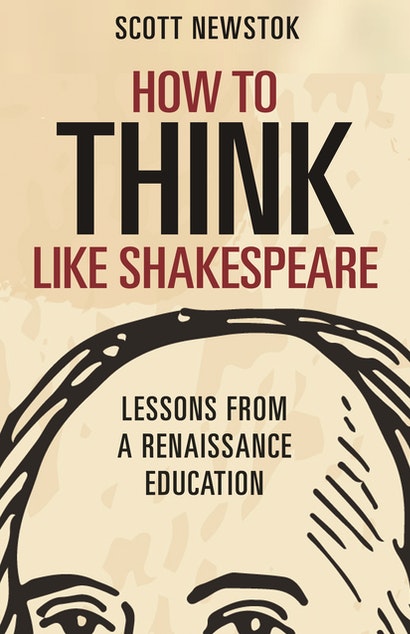
Scott Newstok, author of How to Think Like Shakespeare: Lessons from a Renaissance Education, on why William Shakespeare offers valuable perspectives on the means and ends of education
read more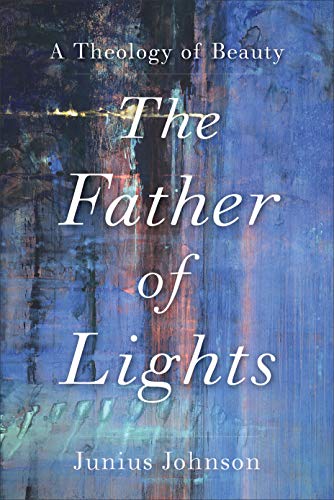
Junius Johnson, author of The Father of Lights: A Theology of Beauty, on why the experience of beauty is dangerous, but necessary (Archive Feature available)
read more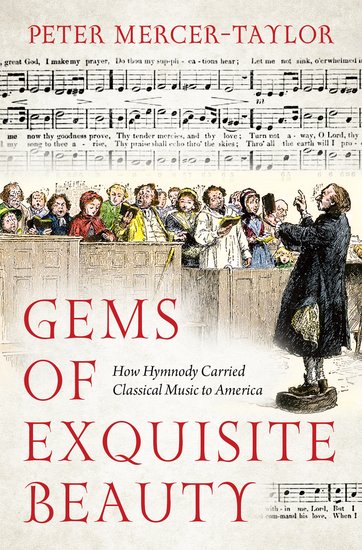
Peter Mercer-Taylor, author of Gems of Exquisite Beauty: How Hymnody Carried Classical Music to America, on how early 19th-century hymnody introduced many Americans to a repertoire of classical music (Archive Feature available)
read moreRelated reading and listening
- The contested idea of beauty in art —
FROM VOL.58 Ted Prescott describes the turn that the role of art in the West took in the 19th century in response to the weight of the “canons” and philosophy of beauty developed during the 17th and 18th centuries. (23 minutes) - The beauty of truth and goodness —
FROM VOL. 141 James Matthew Wilson talks about how cultivating the desire to perceive the interior life of things sustains the basic human capacity for recognizing truth, pursuing wisdom, and contemplating beauty. (23 minutes) - An icon of the whole world — Jason Baxter explains how Dante includes a panoply of characters and creatures in his Comedia, offering a prismatic view of all of Creation in its glory. (20 minutes)
- The soul’s awakening —
FROM VOL. 145 Jason Baxter discusses the great psychological subtlety in Dante’s Divine Comedy. (20 minutes) - Cosmic realities in the built world — Christopher and Christine Perrin discuss the implications of architect Christopher Alexander’s (1936–2022) discovery of patterns of building that cohere with the the created cosmos and with ourselves as human creatures. (59 minutes)
- Life more abundantly — Jeanne Schindler advocates for a return to an understanding and prioritizing of sensory experience — real engagement with the real world — as foundational to learning and living. (35 minutes)
- An invitation to a feast — Christina Bieber Lake explains how poetry is an invitation to experience the beauty and goodness of Creation as gift. (44 minutes)
- Mordor versus the Shire — In this lecture, Heidi White explains how the modern project is a diabolical inversion of Christendom and calls for Christians to build lives and a culture that can counter it. (53 minutes)
- Alert to the magic in the world — Junius Johnson discusses the importance of teaching stories, particularly fairy stories, in classical education. (25 minutes)
- “Earth-shaking” and “heart-breaking” beauty —
FROM VOL. 151 Junius Johnson warns that the pursuit of beauty is both perilous and an experience that points to the desire for God. (25 minutes) - Man as “both mystic and hobbit” — D. C. Schindler explores how building is a quintessential human activity and an expression of our view of the meaning of reality. (47 minutes)
- Students as arbiters of knowledge —
FROM VOL. 94 Tim Clydesdale discusses the experience of freshmen year at college, suggesting that by that time students have been effectively inoculated against a love of knowledge. (21 minutes) - Helping boys become virtuous men — Teacher and chaplain Mark Perkins describes forms of formation that take the body seriously 50 minutes
- Mars Hill Audio Journal, Volume 165 — FEATURED GUESTS: Jeffrey Bilbro, Daniel McInerny, Joseph Minich, Carl Elliott, Nadya Williams, and Don W. King
- Shared Practices, Strong Communities — Christine Pohl reflects on why a deliberate commitment to certain shared practices is necessary for the sustaining of community. (57 minutes)
- Truth, goodness, and beauty (and why they matter) —
FROM VOL. 147 Philosopher D. C. Schindler examines how postmodernism poses a unique threat to our sense of an interior self. (28 minutes) - The downward spiral of all technocracies — Andrew Willard Jones explains the two paths that exist with the development of new technologies: one which leads to an expansion of the humane world and one which exploits and truncates both Creation and humanity. (65 minutes)
- From culture war to culture care — In this 2016 lecture, artist Makoto Fujimura asks what would it look like for Christians to be stewards of beauty and human flourishing in all areas of life and culture. (48 minutes)
- Gratitude and stewardship as political postures —
FROM VOL. 118 Mark Mitchell explores the consequences of four concepts that are sadly missing from most political debates today: creatureliness, gratitude, human scale, and place. (18 minutes) - Metaphysics and sub-creation —
FROM VOL. 144 Jonathan McIntosh claims that scholarship has tended to ignore the depth of St. Thomas Aquinas’s influence on J. R. R. Tolkien’s work. (28 minutes) - Gratitude, vitalism, and the timid rationalist — In this lecture, Matthew Crawford draws a distinction between an orientation toward receiving life as gift and a timid and cramped rationalism that views man as an object to be synthetically remade. (52 minutes)
- Countering American apathy toward history —
FROM VOL. 124 Historian John Fea discusses how American and Protestant individualism continues to influence our orientation toward the past. (22 minutes) - Education that counters alienation — In this lecture, Jeanne Schindler explores how digital technologies warp not only education but our experience of being human. (30 minutes)
- Education vs. conditioning — Education necessarily involves metaphysical and theological preconditions, and Michael Hanby argues that our current education crisis is a result of society rejecting these preconditions. (41 minutes)
- Knowing by heart — D. C. Schindler reflects on Plato’s idea of “conversion” in education, assuming the symbol of the heart as the center of man. (39 minutes)
- Education as a pilgrimage and a mystery — In this lecture, James Matthew Wilson gives a compelling argument for understanding the role of a literary or poetic education as an immersion of the whole being in truth and beauty. (43 minutes)
- Submission to mathematical truth — In this lecture, Carlo Lancellotti argues that integration of the moral, cognitive, and aesthetic aspects of mathematics is needed in a robust liberal arts mathematics curriculum. (25 minutes)
- The gift of liturgical time — In this lecture, Gregory Wilbur explains how liturgy and liturgical time align us to the rhythms and order of Creation, forming us as disciples. (45 minutes)
- How fantasy restores the world — In this 2019 lecture, Alison Milbank shows how fantasy can help restore to us a vision of human flourishing that counters the atomization and meaninglessness of modern life. (43 minutes)
- What higher education forgot —
FROM VOL. 84 Harry L. Lewis discusses higher education’s amnesia about its purposes, and how that shortchanges students. (19 minutes) - The formation of affections —
FROM VOL. 101 James K. A. Smith explains how education always involves the formation of affections and how the form of Christian education should imitate patterns of formation evident in historic Christian liturgy. (15 minutes) - A Christian philosophy of integrated education —
FROM VOL. 61 Michael L. Peterson discusses how Christianity could inform society’s understandings of education and human nature. (8 minutes) - Education for human flourishing — Co-authors Paul Spears and Steven Loomis argue that Christians should foster education that does justice to humans in our fullness of being. (23 minutes)
- The social irrelevance of secular higher education —
FROM VOL. 85 Professor C. John Sommerville describes the increasingly marginal influence of universities in our society, and why they seem to be of no substantive relevance to people outside the school. (13 minutes) - The history of Christianity and higher education —
FROM VOL. 50 In tracing Christianity’s relationship to the academy, Arthur F. Holmes points to Augustine as one of the first to embrace higher learning, believing God’s ordered creation to be open to study by the rational mind of man. (9 minutes) - In praise of a hierarchy of taste — In a lecture at a CiRCE Institute conference, Ken Myers presented a rebuttal to the notion that encouraging the aesthetic appreciation of “higher things” is elitist and undemocratic. (58 minutes)
- The formative power of hymns and hymnbooks —
FROM VOL. 149 Christopher Phillips discusses the cultural and spiritual effects of hymns and the “thingness” of hymnals. (18 minutes) - Congregational singing in Martin Luther’s time —
FROM VOL. 137 Liturgical scholar Robin Leaver clarifies some misconceptions about Martin Luther’s commitment to congregational singing. (10 minutes) - Early 19th-century hymnody —
FROM VOL. 151 Musicologist Peter Mercer-Taylor tells the story of how early 19th-century hymnody introduced many Americans to a repertoire of classical music. (27 minutes) - How music reflects and continues the created order — Musician, composer, and teacher Greg Wilbur explores how music reflects the created order of the cosmos. (55 minutes)
- On wonder, wisdom, worship, and work — Classical educator Ravi Jain dives deeply into the nature, purpose, and interconnectedness of the liberal, common, and fine arts. (43 minutes)
- Orienting reason and passions — In an essay titled “The Abolition of Mania” (Modern Age, Spring 2022), Michael Ward applies C. S. Lewis’s insights to the polarization that afflicts modern societies. (16 minutes)
- The negation of transcendence — Michael Hanby argues that our current civilizational crisis can be understood as a “new totalitarianism” that negates or disallows every form of transcendence. (32 minutes)
- Creation as beauty and gift —
FROM VOL. 67 David Bentley Hart describes how the Christian understanding of Creation as beauty and gift, as the outward expression of the delight the Trinity has in itself, reveals a vision of reality different from the pagan or fatalist vision of reality. (12 minutes) - The infinity of beauty in Bach — David Bentley Hart on why Johann Sebastian Bach is the greatest of Christian theologians
- A theology of active beauty — In a 2010 lecture, George Marsden examines a few ways in which the distorting effects of Enlightenment rationalism were resisted in the work of Jonathan Edwards. (64 minutes)
- Newstok, Scott — FROM THE GUEST PAGE: Scott Newstok is Professor of English and Founding Director of the Pearce Shakespeare Endowment, Rhodes College. He teaches literature of the English Renaissance as well as film, rhetoric, education, lyric poetry, and the humanities.
- Christian education and pagan literature — Kyle Hughes on learning from Basil of Caesarea about the curricular choices for Christian educators
- What hath Hobbiton to do with Jerusalem? — Holly Ordway on the pre-Christian religion in Middle-earth
- Ordway, Holly — FROM THE GUEST PAGE: Holly Ordway is the Cardinal Francis George Professor of Faith and Culture at the Word on Fire Institute, and Visiting Professor of Apologetics at Houston Christian University.