
PREVIEW
The player for this Journal volume is only available to current members or listeners with a legacy account. If you have an active membership, log in here. If you’d like to become a member — with access to all our audio programs — sign up here.
Guests heard on Volume 159
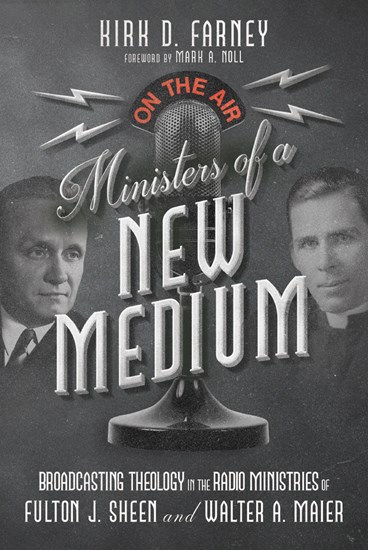
Kirk Farney, author of Ministers of a New Medium: Broadcasting Theology in the Radio Ministries of Fulton J. Sheen and Walter A. Maier, on two pioneers of religious broadcasting
read more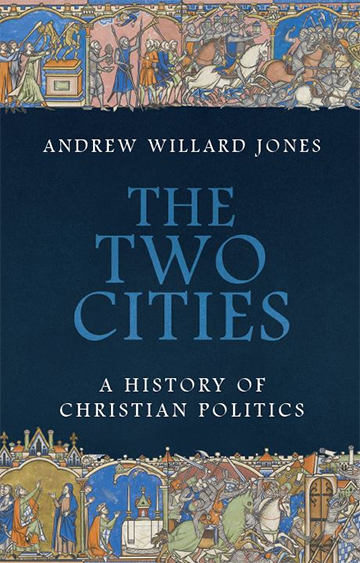
Andrew Willard Jones, author of The Two Cities: A History of Christian Politics, on how the fact of the Incarnation affects political realities
read more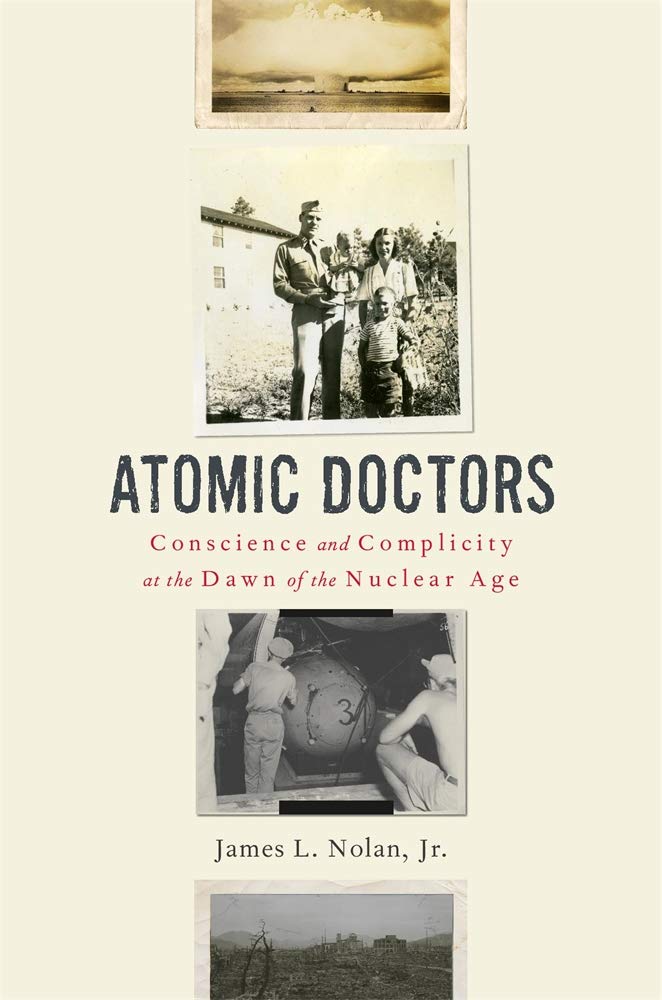
James L. Nolan, Jr., author of Atomic Doctors: Conscience and Complicity at the Dawn of the Nuclear Age, on the moral dynamics of the Manhattan Project
read more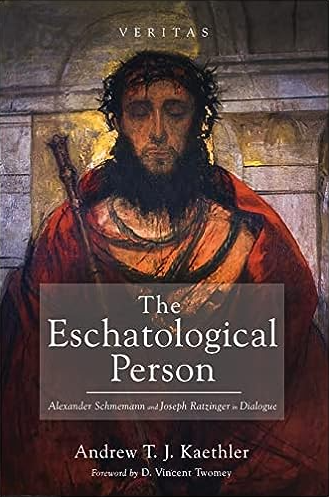
Andrew T. J. Kaethler author of The Eschatological Person: Alexander Schmemann and Joseph Ratzinger in Dialogue, on the relational theology of personhood in the work of two major theologians
read more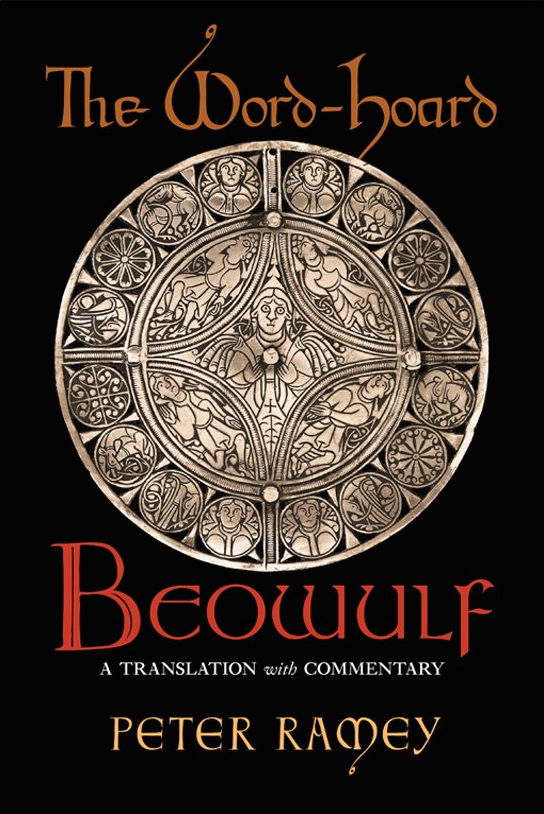
Peter Ramey, author of The Word-Hoard: Beowulf, a Translation and Commentary, on the Christian imagination behind a famous Old English poem
read more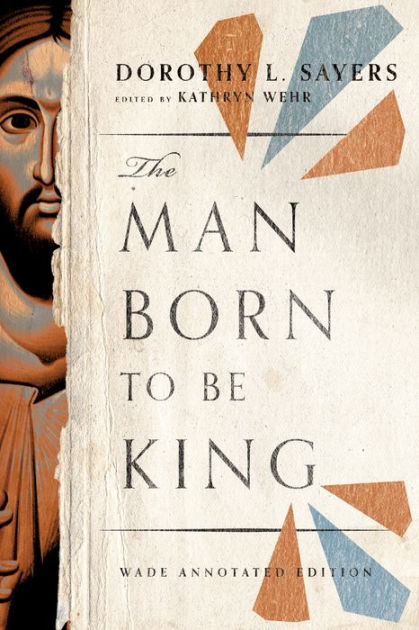
Kathryn Wehr, editor of the Wade Annotated Edition of Dorothy L. Sayers’s The Man Born to Be King, on the background to a remarkable series of twelve radio plays originally broadcast in the 1940s
read moreRelated reading and listening
- Knowing and living our metaphysical totality — Clyde Kilby on the power of myth to bring together “the slender hints of the knowable”
- Modernity’s crisis of place — Craig Bartholomew reflects on the importance of place to our humanity. (58 minutes)
- The Bride of Christ — John Cavadini explores the different views of Origen and Augustine as to the nature and mission of the Church, and he calls for a recovery of the identity of the Church as the Bride of Christ. (38 minutes)
- Reason and the love of truth —
FROM VOL. 97 James Peters discusses historical understandings of reason and rationality and how they differ from the modern notion of rationality. (21 minutes) - Early ambivalence toward anti-Nazi resistance —
FROM VOL.107 Biographer Ferdinand Schlingensiepen talks about the memory of Dietrich Bonhoeffer in the post-war period of Germany, and how his popularity changed over the years. (15 minutes) - The inward eye, cosmic truth, and making well — Andrew Kern takes his listeners along an “interlinear” reading of a portion of St. Augustine’s Confessions that explores the differences between how God makes and how we create. (38 minutes)
- War and loving our enemy-neighbor — Oliver O’Donovan on evaluating the conduct of war in light of the evangelical command of love
- Rose without thorns — Ken Myers introduces various settings of “Ther is no rose of swych vertu,” a medieval carol that uses imagery of a rosebush to describe the Virgin Mary. (29 minutes)
- A “cosmological omnibus” — George Grant recounts the fascinating history of Hernando Colón’s attempt in the 16th century to curate a universal library of the world’s knowledge. (41 minutes)
- The cost of “killing” God — In this October 2023 lecture, Carl Trueman explores the concept of “desecration” as a frame for understanding the nature of modernity in our time. (42 minutes)
- Silence at the end of history — Alan Jacobs examines several literary imaginings of “the last days” and argues that such narration is profoundly inadequate and perhaps even presumptuous. (51 minutes)
- How music blesses and teaches —
FROM VOL. 64 Theologian and musician Jeremy Begbie explores what we learn about time, theology, and the structure of Creation from the experience of music. (28 minutes) - The pathos of sin —
FROM VOL. 15 Poet Robert Pinsky discusses his translation of Dante’s Inferno. (9 minutes) - Existential preparation for reading literature —
FROM VOL. 128 Rod Dreher recounts how he thought he was reading Dante’s Commedia, when in reality the poem was reading him. (18 minutes) - An icon of the whole world — Jason Baxter explains how Dante includes a panoply of characters and creatures in his Comedia, offering a prismatic view of all of Creation in its glory. (20 minutes)
- A flood of images — Oliver O’Donovan describes the distinctive character of publicity in modernity, which drowns us in a flood of ever-changing representations that do not serve the common good. (37 minutes)
- Cosmic realities in the built world — Christopher and Christine Perrin discuss the implications of architect Christopher Alexander’s (1936–2022) discovery of patterns of building that cohere with the the created cosmos and with ourselves as human creatures. (59 minutes)
- An invitation to a feast — Christina Bieber Lake explains how poetry is an invitation to experience the beauty and goodness of Creation as gift. (44 minutes)
- A false dichotomy — In this conversation from 2009, Dallas Willard (1934–2013) discusses the truth of spiritual knowledge and its epistemological validity. (63 minutes)
- The de(con)struction of the humanities (and of truth) — Historian Gertrude Himmelfarb on the skeptical tendencies of the postmodern academy
- Media as agencies of order — Media theorist John Durham Peters wants us to reexamine the purposes of media and how fundamental media are. (59 minutes)
- Utopian dreams and cynicism — John Durham Peters discusses the history of the idea of communication, saying that our hopes are too high when we believe that the solution to social discord is just better communication. (49 minutes)
- Thinking Together — Alan Jacobs discusses some principles he’s compiled to help us think well (and charitably) in our cultural context, and he warns us to be attentive to the ways technology displaces previously fixed communities. (53 minutes)
- Man as “both mystic and hobbit” — D. C. Schindler explores how building is a quintessential human activity and an expression of our view of the meaning of reality. (47 minutes)
- Setting the liberal arts free — In addressing the state of liberal arts education in the U.S., Gilbert Meilaender raises some core questions and makes some surprising proposals. (28 minutes)
- The establishment of nonbelief —
FROM VOL. 10 George Marsden explains how and why American universities became places where religious concerns are excluded. (10 minutes) - Secularization and anarchy — Joseph Cardinal Ratzinger on the necessary connection between law, ethics, and worship
- Still connected to the land — Nadya Williams on the inescapably earthy character of human flourishing
- The amplification of distraction —
FROM VOL. 152 Jeffrey Bilbro advocates a Christian posture toward our contemporary digital media ecosystem that addresses its disorienting and disintegrating effects. (23 minutes) - Immediately yours — Todd Gitlin on the effect of media on our sense of time
- Nervousness about the shape of religion in America — Thomas Albert Howard discusses European perspectives of eighteenth-century American religious life. (21 minutes)
- “The search for shared ends” — Oliver O’Donovan examines whether and to what extent there might be the possibility of a unifying Christian perspective on political doctrine or policy. (59 minutes)
- Thinking coherently about politics — Ken Myers gives an introduction to political theologian Oliver O’Donovan, whose work has been instrumental in teaching many how to think about social and political life in light of the gospel of Christ. (57 minutes)
- A Christian understanding of human nature —
FROM VOL. 35 Robert C. Roberts and Mark R. Talbot discuss the need for Christian psychologists to draw from Christianity’s deep tradition of understanding human nature. (15 minutes) - Postmodern culture and the gospel —
FROM VOL. 6 Roger Lundin discusses the ethical and theological consequences of our postmodern culture. (9 minutes) - Ten, seven, and the rhythm of God’s love — Joseph Cardinal Ratzinger on the meaningfulness of numbers in Creation and Scripture
- Christian unity and civil society — Oliver O’Donovan introduces listeners to Dutch lay theologian Hugo Grotius, arguing that the questions he tackled relate to perennial concerns about the relationship between divine and human agency, and between civil and ecclesiastical authority. (Lecture 2 of 3; 57 minutes)
- The demoralizing effect of pagan Roman religion — Oliver O’Donovan examines St. Augustine’s critique of pagan Roman religion in Book II of his treatise City of God and asks his audience to consider what insights Augustine’s critique has for us today. (Lecture 1 of 3; 51 minutes)
- The recovery of an integrated ecology — In this essay, Michael Hanby unpacks the summons of Laudato si’ to an ecological way of life based on a proper understanding of creation in its fullness and integrity. (57 minutes)
- Poetry and Liturgy — Karen Dieleman explores the influence of liturgical practices on shaping the imaginations and poetry of Elizabeth Barrett Browning, Christina Rossetti, and Adelaide Proctor. (49 minutes)
- A more robust account of political life —
FROM VOL. 138 John Milbank and Adrian Pabst on why politics needs to recognize the human soul in its depth (and what happens when it doesn’t). (51 minutes) - Politics and the good —
FROM VOL. 160 D. C. Schindler argues that political order cannot be disentangled from the social, and that fundamental questions of what humans are and what the good is cannot be bracketed from politics. (30 minutes) - The profound drama of human sexuality — In this lecture, D. C. Schindler explains the cosmological significance of human sexuality and why it is paradigmatic of the relationship between nature and freedom. (32 minutes)
- Sacramental Poetics — Poet and Eastern Orthodox believer Scott Cairns explains how a good poem functions like an icon: it assists the process of our becoming aware of what is real, and it is generative in the ways it keeps opening up new understandings. (56 minutes)
- Poetry and piety —
FROM VOL. 48 James Trott discusses insights he learned while editing A Sacrifice of Praise: An Anthology of Christian Poetry in English from Caedman to the Mid-Twentieth Century. (7 minutes) - A poet’s relationship to time —
FROM VOL. 57 Poet Wilmer Mills (1969–2011) discusses how his agricultural and cross-cultural childhood in Brazil shaped his imagination and his relationship with modernity. (11 minutes) - The life of the city in poetry —
FROM VOL. 1 Ken Myers talks with W. H. Auden’s biographer and literary executor, Edward Mendelson, about political and social themes in Auden’s poetry. (7 minutes) - Joy & sorrow, destitution & abundance — In this poetry reading and talk, poet Christian Wiman discusses his own faith journey and how his struggles worked themselves into his poems. (40 minutes)
- Seeing Creation Anew: The Life & Poetry of Gerard Manley Hopkins — Dana Gioia examines Gerard Manley Hopkins‘s poetic genius and dedication to Christ in spite of his personal trials and difficult cultural context. (55 minutes)
- “The essence of a moment, clearly perceived” — Haiku poet Gary Hotham reads his poetry and discusses how the form of haiku reveals the connection between creatures and creation. (45 minutes)