
PREVIEW
Guests heard on Volume 161
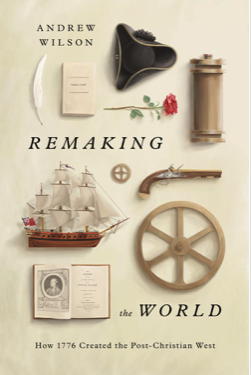
Andrew Wilson, author of Remaking the World: How 1776 Created the Post-Christian West, on a transformative year for Western culture
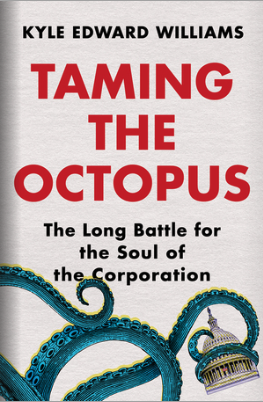
Kyle Edward Williams, author of Taming the Octopus: The Long Battle for the Soul of the Corporation, on the history of the corporation and the implications of corporate “personhood”
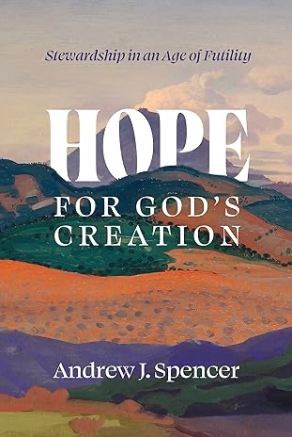
Andrew James Spencer, author of Hope for God’s Creation: Stewardship in an Age of Futility, on a theological understanding of mankind’s responsibility to the environment
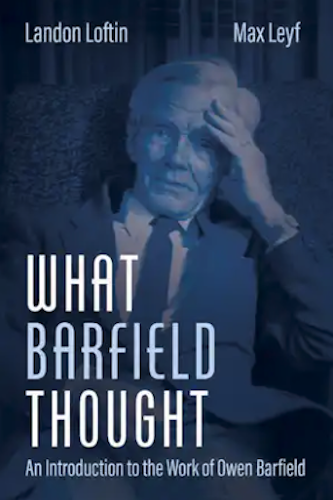
Landon Loftin, co-author (with Max Leyf) of What Barfield Thought: An Introduction to the Work of Owen Barfield, on Owen Barfield’s concern with the evolution of consciousness over time, as evidenced through language
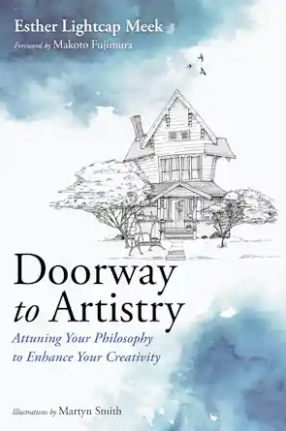
Esther Lightcap Meek, author of Doorway to Artistry: Attuning Your Philosophy to Enhance Your Creativity, on how hospitable encounters with reality can lead artists to make more meaningful art
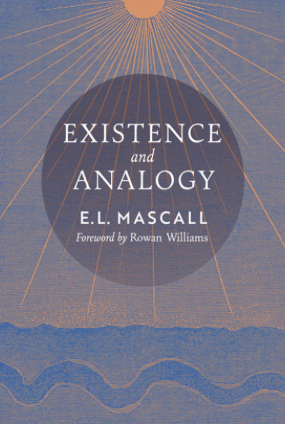
Andrew Davison, on recent reprintings of two works by priest and theologian E. L. Mascall: Existence and Analogy and The Christian Universe
Related reading and listening
- When myth becomes fact — In this 1976 interview, Clyde Kilby (1902–1986) discusses C. S. Lewis’s critique of scientism and rationalism, his belief in the primacy of the imagination, and his mythic vision. (37 minutes)
- A great Reality at the core of things — Clyde Kilby on the nature and need for myths
- Christian culture and the myth of the secular — Ken Myers draws on T. S. Eliot to argue that Western civilization has broken down, not into a multiplicity of cultures, but into a “post-culture.” (47 minutes)
- How to make war on nothingness? — David Bentley Hart argues that if it rejects Christ, the only remaining option for a post-Christian culture is conscious or “narcotic” nihilism, which takes the form of absolute, meaningless volition. (66 minutes)
- Disengagement from the world — Nicholas Carr encourages us to consider how automation technologies impact our ability to engage with the world and whether — like a good tool — they present a more inviting world or close us off from that world. (30 minutes)
- Modernity’s crisis of place — Craig Bartholomew reflects on the importance of place to our humanity. (58 minutes)
- Reason and the love of truth —
FROM VOL. 97 James Peters discusses historical understandings of reason and rationality and how they differ from the modern notion of rationality. (21 minutes) - The contested idea of beauty in art —
FROM VOL.58 Ted Prescott describes the turn that the role of art in the West took in the 19th century in response to the weight of the “canons” and philosophy of beauty developed during the 17th and 18th centuries. (23 minutes) - A sampling of newly published lectures — Ken Myers introduces listeners to four recently released lectures, courtesy of our Partners. The lecturers are Jennifer Frey, Gary Saul Morson, N. T. Wright, and Andrew Kern. (27 minutes)
- The inward eye, cosmic truth, and making well — Andrew Kern takes his listeners along an “interlinear” reading of a portion of St. Augustine’s Confessions that explores the differences between how God makes and how we create. (38 minutes)
- Grace and Christian realism — Jennifer Frey explores Thomist elements in Flannery O’Connor’s theology and writing, with a particular emphasis on a Thomist understanding of art. (39 minutes)
- Divine love and human sexuality — Paul Tyson argues that views about sexuality are downstream from theological — or at least metaphysical — assumptions about human nature. (16 minutes)
- “Investigations of divine works” — Greg Wilbur explains how closely connected music is to the order of the cosmos and how it even reveals attributes of God. (56 minutes)
- To be at home in the world — D. C. Schindler examines how rituals enable us to experience time in a meaningful way — how they actually make time habitable for us. (41 minutes)
- A letter from Ken Myers — Ken Myers examines the cultural implications of the Incarnation and the deep-seated dualism of modernity that divorces spirituality from our material experience. (22 minutes)
- Buying and selling holidays, identities, and ourselves — We present four interviews on American consumerism, with Leigh Eric Schmidt, David Lyon, Thomas Frank, and Sam Van Eman. (46 minutes)
- The beauty of truth and goodness —
FROM VOL. 141 James Matthew Wilson talks about how cultivating the desire to perceive the interior life of things sustains the basic human capacity for recognizing truth, pursuing wisdom, and contemplating beauty. (23 minutes) - The experience of a “real presence” in sacred music —
FROM VOL. 126 Jonathan Arnold explores why people of no religious commitment pay money to hear specifically sacred music. (22 minutes) - How music blesses and teaches —
FROM VOL. 64 Theologian and musician Jeremy Begbie explores what we learn about time, theology, and the structure of Creation from the experience of music. (28 minutes) - Mars Hill Audio Journal, Volume 166 — FEATURED GUESTS: William Cavanaugh, Kent Burreson, Beth Hoeltke, Jeffrey Barbeau, Jason Baxter, John Betz, and Bruce Herman
- Creation, in harmony with the Logos — Rowan Williams on the Logos and the diverse logoi that mirror it
- An icon of the whole world — Jason Baxter explains how Dante includes a panoply of characters and creatures in his Comedia, offering a prismatic view of all of Creation in its glory. (20 minutes)
- Art that witnesses, consoles, and strengthens — Artist Margaret Adams Parker explores the human need to lament and reveals how various “arts of lament” console, strengthen, bear witness to those who engage with them. (51 minutes)
- Films that lead to contemplation —
FROM VOL. 162 David Paul Baird discusses some of the films on the Vatican’s list of recommended films. (25 minutes) - Cosmic realities in the built world — Christopher and Christine Perrin discuss the implications of architect Christopher Alexander’s (1936–2022) discovery of patterns of building that cohere with the the created cosmos and with ourselves as human creatures. (59 minutes)
- The “book” of Creation — Alan Noble explains why the modern world makes it profoundly difficult to experience Creation as revelation, and he encourages unmediated encounters with Creation that lead to meditation. (52 minutes)
- Life more abundantly — Jeanne Schindler advocates for a return to an understanding and prioritizing of sensory experience — real engagement with the real world — as foundational to learning and living. (35 minutes)
- Heaven and earth are full of His glory — Gerald R. McDermott examines the typological tradition of the Church, particularly through Jonathan Edwards’s thought, and he argues for a recovery of the Christian understanding of the universe as an “immense Trinitarian symbol.” (61 minutes)
- An invitation to a feast — Christina Bieber Lake explains how poetry is an invitation to experience the beauty and goodness of Creation as gift. (44 minutes)
- Stewarding God’s creation —
FROM VOL. 116 Fred Bahnson talks about how a Christian understanding of God’s redemptive work on the earth should influence our practices of growing and sharing food. (19 minutes) - How to illustrate music and mystery —
FROM VOL. 164 Illustrator Joonas Sildre discusses his graphic biography of Estonian composer Arvo Pärt. (19 minutes) - “Earth-shaking” and “heart-breaking” beauty —
FROM VOL. 151 Junius Johnson warns that the pursuit of beauty is both perilous and an experience that points to the desire for God. (25 minutes) - Rand’s influence on conservatism —
FROM VOL. 100 History professor Jennifer Burns discusses the life and legacy of “goddess of the market” Ayn Rand. (17 minutes) - Utopian dreams and cynicism — John Durham Peters discusses the history of the idea of communication, saying that our hopes are too high when we believe that the solution to social discord is just better communication. (49 minutes)
- Man as “both mystic and hobbit” — D. C. Schindler explores how building is a quintessential human activity and an expression of our view of the meaning of reality. (47 minutes)
- Showing as meaning — Daniel McInerny on how the arts convey meaning
- Mars Hill Audio Journal, Volume 165 — FEATURED GUESTS: Jeffrey Bilbro, Daniel McInerny, Joseph Minich, Carl Elliott, Nadya Williams, and Don W. King
- The reciprocity of all things —
FROM VOL. 148 Jeffrey Bilbro explores the importance of sustainability through the essays, poetry and fiction of Wendell Berry. (13 minutes) - Clips from five extended interviews — We are pleased to share clips from five interviews that we’ve recently produced as full-length Conversations. (30 minutes)
- Breaking out of the immanent frame — Norman Wirzba on the true character of Creation and of our creatureliness
- Pathways of the Mind: The Joy of the Essay — Alan Jacobs thinks Christians should embrace the potential in the literary form of the essay, because of the way it corresponds to the navigation and journey of a Christian life. (48 minutes)
- Good News for All Creation — Theologian Norman Wirzba helps us rethink the category of nature in terms of the Christian doctrine of creation. (66 minutes)
- “The greatest works of art are endless” — Daniel McInerny argues that more robust reflection about how we attend to art enables us to discover deeper meaning in it and to experience greater sensory and intellectual joy. (16 minutes)
- From enthusiasm to discernment — Hans Urs von Balthasar on how the assumption that taste is entirely subjective is a function of immaturity
- Abstraction, immanence, & the cultural landscape — Artist, philosopher, and art historian discuss the tension between self-expression, transcendence, and the material world.
- Only religion can save the arts — Camille Paglia: “For the fine arts to revive, they must recover their spiritual center.”
- Art and whateverism — Jed Perl on why great art is triumphantly intolerant
- Thinking coherently about politics — Ken Myers gives an introduction to political theologian Oliver O’Donovan, whose work has been instrumental in teaching many how to think about social and political life in light of the gospel of Christ. (57 minutes)
- How paintings convey meaning —
FROM VOL. 121 Theologian Walter Hansen and painter Bruce Herman question contemporary conceptions of meaning that confine it to the verbal or consider visual and verbal meaning to be completely exclusive. (20 minutes) - “A man after reality” —
FROM VOL. 30 Clyde Kilby discusses C. S. Lewis‘s critique of scientism and rationalism, and his belief in the primacy of the imagination. (15 minutes)