PREVIEW
The player for this Journal volume is only available to current members or listeners with a legacy account. If you have an active membership, log in here. If you’d like to become a member — with access to all our audio programs — sign up here.
Guests heard on Volume 72
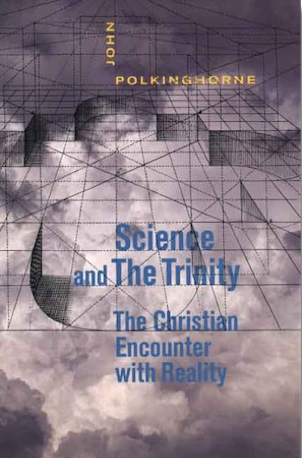
John Polkinghorne, author of Science and the Trinity: The Christian Encounter with Reality, on lessons for theology learned from the inductive nature of the work of science
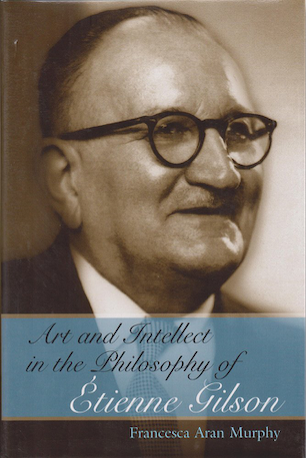
Francesca Aran Murphy, author of Art and Intellect in the Philosophy of Étienne Gilson, on the efforts of 20th-century Catholic and French philosopher Étienne Gilson to reconcile faith and reason
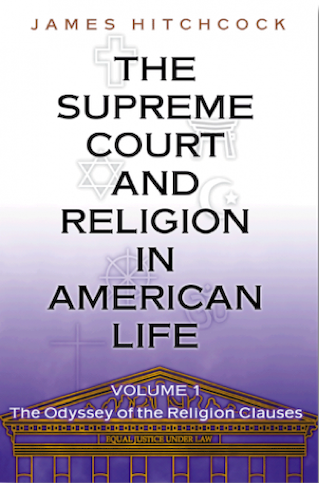
James Hitchcock, author of The Supreme Court and Religion in American Life, Volume 1: The Odyssey of the Religion Clauses, on the history of the Supreme Court’s decisions regarding religious practice and liberty
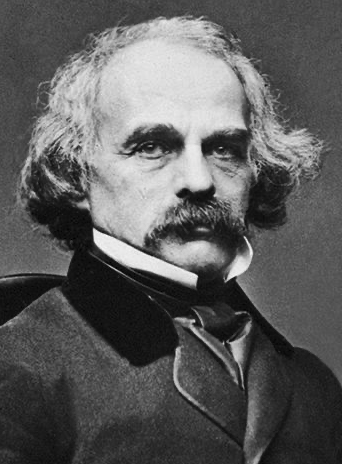
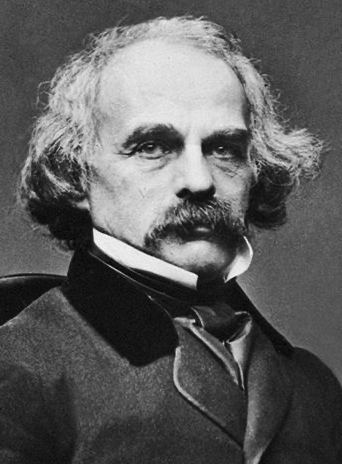
Wilfred McClay, reviewer of two of the biographies about Nathaniel Hawthorne (1804-1864) published during last year’s bicentennial celebration of the author, on Nathaniel Hawthorne’s vision of the intractability of human failings and the possibilities of the American experiment
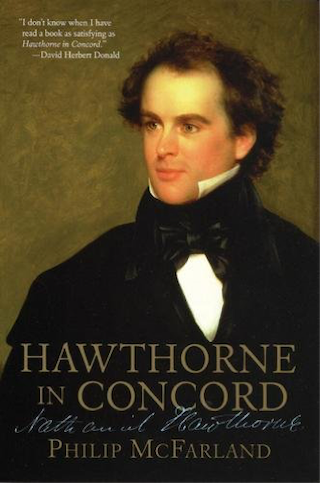
Philip McFarland, author of Hawthorne in Concord, on how Nathaniel Hawthorne’s sensitivity to the darker side of human nature makes him perennially instructive
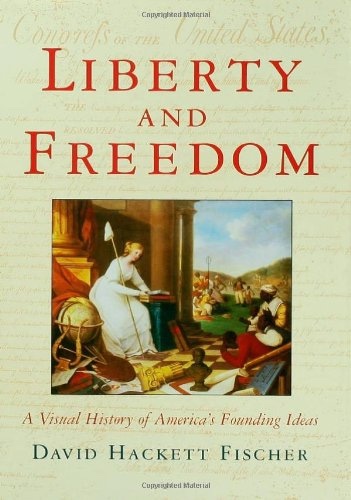
David Hackett Fischer, author of Liberty and Freedom: A Visual History of America’s Founding Ideas, on the history of how Americans have understood and symbolized freedom and liberty
Wilfred McClay, on the theme of place and communal obligation in Nathaniel Hawthorne’s writing
Related reading and listening
- Knowing and living our metaphysical totality — Clyde Kilby on the power of myth to bring together “the slender hints of the knowable”
- When myth becomes fact — In this 1976 interview, Clyde Kilby (1902–1986) discusses C. S. Lewis’s critique of scientism and rationalism, his belief in the primacy of the imagination, and his mythic vision. (37 minutes)
- Paradoxes of “nature” and “culture” — Robert Spaemann, on the destructive consequences of a merely naturalistic understanding of nature
- Modernity’s crisis of place — Craig Bartholomew reflects on the importance of place to our humanity. (58 minutes)
- Reason and the love of truth — FROM VOL. 97 James Peters discusses historical understandings of reason and rationality and how they differ from the modern notion of rationality. (21 minutes)
- The inward eye, cosmic truth, and making well — Andrew Kern takes his listeners along an “interlinear” reading of a portion of St. Augustine’s Confessions that explores the differences between how God makes and how we create. (38 minutes)
- The cost of “killing” God — In this October 2023 lecture, Carl Trueman explores the concept of “desecration” as a frame for understanding the nature of modernity in our time. (42 minutes)
- How music blesses and teaches — FROM VOL. 64 Theologian and musician Jeremy Begbie explores what we learn about time, theology, and the structure of Creation from the experience of music. (28 minutes)
- The “sovereign uselessness of moral reflection” — Calling on the wisdom of St. Augustine, Oliver O’Donovan reminds his listeners that all knowledge participates in the eternal Logos of God and is rooted in love, not disinterested moral judgement.(Lecture 1 of 3; 52 minutes)
- Cosmic realities in the built world — Christopher and Christine Perrin discuss the implications of architect Christopher Alexander’s (1936–2022) discovery of patterns of building that cohere with the the created cosmos and with ourselves as human creatures. (59 minutes)
- Beyond a reasonable doubt — From a 1980 interview with Ken Myers, Mortimer J. Adler discusses his argument that belief in the existence of God is rational. (14 minutes)
- Technophiliac obsessions — FROM VOL. 141 Literary and media scholar Grant Wythoff talks about the “father of science fiction,” Hugo Gernsback. (26 minutes)
- Christian belief as real knowledge — Dallas Willard on the modern divorce between faith and knowledge
- Universities as the hosts of reciprocating speech — Robert Jenson on how the Christian understanding of Truth in a personal Word shaped the Western university
- Utopian dreams and cynicism — John Durham Peters discusses the history of the idea of communication, saying that our hopes are too high when we believe that the solution to social discord is just better communication. (49 minutes)
- The “scandal” of theology in the university — Edward T. Oakes, S.J. explains why John Henry Newman’s eloquent defense of the nature of university education, The Idea of a University, continues to inspire, challenge, and even frustrate its sympathizers. (24 minutes)
- Man as “both mystic and hobbit” — D. C. Schindler explores how building is a quintessential human activity and an expression of our view of the meaning of reality. (47 minutes)
- Setting the liberal arts free — In addressing the state of liberal arts education in the U.S., Gilbert Meilaender raises some core questions and makes some surprising proposals. (28 minutes)
- Secularization and anarchy — Joseph Cardinal Ratzinger on the necessary connection between law, ethics, and worship
- Still connected to the land — Nadya Williams on the inescapably earthy character of human flourishing
- Christ-animated learning — FROM VOL. 142 Perry L. Glanzer and Nathan F. Alleman discuss the fragmentation of modern higher education and why we need theology to unify universities. 26 minutes)
- How the Church promotes the cause of freedom — Oliver O’Donovan: “We discover we are free when we are commanded by that authority which commands us according to the law of our being, disclosing the secrets of the heart.”
- What is beyond our choosing? — D. C. Schindler on our nihilistic quest for freedom
- The danger of not defining “freedom” — Richard Bauckham insists that an adequate understanding of freedom requires recognition of God as the ground of true human freedom
- Power to the people — Nathan O. Hatch on the DIY spirit of early American Christianity
- Free for obedience — Glenn W. Olsen on Augustine’s understanding of freedom
- What Ockham severed — Jean-Charles Nault on the advent of sheer freedom
- “A man after reality” — FROM VOL. 30 Clyde Kilby discusses C. S. Lewis‘s critique of scientism and rationalism, and his belief in the primacy of the imagination. (15 minutes)
- We were created for this — Joshua Jipp explores St. Paul’s theology to propose that doctrine ought to be intimately concerned with the way one lives one’s life. (31 minutes)
- A Christian understanding of human nature — FROM VOL. 35 Robert C. Roberts and Mark R. Talbot discuss the need for Christian psychologists to draw from Christianity’s deep tradition of understanding human nature. (15 minutes)
- Postmodern culture and the gospel — FROM VOL. 6 Roger Lundin discusses the ethical and theological consequences of our postmodern culture. (9 minutes)
- What we can know about God’s nature — Bruce McCormack outlines the history of the development of the doctrine of the Trinity. He shows how early Christians’ understanding of the nature of God moved from a focus on His oneness to a more full apprehension of His Triune nature. (66 minutes)
- Knowing and doing the good — Oliver O’Donovan raises several key questions and complications involved in the task of taking concrete and practical action toward a recognized moral good. (Lecture 3 of 3; 63 minutes)
- Attentiveness to the world, the self, and time — Oliver O’Donovan uses the metaphor of waking to discuss the concept of moral sensibility as attention to the world, the self, and time. (Lecture 1 of 3; 60 minutes)
- A life well lived — In this essay, Stanley Hauerwas explains the breadth and depth of Alasdair MacIntyre’s thought, the goal of which was to help people to act intelligibly and live morally worthy lives. (40 minutes)
- How the Enlightenment blinded us — Alasdair MacIntyre on the dependence of rationality on a lived tradition
- The recovery of an integrated ecology — In this essay, Michael Hanby unpacks the summons of Laudato si’ to an ecological way of life based on a proper understanding of creation in its fullness and integrity. (57 minutes)
- The Transformed Vision of Samuel Taylor Coleridge — Poet Malcolm Guite explores the dramatic and even prophetic parallels between the life of Samuel Taylor Coleridge and that of the titular character in his famous poem “The Rime of the Ancient Mariner.” (59 minutes)
- Politics and the good — FROM VOL. 160 D. C. Schindler argues that political order cannot be disentangled from the social, and that fundamental questions of what humans are and what the good is cannot be bracketed from politics. (30 minutes)
- The dramatic ecstasy of reason — FROM VOL. 120 D. C. Schindler argues that the Enlightenment was not wrong for giving too much to reason; it was wrong in endorsing an impoverished conception of reason. (19 minutes)
- The profound drama of human sexuality — In this lecture, D. C. Schindler explains the cosmological significance of human sexuality and why it is paradigmatic of the relationship between nature and freedom. (32 minutes)
- A poet’s relationship to time — FROM VOL. 57 Poet Wilmer Mills (1969–2011) discusses how his agricultural and cross-cultural childhood in Brazil shaped his imagination and his relationship with modernity. (11 minutes)
- The downward spiral of all technocracies — Andrew Willard Jones explains the two paths that exist with the development of new technologies: one which leads to an expansion of the humane world and one which exploits and truncates both Creation and humanity. (65 minutes)
- To see people as people — Anthony Bradley argues that a recovery of Christian personalism is needed to counter the dehumanization, polarization, and tribalism of our day. (45 minutes)
- The idiom for the revelation of mystery — Dana Gioia on the foundational place of poetry in Christian faith
- Mars Hill Audio Journal, Volume 164 — FEATURED GUESTS: Dana Gioia, Brady Stiller, Robert Royal, Richard DeClue, Tiffany Schubert, and Joonas Sildre
- Ethical issues in neurobiological interventions — William Hurlbut explores current neurobiological advancements and the ethics and dangers of biotechnology interventions that go beyond therapy. (62 minutes)
- Excluding cranks and dabblers — Drusilla Scott on Michael Polanyi’s insistence that the “community of science” required authority
- How discovery happens — Esther Lightcap Meek on Michael Polanyi’s account of scientific discovery
- An impoverished anthropology — FROM VOL. 146 Mark Mitchell asks whether there is anything that truly binds Americans together beyond their commitment to self-creation. (34 minutes)