PREVIEW
Guests heard on Volume 73

Richard John Neuhaus, Nigel Cameron, Carlos F. Gomez, and Michael Uhlmann, on the meaning and value of human life, the vocation of medicine, the logic of autonomous individualism, and the temptation of suicide and euthanasia
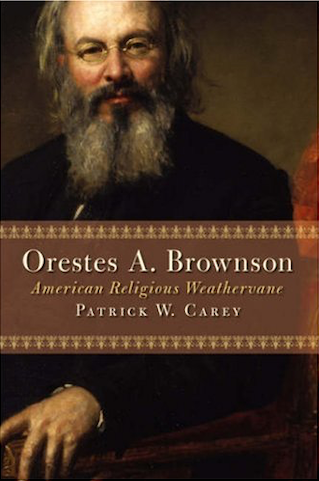
Patrick Carey, author of Orestes A. Brownson: American Religious Weathervane, on the perceptive (and peregrinating) thought of Orestes Brownson
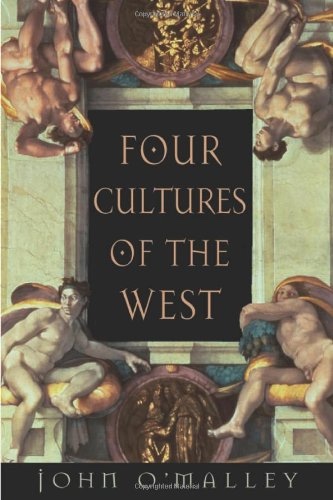
John W. O’Malley, author of The Four Cultures of the West, on the prophetic, academic, humanistic, and artistic vectors of Western culture

Patricia Owen, children’s book critic, on what makes good children’s books and on how the Newbery Medal winners have changed over time
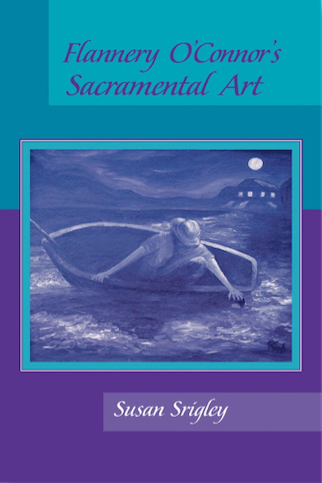
Susan Srigley, author of Flannery O’Connor’s Sacramental Art, on the sacramental and incarnational fiction of Flannery O’Connor
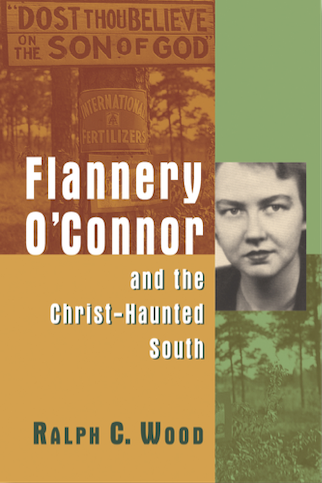
Ralph C. Wood, author of Flannery O’Connor and the Christ-Haunted South, on Flannery O’Connor as “hill-billy Thomist” and sympathizer with backwoods religion
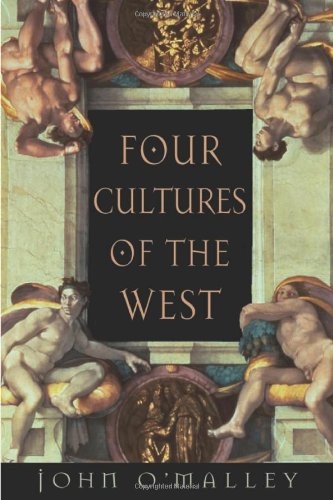
John W. O’Malley, author of The Four Cultures of the West, on the culture of rhetoric and poetry
Related reading and listening
- The reclaiming of authentic liberalism — John Médaille examines the Christian roots of liberalism and how liberalism might be recovered from the heresy of secularism. (51 minutes)
- Christian culture and the myth of the secular — Ken Myers draws on T. S. Eliot to argue that Western civilization has broken down, not into a multiplicity of cultures, but into a “post-culture.” (47 minutes)
- How to make war on nothingness? — David Bentley Hart argues that if it rejects Christ, the only remaining option for a post-Christian culture is conscious or “narcotic” nihilism, which takes the form of absolute, meaningless volition. (66 minutes)
- A sampling of newly published lectures — Ken Myers introduces listeners to four recently released lectures, courtesy of our Partners. The lecturers are Jennifer Frey, Gary Saul Morson, N. T. Wright, and Andrew Kern. (27 minutes)
- Grace and Christian realism — Jennifer Frey explores Thomist elements in Flannery O’Connor’s theology and writing, with a particular emphasis on a Thomist understanding of art. (39 minutes)
- Rose without thorns — Ken Myers introduces various settings of “Ther is no rose of swych vertu,” a medieval carol that uses imagery of a rosebush to describe the Virgin Mary. (29 minutes)
- A “cosmological omnibus” — George Grant recounts the fascinating history of Hernando Colón’s attempt in the 16th century to curate a universal library of the world’s knowledge. (41 minutes)
- The cost of “killing” God — In this October 2023 lecture, Carl Trueman explores the concept of “desecration” as a frame for understanding the nature of modernity in our time. (42 minutes)
- The primacy of the Body of Christ —
FROM VOL. 134 Philip Turner reflects on how Christian ethics is misplaced if it has as its central concern individual moral behavior or social justice. (28 minutes) - Mystery novels with theological concerns — In these interviews from 1993, mystery author P. D. James speaks about the philosophical and theological issues woven into her novels, and Alan Jacobs discusses James’s novel The Children of Men. (23 minutes)
- Money, status, and satisfaction —
FROM VOL. 44 David Myers and Robert Frank discuss the tenuous relationship between wealth and happiness. (22 minutes) - Showing as meaning — Daniel McInerny on how the arts convey meaning
- Mars Hill Audio Journal, Volume 165 — FEATURED GUESTS: Jeffrey Bilbro, Daniel McInerny, Joseph Minich, Carl Elliott, Nadya Williams, and Don W. King
- Shared Practices, Strong Communities — Christine Pohl reflects on why a deliberate commitment to certain shared practices is necessary for the sustaining of community. (57 minutes)
- Georges Bernanos & the Mystery of the Human Person — Translator J. C. Whitehouse praises French novelist Georges Bernanos’s profundity in exploring the depths of the human soul through the vehicle of fiction. (58 minutes)
- “Only a real world can save us” — Oliver O’Donovan explores how the “religion” of modernity lacks a coherent world in which one may participate with full human agency and moral purpose. (Lecture 3 of 3; 61 minutes)
- The recovery of an integrated ecology — In this essay, Michael Hanby unpacks the summons of Laudato si’ to an ecological way of life based on a proper understanding of creation in its fullness and integrity. (57 minutes)
- The collapse of public life —
FROM VOL. 154 D. C. Schindler explains how liberalism sought to make way for individuals to function together without any orientation to an explicit common good. (37 minutes) - Sacramental Poetics — Poet and Eastern Orthodox believer Scott Cairns explains how a good poem functions like an icon: it assists the process of our becoming aware of what is real, and it is generative in the ways it keeps opening up new understandings. (56 minutes)
- The downward spiral of all technocracies — Andrew Willard Jones explains the two paths that exist with the development of new technologies: one which leads to an expansion of the humane world and one which exploits and truncates both Creation and humanity. (65 minutes)
- To see people as people — Anthony Bradley argues that a recovery of Christian personalism is needed to counter the dehumanization, polarization, and tribalism of our day. (45 minutes)
- Learning from experience — Flannery O’Connor on belief and experience
- Hillbilly Augustinian — Ralph Wood on Flannery O’Connor’s refusal to adapt her fiction to the national temper
- The grotesque and the transcendent — Christina Bieber Lake on why Flannery O’Connor’s readers have to work
- Flannery at 100 — In honor of Flannery O’Connor’s 100th birthday, we have gathered here an aural feast of interviews with O’Connor scholars and aficionados discussing her life, work, and faith. (3 hours, 28 minutes)
- Ideas made incarnate — In this lecture, Karen Swallow Prior examines the power of great literature to shape lives, nourish imaginations, and develop a vision of the good life. (43 minutes)
- Ethical issues in neurobiological interventions — William Hurlbut explores current neurobiological advancements and the ethics and dangers of biotechnology interventions that go beyond therapy. (62 minutes)
- Insights into O’Connor’s development as a writer —
FROM VOL. 160 Jessica Hooten Wilson discusses her experience studying and organizing Flannery O’Connor’s unfinished third novel, Why Do the Heathen Rage? (27 minutes) - Gratitude, vitalism, and the timid rationalist — In this lecture, Matthew Crawford draws a distinction between an orientation toward receiving life as gift and a timid and cramped rationalism that views man as an object to be synthetically remade. (52 minutes)
- Humans as biological hardware — In this essay, Brad Littlejohn and Clare Morell decry how modern technology tends to hack the human person in pursuit of profit. (55 minutes)
- A richer, deeper view of human dignity —
FROM VOL. 98 Moral philosopher Gilbert Meilaender examines the question of human dignity and its place within political discourse. (25 minutes) - “The system will be first” —
FROM VOL. 27 Robert Kanigel describes the transformation of work due to Frederick Winslow Taylor’s concept of scientific management. (11 minutes) - Countering American apathy toward history —
FROM VOL. 124 Historian John Fea discusses how American and Protestant individualism continues to influence our orientation toward the past. (22 minutes) - “Detachment as a whole way of life” —
FROM VOL. 85 Professor Christopher Shannon discusses how early twentieth-century social scientists encouraged the American idea that individual identity works against communal membership. (17 minutes) - The fraught marriage of liberty and equality — In this essay, Patrick Deneen examines Alexis de Tocqueville’s complex and insightful portrait of “democratic man” living in the context of perpetual societal tension between the excesses of liberty and equality. (39 minutes)
- “A sign of contradiction” — In this lecture, Daniel Gibbons compares and contrasts understandings of sacramental poetics proposed by Augustine, Aquinas, and Sydney. (36 minutes)
- “What’s the point of a life like that?” — Given recent legal developments in the UK, Canada, and elsewhere regarding assisted suicide, we present two interviews focused on the “right to die” movement. (27 minutes)
- Privacy and a right to kill —
FROM VOL. 60 Russell Hittinger explains the legal history behind the “right to privacy” and how it was used in landmark cases involving abortion and physician-assisted suicide. (33 minutes) - Were Christian martyrs considered suicides? —
FROM VOL. 36 Darrel Amundsen counters the modern myth that the early Church up until St. Augustine was accepting and even favorable of suicide. (12 minutes) - “The angels sang, and the shepherds too” — Ken Myers introduces listeners to the Christmas musical compositions of French composer Marc-Antoine Charpentier (c.1645–1704). (19 minutes)
- Cosmetic surgery and human perfectibility — Elizabeth Haiken examines the shift that occurred in 20th century America from a focus on developing character to a focus on developing “personality” and achieving physical perfection. (19 minutes)
- The Body Worlds exhibit and Western art —
FROM VOL. 88 Michael J. Lewis explores the effects of the Body Worlds exhibits on the moral imagination of the viewer, who encounters human cadavers in a mechanistic way erased of all moral context. (26 minutes) - Human nature through the eyes of Lucian Freud —
FROM VOL. 7 Art critic and sculptor Ted Prescott discusses the work of British realist painter Lucian Freud (notably, the grandson of Sigmund Freud). (8 minutes) - Depicting the human form —
FROM VOL. 6 Ted Prescott explains the history of portraying the nude human body in art and contrasts it with the way the naked human form is often used in advertising. (9 minutes) - “Gender” as ultimate separation — In this November 2018 lecture, Margaret McCarthy explains how the predictions of Pope Paul VI’s Humanae vitae regarding the consequences of separating sex from procreation have proven true. (38 minutes)
- Alexis de Tocqueville’s penetrating review of America —
FROM VOL. 91 Hugh Brogan and Daniel Ritchie discuss Alexis de Tocqueville’s insights into American society, government, and character. (26 minutes) - Books worthy of a lifetime of encounters —
FROM VOL. 69 Daniel Ritchie discusses why great books programs survive mainly in Christian institutions while declining in secular ones. (13 minutes) - Personhood, limits, and academic vocation —
FROM VOL. 39 Marion Montgomery (1934–2002) offers a deep critique of the relationship of the academy to its community in an effort to diagnose how higher education has lost its way. (13 minutes) - Christopher Hitchens vs. G. K. Chesterton — Ralph Wood compares Christopher Hitchens‘s view of the cosmos with that of G. K. Chesterton, arguing that Chesterton succeeded where Hitchens failed. (44 minutes)
- Prudence in politics —
FROM VOL. 146 Henry T. Edmondson, III talks about Flannery O’Connor’s understanding of political life, which was influenced by a range of thinkers including Aristotle, Thomas Aquinas, Eric Voegelin, and Russell Kirk. (19 minutes)