PREVIEW
The player for this Journal volume is only available to current members or listeners with a legacy account. If you have an active membership, log in here. If you’d like to become a member — with access to all our audio programs — sign up here.
Guests heard on Volume 76
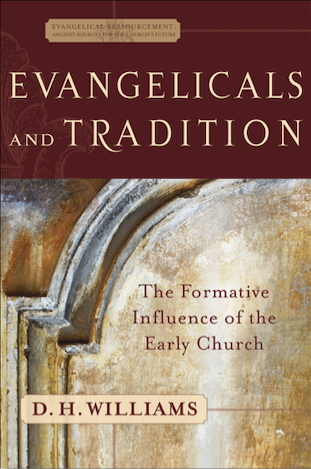
D. H. Williams, author of Evangelicals and Tradition: The Formative Influence of the Early Church, on the Church’s rootedness in its Tradition, why some Protestants remain suspicious, and on the excluding character of Christian conversion
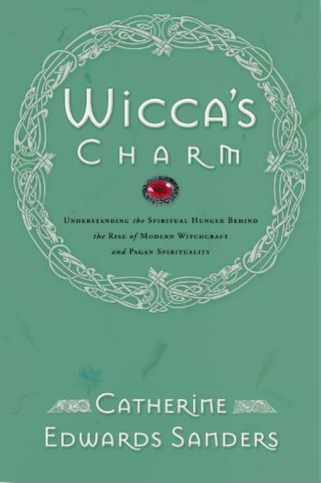
Catherine Edwards Sanders, author of Wicca’s Charms: Understanding the Spiritual Hunger behind the Rise of Modern Witchcraft and Pagan Spirituality, on the spiritual hunger behind the rise of modern witchcraft
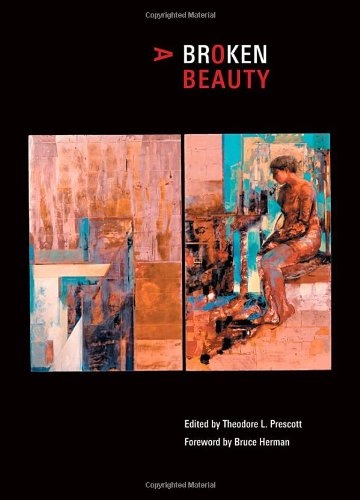
Ted Prescott on the book and gallery show titled A Broken Beauty, an on changing images of beauty and the human figure in twentieth century art
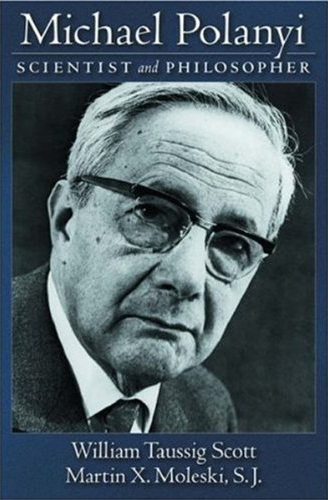
Martin X. Moleski, co-author of Michael Polanyi: Scientist and Philosopher, on the life, times, and remarkable insights of Michael Polanyi (Archive Feature available)
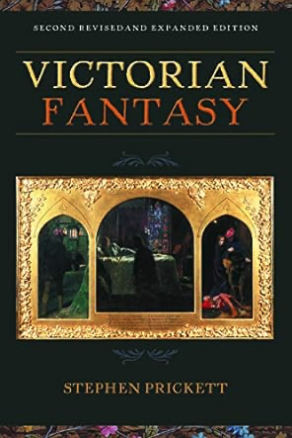
Stephen Prickett, author of Victorian Fantasy, on George MacDonald and the tasks of imagination

Barrett Fisher on the relative artistic assets of film and literature, and on what is involved in linking the two experiences when making a movie based on a book
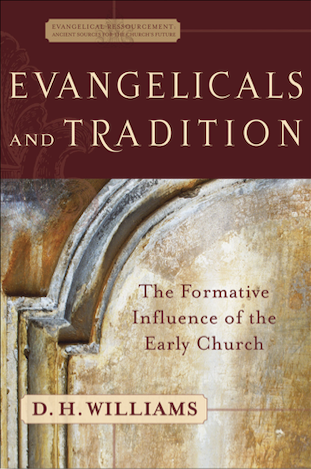
D. H. Williams, author of Evangelicals and Tradition: The Formative Influence of the Early Church, on how the teachings and doctrines of the Patristics were the recognized foundation of Christian identity up until the modern period
Related reading and listening
- A living tradition — In this lecture, James Matthew Wilson explores the nature of tradition as a “condition of possibility” that situates both reason and poetry. (49 minutes)
- Knowing and living our metaphysical totality — Clyde Kilby on the power of myth to bring together “the slender hints of the knowable”
- Savoring the taste of Reality — C. S. Lewis on the transporting, illuminating capacity of Myth
- When myth becomes fact — In this 1976 interview, Clyde Kilby (1902–1986) discusses C. S. Lewis’s critique of scientism and rationalism, his belief in the primacy of the imagination, and his mythic vision. (37 minutes)
- How to make war on nothingness? — David Bentley Hart argues that if it rejects Christ, the only remaining option for a post-Christian culture is conscious or “narcotic” nihilism, which takes the form of absolute, meaningless volition. (66 minutes)
- Disengagement from the world — Nicholas Carr encourages us to consider how automation technologies impact our ability to engage with the world and whether — like a good tool — they present a more inviting world or close us off from that world. (30 minutes)
- The Bride of Christ — John Cavadini explores the different views of Origen and Augustine as to the nature and mission of the Church, and he calls for a recovery of the identity of the Church as the Bride of Christ. (38 minutes)
- The contested idea of beauty in art — FROM VOL.58 Ted Prescott describes the turn that the role of art in the West took in the 19th century in response to the weight of the “canons” and philosophy of beauty developed during the 17th and 18th centuries. (23 minutes)
- A sampling of newly published lectures — Ken Myers introduces listeners to four recently released lectures, courtesy of our Partners. The lecturers are Jennifer Frey, Gary Saul Morson, N. T. Wright, and Andrew Kern. (27 minutes)
- Grace and Christian realism — Jennifer Frey explores Thomist elements in Flannery O’Connor’s theology and writing, with a particular emphasis on a Thomist understanding of art. (39 minutes)
- A “cosmological omnibus” — George Grant recounts the fascinating history of Hernando Colón’s attempt in the 16th century to curate a universal library of the world’s knowledge. (41 minutes)
- The beauty of truth and goodness — FROM VOL. 141 James Matthew Wilson talks about how cultivating the desire to perceive the interior life of things sustains the basic human capacity for recognizing truth, pursuing wisdom, and contemplating beauty. (23 minutes)
- Theology and the imagination — Jeffrey Barbeau explains what made C. S. Lewis an effective “translator” of theology for non-theologians. (21 minutes)
- The pathos of sin — FROM VOL. 15 Poet Robert Pinsky discusses his translation of Dante’s Inferno. (9 minutes)
- Existential preparation for reading literature — FROM VOL. 128 Rod Dreher recounts how he thought he was reading Dante’s Commedia, when in reality the poem was reading him. (18 minutes)
- An icon of the whole world — Jason Baxter explains how Dante includes a panoply of characters and creatures in his Comedia, offering a prismatic view of all of Creation in its glory. (20 minutes)
- The soul’s awakening — FROM VOL. 145 Jason Baxter discusses the great psychological subtlety in Dante’s Divine Comedy. (20 minutes)
- How literature shaped Lewis — FROM VOL. 155 Jason Baxter explains how reading medieval literature enabled C. S. Lewis to become a “naturalized citizen of the Middle Ages.” (25 minutes)
- How communities remember who they are — Oliver O’Donovan on the necessity of tradition in sustaining communal identity
- How common loves shape communities — Oliver O’Donovan discusses how communities mediate love and knowledge to their members and what challenges arise as a community’s traditions are confronted by sin, error, and plurality. (Lecture 2 of 3; 49 minutes)
- Films that lead to contemplation — FROM VOL. 162 David Paul Baird discusses some of the films on the Vatican’s list of recommended films. (25 minutes)
- Cosmic realities in the built world — Christopher and Christine Perrin discuss the implications of architect Christopher Alexander’s (1936–2022) discovery of patterns of building that cohere with the the created cosmos and with ourselves as human creatures. (59 minutes)
- An invitation to a feast — Christina Bieber Lake explains how poetry is an invitation to experience the beauty and goodness of Creation as gift. (44 minutes)
- Ontology and reality in fiction — Katy Carl discusses Catholic novelist Graham Greene’s skill in portraying the struggle between spiritual belief and doubt. (27 minutes)
- Sacred and Profane Love: Graham Greene and the Catholic Imagination — Katy Carl discusses novelist Graham Greene’s fiction and spiritual struggles in light of the concept of the Catholic imagination. (49 minutes)
- Alert to the magic in the world — Junius Johnson discusses the importance of teaching stories, particularly fairy stories, in classical education. (25 minutes)
- “Earth-shaking” and “heart-breaking” beauty — FROM VOL. 151 Junius Johnson warns that the pursuit of beauty is both perilous and an experience that points to the desire for God. (25 minutes)
- City of God, City of Man — Architect Philip Bess discusses how our modern-day confusion and moral illiteracy are worked out visibly in the cities and buildings our architects create. (57 minutes)
- Harbinger of disorder — Mark Mitchell on Michael Polanyi’s recognition of the dangerous dead-end of materialistic reductionism
- Man as “both mystic and hobbit” — D. C. Schindler explores how building is a quintessential human activity and an expression of our view of the meaning of reality. (47 minutes)
- Mars Hill Audio Journal, Volume 165 — FEATURED GUESTS: Jeffrey Bilbro, Daniel McInerny, Joseph Minich, Carl Elliott, Nadya Williams, and Don W. King
- “A man after reality” — FROM VOL. 30 Clyde Kilby discusses C. S. Lewis‘s critique of scientism and rationalism, and his belief in the primacy of the imagination. (15 minutes)
- Two versions of Shadowlands — FROM VOL. 10 Marjorie Mead examines two film portrayals of C. S. Lewis, noting which best captures Lewis’s jovial personality and the nuances of his faith. (4 minutes)
- We were created for this — Joshua Jipp explores St. Paul’s theology to propose that doctrine ought to be intimately concerned with the way one lives one’s life. (31 minutes)
- Passing on the virtues to the next generation — Theologian and ethicist Stanley Hauerwas reflects on being a godparent and the responsibility to cultivate and talk about Christian virtue. (21 minutes)
- The demoralizing effect of pagan Roman religion — Oliver O’Donovan examines St. Augustine’s critique of pagan Roman religion in Book II of his treatise City of God and asks his audience to consider what insights Augustine’s critique has for us today. (Lecture 1 of 3; 51 minutes)
- How the Enlightenment blinded us — Alasdair MacIntyre on the dependence of rationality on a lived tradition
- Manners and morals — FROM VOL. 19 Film and literary critic Alan Jacobs discusses how modern audiences relate to the manners and morals portrayed in Jane Austen films. (16 minutes)
- Cultivating the Virtue of Reverence — Paul Woodruff (1943–2023) discusses the importance of reverence as a virtue that enriches relationships, elevates civic life, and helps leaders to wield power wisely. (53 minutes)
- The moral complicity of movie audiences — Film critic David Thomson explains why Alfred Hitchcock’s film Psycho achieves a kind of unique synergy with American culture, raising unsettling questions about alienation and identity. (33 minutes)
- The Transformed Vision of Samuel Taylor Coleridge — Poet Malcolm Guite explores the dramatic and even prophetic parallels between the life of Samuel Taylor Coleridge and that of the titular character in his famous poem “The Rime of the Ancient Mariner.” (59 minutes)
- Truth, goodness, and beauty (and why they matter) — FROM VOL. 147 Philosopher D. C. Schindler examines how postmodernism poses a unique threat to our sense of an interior self. (28 minutes)
- The downward spiral of all technocracies — Andrew Willard Jones explains the two paths that exist with the development of new technologies: one which leads to an expansion of the humane world and one which exploits and truncates both Creation and humanity. (65 minutes)
- The idiom for the revelation of mystery — Dana Gioia on the foundational place of poetry in Christian faith
- Breaking the frozen sea — Dana Gioia on how poetry enchants
- Seneca’s moral courage — Dana Gioia explains how Seneca’s family was interwoven with the Roman governing class, ultimately leading to the philospher’s death at the hands of Emperor Nero. (27 minutes)
- The importance of literary reading — FROM VOL. 70 Dana Gioia discusses the important role literary reading plays in society and the 2004 publication from the NEA about such reading. (13 minutes)
- Flannery at 100 — In honor of Flannery O’Connor’s 100th birthday, we have gathered here an aural feast of interviews with O’Connor scholars and aficionados discussing her life, work, and faith. (3 hours, 28 minutes)
- Ideas made incarnate — In this lecture, Karen Swallow Prior examines the power of great literature to shape lives, nourish imaginations, and develop a vision of the good life. (43 minutes)
- From culture war to culture care — In this 2016 lecture, artist Makoto Fujimura asks what would it look like for Christians to be stewards of beauty and human flourishing in all areas of life and culture. (48 minutes)