
PREVIEW
Guests heard on Volume 83

Barrett Fisher, on film noir and its revealing portrayal of human moral confusion
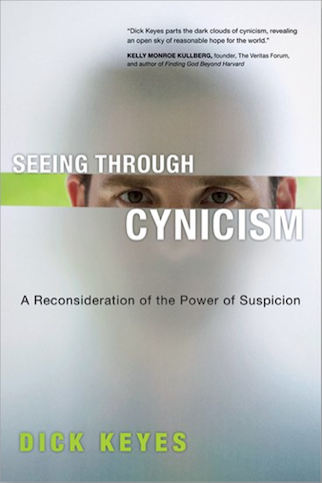
Dick Keyes, author of Seeing through Cynicism: A Reconsideration of the Power of Suspicion, on contemporary cynicism, how it’s destructive, and how it might be resisted
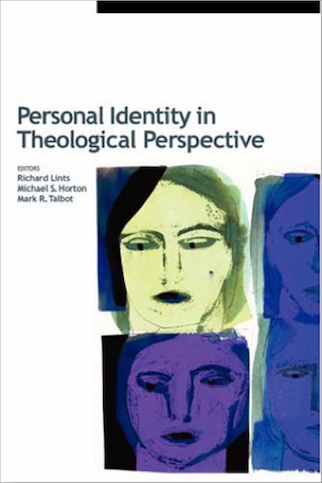
Richard Lints, co-editor of the anthology Personal Identity in Theological Perspective, on a distinctively theological approach to understanding human identity

Paul McHugh, author of The Mind Has Mountains: Reflections on Society and Psychiatry, on how the discipline of psychiatry needs to mature, and on stories as diagnostic tools
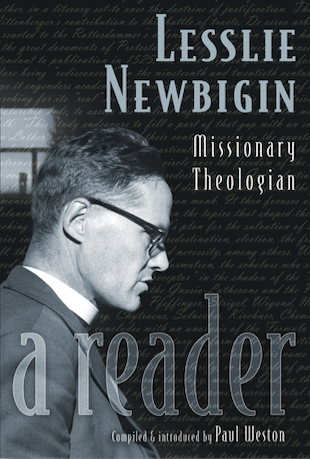
Paul Weston, editor of the anthology Lesslie Newbigin: Missionary Theologian, on lessons from Lesslie Newbigin on interfaith dialogue and the attacks on Christianity from scientism (Archive Feature available)
Paul Walker, on how the forms of Renaissance choral music communicate rich theological concerns
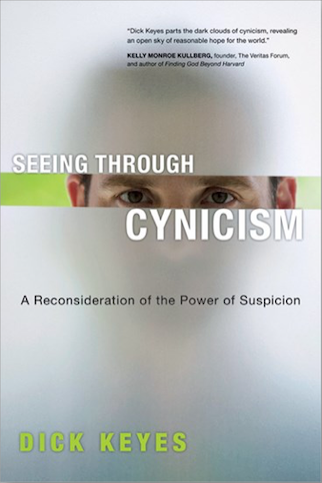
Bonus: Dick Keyes, author of Seeing through Cynicism: A Reconsideration of the Power of Suspicion, discusses the difference between cynicism and suspicion and how contemporary culture encourages cynicism to fester
Related reading and listening
- Knowing and living our metaphysical totality — Clyde Kilby on the power of myth to bring together “the slender hints of the knowable”
- When myth becomes fact — In this 1976 interview, Clyde Kilby (1902–1986) discusses C. S. Lewis’s critique of scientism and rationalism, his belief in the primacy of the imagination, and his mythic vision. (37 minutes)
- Modernity’s crisis of place — Craig Bartholomew reflects on the importance of place to our humanity. (58 minutes)
- The inward eye, cosmic truth, and making well — Andrew Kern takes his listeners along an “interlinear” reading of a portion of St. Augustine’s Confessions that explores the differences between how God makes and how we create. (38 minutes)
- In tune with the muses of Zion — Ken Myers on the Christmas music of Michael Praetorius
- The cost of “killing” God — In this October 2023 lecture, Carl Trueman explores the concept of “desecration” as a frame for understanding the nature of modernity in our time. (42 minutes)
- How music blesses and teaches —
FROM VOL. 64 Theologian and musician Jeremy Begbie explores what we learn about time, theology, and the structure of Creation from the experience of music. (28 minutes) - Films that lead to contemplation —
FROM VOL. 162 David Paul Baird discusses some of the films on the Vatican’s list of recommended films. (25 minutes) - Cosmic realities in the built world — Christopher and Christine Perrin discuss the implications of architect Christopher Alexander’s (1936–2022) discovery of patterns of building that cohere with the the created cosmos and with ourselves as human creatures. (59 minutes)
- Technophiliac obsessions —
FROM VOL. 141 Literary and media scholar Grant Wythoff talks about the “father of science fiction,” Hugo Gernsback. (26 minutes) - Utopian dreams and cynicism — John Durham Peters discusses the history of the idea of communication, saying that our hopes are too high when we believe that the solution to social discord is just better communication. (49 minutes)
- Man as “both mystic and hobbit” — D. C. Schindler explores how building is a quintessential human activity and an expression of our view of the meaning of reality. (47 minutes)
- Setting the liberal arts free — In addressing the state of liberal arts education in the U.S., Gilbert Meilaender raises some core questions and makes some surprising proposals. (28 minutes)
- Still connected to the land — Nadya Williams on the inescapably earthy character of human flourishing
- “A man after reality” —
FROM VOL. 30 Clyde Kilby discusses C. S. Lewis‘s critique of scientism and rationalism, and his belief in the primacy of the imagination. (15 minutes) - Two versions of Shadowlands —
FROM VOL. 10 Marjorie Mead examines two film portrayals of C. S. Lewis, noting which best captures Lewis’s jovial personality and the nuances of his faith. (4 minutes) - A Christian understanding of human nature —
FROM VOL. 35 Robert C. Roberts and Mark R. Talbot discuss the need for Christian psychologists to draw from Christianity’s deep tradition of understanding human nature. (15 minutes) - Postmodern culture and the gospel —
FROM VOL. 6 Roger Lundin discusses the ethical and theological consequences of our postmodern culture. (9 minutes) - Lives of generosity — Jonathan Wilson distinguishes between two fundamental ways of viewing Creation: a true Christian account of the world and a “survival of the fittest” one. (21 minutes)
- The recovery of an integrated ecology — In this essay, Michael Hanby unpacks the summons of Laudato si’ to an ecological way of life based on a proper understanding of creation in its fullness and integrity. (57 minutes)
- Manners and morals —
FROM VOL. 19 Film and literary critic Alan Jacobs discusses how modern audiences relate to the manners and morals portrayed in Jane Austen films. (16 minutes) - The moral complicity of movie audiences — Film critic David Thomson explains why Alfred Hitchcock’s film Psycho achieves a kind of unique synergy with American culture, raising unsettling questions about alienation and identity. (33 minutes)
- Politics and the good —
FROM VOL. 160 D. C. Schindler argues that political order cannot be disentangled from the social, and that fundamental questions of what humans are and what the good is cannot be bracketed from politics. (30 minutes) - The profound drama of human sexuality — In this lecture, D. C. Schindler explains the cosmological significance of human sexuality and why it is paradigmatic of the relationship between nature and freedom. (32 minutes)
- A poet’s relationship to time —
FROM VOL. 57 Poet Wilmer Mills (1969–2011) discusses how his agricultural and cross-cultural childhood in Brazil shaped his imagination and his relationship with modernity. (11 minutes) - The downward spiral of all technocracies — Andrew Willard Jones explains the two paths that exist with the development of new technologies: one which leads to an expansion of the humane world and one which exploits and truncates both Creation and humanity. (65 minutes)
- To see people as people — Anthony Bradley argues that a recovery of Christian personalism is needed to counter the dehumanization, polarization, and tribalism of our day. (45 minutes)
- Ethical issues in neurobiological interventions — William Hurlbut explores current neurobiological advancements and the ethics and dangers of biotechnology interventions that go beyond therapy. (62 minutes)
- An impoverished anthropology —
FROM VOL. 146 Mark Mitchell asks whether there is anything that truly binds Americans together beyond their commitment to self-creation. (34 minutes) - Steward of knowledge vs. autonomous knower —
FROM VOL. 66 Esther Lightcap Meek challenges the modernist view of knowledge, which prefers the figure of the autonomous knower to the figure of a steward of knowledge acquired in part from others. (15 minutes) - St. Thomas the anthropologist — G. K. Chesterton on Aquinas’s complete Science of Man
- An embedded life — Following a move from one state to another, Gilbert Meilaender explores the tension between being simultaneously a sojourner and a body located in place and time. (30 minutes)
- Impact of “infotainment” on community — Neil Gabler and C. John Sommerville discuss how the mentalities conveyed by our experience with communications media work against the nurturing of community. (36 minutes)
- On Eugenics in America — Christine Rosen explores early eugenics support in the early 1900s and current “participatory evolution” practices. (50 minutes)
- Gratitude, vitalism, and the timid rationalist — In this lecture, Matthew Crawford draws a distinction between an orientation toward receiving life as gift and a timid and cramped rationalism that views man as an object to be synthetically remade. (52 minutes)
- Humans as biological hardware — In this essay, Brad Littlejohn and Clare Morell decry how modern technology tends to hack the human person in pursuit of profit. (55 minutes)
- “The system will be first” —
FROM VOL. 27 Robert Kanigel describes the transformation of work due to Frederick Winslow Taylor’s concept of scientific management. (11 minutes) - What it means to be a person —
FROM VOL. 147 Sociologist Craig Gay argues that in order to address the challenges of a technological approach to the world, we need to recover the Christian tradition’s robust theology of personhood. (24 minutes) - Voluntarily silencing ourselves —
FROM VOL. 39 John L. Locke discusses the value of personal communication and how technology is displacing it. (12 minutes) - Human nature through the eyes of Lucian Freud —
FROM VOL. 7 Art critic and sculptor Ted Prescott discusses the work of British realist painter Lucian Freud (notably, the grandson of Sigmund Freud). (8 minutes) - Self-knowledge versus “selfism” —
FROM VOL.10 Psychologist Paul Vitz argues that the modern focus on self-actualization makes the self the highest good in the cosmos. (7 minutes) - Christianity and psychiatry in a “comfortable rapprochement” —
FROM VOL. 38 Dan Blazer examines several factors he believes have led to the end of the necessary and creative tension between Christianity and psychiatry. (11 minutes) - The gift of meaningful work — In this lecture, D. C. Schindler argues that genuine work is inherently meaningful and facilitates an encounter with reality and therefore, ultimately, with God. (36 minutes)
- “Gender” as ultimate separation — In this November 2018 lecture, Margaret McCarthy explains how the predictions of Pope Paul VI’s Humanae vitae regarding the consequences of separating sex from procreation have proven true. (38 minutes)
- How words are central to the human experience —
FROM VOL. 95 Craig Gay reflects on the essential linguistic nature of humanity: how our growth (or decline) in life is tied to words. (18 minutes) - Bearing well the burdens of the past, present, and future — Louis Markos shows how great literature like the Iliad links us to the human story and strengthens us to live fully and well. (65 minutes)
- The abolition of the fine arts — In this lecture, R. V. Young examines why people are increasingly unable to discriminate between base and fine art, arguing why this issue is of particular concern to Christians. (41 minutes)
- Recovering the primacy of contemplation — Augusto Del Noce finds in St. Augustine resources to diagnose the fatal flaw in progressivism
- Confronting the supremacy of science — Augusto Del Noce on the belief that science is the only true form of knowledge
- The roots of American disorder — In this reading of an article from 2021 by Michael Hanby, the critique of Marxism in Augusto del Noce’s work is compared with texts from the American Founders. (79 minutes)