PREVIEW
The player for this Journal volume is only available to current members or listeners with a legacy account. If you have an active membership, log in here. If you’d like to become a member — with access to all our audio programs — sign up here.
Guests heard on Volume 97
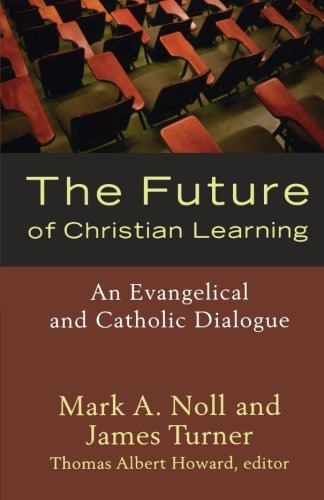
Mark Noll, author of The Future of Christian Learning: An Evangelical and Catholic Dialogue, on how Christian higher education is aided by a commitment to something like Christendom, a commitment to the assumption that the Gospel has consequences for all of life and all of social experience
Stanley Fish, author of Save the World on Your Own Time, on how university professors should refrain from bringing their own political, philosophical, and religious commitments into the classroom
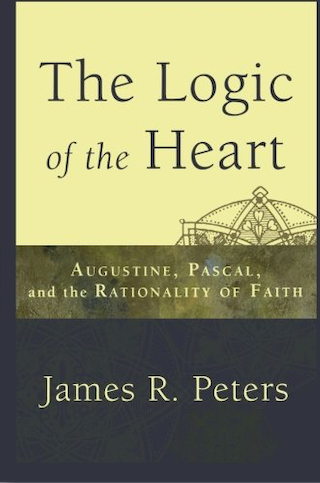
James Peters, author of The Logic of the Heart: Augustine, Pascal, and the Rationality of Faith, on how Plato, Aristotle, Augustine, Pascal, and many others had an understanding of the nature and purpose of reason quite different from the common modern understanding (Archive Feature available)
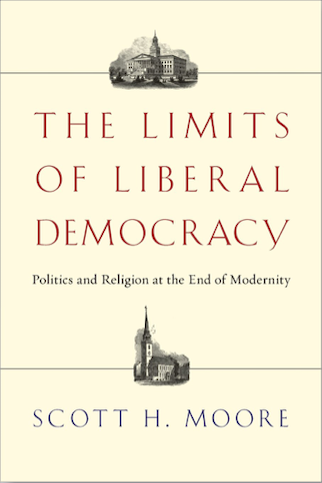
Scott Moore, author of The Limits of Liberal Democracy: Politics and Religion at the End of Modernity, on cultivating an understanding of politics that goes beyond mere statecraft, and on the limits of the notion of rights
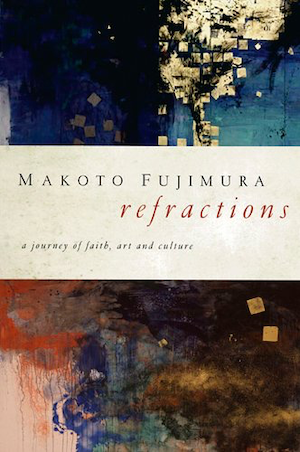
Makoto Fujimura, author of Refractions: A Journey of Faith, Art, and Culture, on how his work as a painter is enriched by writing, why artists need to cultivate an attentiveness to many things, and how visual language expresses experience
Related reading and listening
- A brief for “prophetic Thomism” — David Decosimo on assuming a charitable posture toward pagan virtue
- When myth becomes fact — In this 1976 interview, Clyde Kilby (1902–1986) discusses C. S. Lewis’s critique of scientism and rationalism, his belief in the primacy of the imagination, and his mythic vision. (37 minutes)
- Christian culture and the myth of the secular — Ken Myers draws on T. S. Eliot to argue that Western civilization has broken down, not into a multiplicity of cultures, but into a “post-culture.” (47 minutes)
- How to make war on nothingness? — David Bentley Hart argues that if it rejects Christ, the only remaining option for a post-Christian culture is conscious or “narcotic” nihilism, which takes the form of absolute, meaningless volition. (66 minutes)
- Modernity’s crisis of place — Craig Bartholomew reflects on the importance of place to our humanity. (58 minutes)
- The Bride of Christ — John Cavadini explores the different views of Origen and Augustine as to the nature and mission of the Church, and he calls for a recovery of the identity of the Church as the Bride of Christ. (38 minutes)
- Reason and the love of truth — FROM VOL. 97 James Peters discusses historical understandings of reason and rationality and how they differ from the modern notion of rationality. (21 minutes)
- The contested idea of beauty in art — FROM VOL.58 Ted Prescott describes the turn that the role of art in the West took in the 19th century in response to the weight of the “canons” and philosophy of beauty developed during the 17th and 18th centuries. (23 minutes)
- A sampling of newly published lectures — Ken Myers introduces listeners to four recently released lectures, courtesy of our Partners. The lecturers are Jennifer Frey, Gary Saul Morson, N. T. Wright, and Andrew Kern. (27 minutes)
- The inward eye, cosmic truth, and making well — Andrew Kern takes his listeners along an “interlinear” reading of a portion of St. Augustine’s Confessions that explores the differences between how God makes and how we create. (38 minutes)
- Why the Department of War must be a Department of Peace — Daniel M. Bell, Jr. summarizes Augustine’s understanding of justice in warfare
- The epistemology of love — In this lecture, N. T. Wright examines the epistemology of love and how it counters the reductionism of Enlightenment and Epicurean ways of knowing. (63 minutes)
- The cost of “killing” God — In this October 2023 lecture, Carl Trueman explores the concept of “desecration” as a frame for understanding the nature of modernity in our time. (42 minutes)
- Cultural superiority and Medieval romance literature — FROM VOL. 164 Tiffany Schubert argues that Jane Austen’s novels subtly incorporate some medieval literary conventions in ways that enable modern readers to experience a sense of wonder, romance, and the benevolence of Providence. (30 minutes)
- The implausibility of belief — FROM VOL. 123 James K. A. Smith discusses the evangelical and ecclesial ramifications for Christians living within Charles Taylor’s third wave of secularism. (25 minutes)
- Mars Hill Audio Journal, Volume 166 — FEATURED GUESTS: William Cavanaugh, Kent Burreson, Beth Hoeltke, Jeffrey Barbeau, Jason Baxter, John Betz, and Bruce Herman
- Moral reasoning and human flourishing — Tim McIntosh describes moral philosopher Alasdair MacIntyre’s intellectual conversion to a synthesis of Aristotelian ethics and Christianity, best embodied in Thomism. (44 minutes)
- Art that witnesses, consoles, and strengthens — Artist Margaret Adams Parker explores the human need to lament and reveals how various “arts of lament” console, strengthen, bear witness to those who engage with them. (51 minutes)
- Politics and idolatry — FROM VOL. 109 Theologian William Cavanaugh explains how the modern state is a unique kind of political entity, inviting a new kind of idolatry. (26 minutes)
- The modern invention of “religion” — FROM VOL. 101 Theologian William Cavanaugh examines the emptiness of the myth of religious violence. (22 minutes)
- A flood of images — Oliver O’Donovan describes the distinctive character of publicity in modernity, which drowns us in a flood of ever-changing representations that do not serve the common good. (37 minutes)
- Publicity and representative images in society — Oliver O’Donovan describes the nature of publicity as the force that mediates our communication with one another, creating common interests and then rapidly subsuming them into newer ones.(Lecture 3 of 3; 57 minutes)
- The “sovereign uselessness of moral reflection” — Calling on the wisdom of St. Augustine, Oliver O’Donovan reminds his listeners that all knowledge participates in the eternal Logos of God and is rooted in love, not disinterested moral judgement.(Lecture 1 of 3; 52 minutes)
- Films that lead to contemplation — FROM VOL. 162 David Paul Baird discusses some of the films on the Vatican’s list of recommended films. (25 minutes)
- Beyond a reasonable doubt — From a 1980 interview with Ken Myers, Mortimer J. Adler discusses his argument that belief in the existence of God is rational. (14 minutes)
- Mordor versus the Shire — In this lecture, Heidi White explains how the modern project is a diabolical inversion of Christendom and calls for Christians to build lives and a culture that can counter it. (53 minutes)
- A false dichotomy — In this conversation from 2009, Dallas Willard (1934–2013) discusses the truth of spiritual knowledge and its epistemological validity. (63 minutes)
- Christian belief as real knowledge — Dallas Willard on the modern divorce between faith and knowledge
- The de(con)struction of the humanities (and of truth) — Historian Gertrude Himmelfarb on the skeptical tendencies of the postmodern academy
- Universities as the hosts of reciprocating speech — Robert Jenson on how the Christian understanding of Truth in a personal Word shaped the Western university
- University or “utiliversity”? — In this essay, Reinhard Hütter examines in depth John Henry Newman’s The Idea of a University and argues that its insights and prescriptions are urgently relevant to the current status of higher education. (87 minutes)
- The “scandal” of theology in the university — Edward T. Oakes, S.J. explains why John Henry Newman’s eloquent defense of the nature of university education, The Idea of a University, continues to inspire, challenge, and even frustrate its sympathizers. (24 minutes)
- Setting the liberal arts free — In addressing the state of liberal arts education in the U.S., Gilbert Meilaender raises some core questions and makes some surprising proposals. (28 minutes)
- The establishment of nonbelief — FROM VOL. 10 George Marsden explains how and why American universities became places where religious concerns are excluded. (10 minutes)
- Students as arbiters of knowledge — FROM VOL. 94 Tim Clydesdale discusses the experience of freshmen year at college, suggesting that by that time students have been effectively inoculated against a love of knowledge. (21 minutes)
- Mars Hill Audio Journal, Volume 165 — FEATURED GUESTS: Jeffrey Bilbro, Daniel McInerny, Joseph Minich, Carl Elliott, Nadya Williams, and Don W. King
- What are students for? — FROM VOL. 140 Drawing from Wendell Berry’s works, Jack Baker and Jeffrey Bilbro discuss a vision of higher education that respects a multidimensional notion of place. (23 minutes)
- The avant garde of secularization — FROM VOL. 38 Alvin Kernan explains sweeping changes in American university education since the 19th century. (11 minutes)
- Christ-animated learning — FROM VOL. 142 Perry L. Glanzer and Nathan F. Alleman discuss the fragmentation of modern higher education and why we need theology to unify universities. 26 minutes)
- “The greatest works of art are endless” — Daniel McInerny argues that more robust reflection about how we attend to art enables us to discover deeper meaning in it and to experience greater sensory and intellectual joy. (16 minutes)
- From enthusiasm to discernment — Hans Urs von Balthasar on how the assumption that taste is entirely subjective is a function of immaturity
- Abstraction, immanence, & the cultural landscape — Artist, philosopher, and art historian discuss the tension between self-expression, transcendence, and the material world.
- Only religion can save the arts — Camille Paglia: “For the fine arts to revive, they must recover their spiritual center.”
- Art and whateverism — Jed Perl on why great art is triumphantly intolerant
- Power to the people — Nathan O. Hatch on the DIY spirit of early American Christianity
- Free for obedience — Glenn W. Olsen on Augustine’s understanding of freedom
- The law of faith and of love — Oliver O’Donovan compares St. Augustine’s interpretation of Psalm 119 with that of others, revealing Augustine’s more nuanced understanding of the complexities of the life of faith that the psalmist explores. (64 minutes)
- A mixed reception — FROM VOL. 162 Mark Noll discusses early critical reception of C. S. Lewis’s work in America. (29 minutes)
- “A man after reality” — FROM VOL. 30 Clyde Kilby discusses C. S. Lewis‘s critique of scientism and rationalism, and his belief in the primacy of the imagination. (15 minutes)
- “Only a real world can save us” — Oliver O’Donovan explores how the “religion” of modernity lacks a coherent world in which one may participate with full human agency and moral purpose. (Lecture 3 of 3; 61 minutes)