
Orienting reason and passions
In an essay titled “The Abolition of Mania” (Modern Age, Spring 2022), Michael Ward applies C. S. Lewis’s insights to the polarization that afflicts modern societies. (16 minutes)

Lessons from Leviticus
The book of Leviticus may be assumed to be irrelevant for charting a way through the challenges of modernity. Theologian Peter J. Leithart disagrees. (22 minutes)
Resituating discussion of “science” and “religion”
Peter Harrison argues that modern Western culture’s partitioning of ‘science’ and ‘religion’ into distinct spheres is a novel categorical conception in history. (58 minutes)
Sources of wisdom (and of doubt)
Roger Lundin shares what he has appreciated about Mars Hill Audio conversations, and he discusses what makes Christian belief so implausible to non-believers. (32 minutes)
Aspects of our un-Christening
In this Friday Feature — presented courtesy of Biola University — Carlo Lancellotti talks with Aaron Kheriaty about the central ideas in Augusto Del Noce’s writings. (43 minutes)
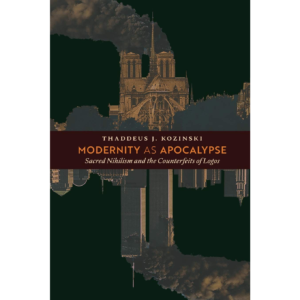
The loss of awe, the idolatry of partial thinking
Thaddeus J. Kozinski on reading modernity’s symptoms wisely (and wonder-fully)
The paradoxes of therapeutic culture
Stephen Gardner and Elisabeth Lasch-Quinn discuss Philip Reiff’s diagnosis of how psychology replaced the social roles of religion, morality, and custom, redefining the meaning of what is public. (39 minutes)

Confronting modernity through farming
Jesse Straight, who nurtures the life of Whiffletree Farm in Warrenton, Virginia, talks about how he decided to pursue a vocation as a farmer in an effort to discover a way of life that worked against the characteristic fragmentation so dispiriting in modern culture. (24 minutes)
“Death lies at the heart of modern medicine”
Dr. Kimbell Kornu, who teaches health care ethics and palliative medicine at St. Louis University, talks about why modern medicine can’t adequately explain health or suffering, even as doctors promote health and try to eliminate suffering. (28 minutes)
Is there a transcendent order of which we are a part?
Sociologist Zygmunt Bauman argues that the spirit of the (hyper) modern world is one of relentless disposability and of denial of a transcendent order to the cosmos. (36 minutes)
Deconstructing the Enlightenment
Peter Leithart discusses Johann Georg Hamann’s insights about the nature of language and his prophetic critique of the Enlightenment. (17 minutes)
Thomas Howard: “The ‘Moral Mythology’ of C. S. Lewis”
Thomas Howard describes C. S. Lewis’s fictional works in terms of a mythological re-presentation of the Christian and pre-modern moral and cosmic vision. (41 minutes)
James Matthew Wilson: “T. S. Eliot: Culture and Anarchy”
James Matthew Wilson examines T. S. Eliot’s cultural conservatism and religious conversion in light of his intellectual and familial influences. (79 minutes)
Mars Hill Audio Journal, Volume 143
FEATURED GUESTS:
Mark Regnerus, Jessica Hooten Wilson, John Henry Crosby, John F. Crosby, Wynand De Beer, and Sørina Higgins

Chesterton and Tolkien as theologians
Alison Milbank discusses how both Chesterton and Tolkien restore reason to fantasy and help us to see things as we were meant to see them. (20 minutes)
The mythic song of modernity
In his book Returning to Reality, philosopher Paul Tyson imagines a grand “Song of Modernity.” In it, he captures the triumphant sense of enlightenment characteristic of modern thought. Ken Myers summarizes some of the key themes in Tyson’s book. (17 minutes)
Robert W. Jenson: “How the World Lost Its Story”
Theologian Robert W. Jenson describes how a postmodern world is characterized by the loss of a conviction that we inhabit a “narratable world” that exists coherently outside of ourselves. (40 minutes)
Mars Hill Audio Journal, Volume 130
FEATURED GUESTS:
Jacob Silverman, Carson Holloway, Joseph Atkinson, Greg Peters, Antonio López, and Julian Johnson
Mars Hill Audio Journal, Volume 129
FEATURED GUESTS:
Nicholas Carr, Robert Pogue Harrison, R. J. Snell, Norman Wirzba, Philip Zaleski, Carol Zaleski, and Peter Phillips
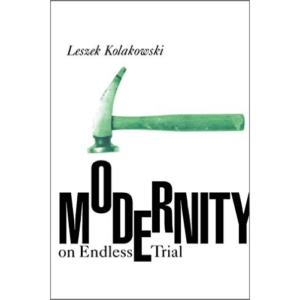
From Descartes to Nietzsche
Leszek Kolakowski on Cartesian rationality and modernity’s loss of meaning
