

The primacy of the Body of Christ

Modern fictional “heroes”

Humility and moral knowledge
“Only a real world can save us”
Oliver O’Donovan explores how the “religion” of modernity lacks a coherent world in which one may participate with full human agency and moral purpose. (Lecture 3 of 3; 61 minutes)
Christian unity and civil society
Oliver O’Donovan introduces listeners to Dutch lay theologian Hugo Grotius, arguing that the questions he tackled relate to perennial concerns about the relationship between divine and human agency, and between civil and ecclesiastical authority. (Lecture 2 of 3; 57 minutes)
The demoralizing effect of pagan Roman religion
Oliver O’Donovan examines St. Augustine’s critique of pagan Roman religion in Book II of his treatise City of God and asks his audience to consider what insights Augustine’s critique has for us today. (Lecture 1 of 3; 51 minutes)
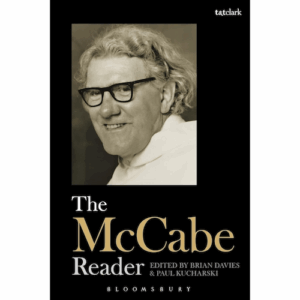
It takes a character (and a village)
Herbert McCabe, O.P. on the Aristotelian, Thomistic, and MacIntyrean account of the moral life

Manners and morals

Etiquette and ethics
In this essay, Judith Martin (a.k.a. Miss Manners) argues that etiquette is “civilization’s first necessity” and an indispensable societal virtue. (21 minutes)
Embodied knowledge
Courtesy as a theological issue
Mars Hill Audio Journal, Volume 63
FEATURED GUESTS: Charles M. Sennott, Nicholas Orme, J. Budziszewski, Albert Borgmann, James A. Herrick, Darrell Cole, and Jackson Lears

Mars Hill Audio Journal, Volume 57
FEATURED GUESTS: John Hare, Clifford Putney, Andrei S. Markovits, Wilmer Mills, Steve Bruce, Colleen Carroll, Michael Budde, and Robert Brimlow

Mars Hill Audio Journal, Volume 44
FEATURED GUESTS: James Davison Hunter, Brian C. Robertson, David Myers, Robert Frank, Gayle Brandow Samuels, Thomas Hine, Thomas Hibbs, and Robin Leaver
Manners and the Civil Society
Four essayists reflect on the relationship between manners and morals, and address the way in which the survival of a democratic society depends upon its citizens' respect for one another. (90 minutes)