Questioning “conservatives”
John Lukacs asserts that believers in unending technological ‘progress’ can’t really be conservatives.
Seeking control, in white magic and The Green Book
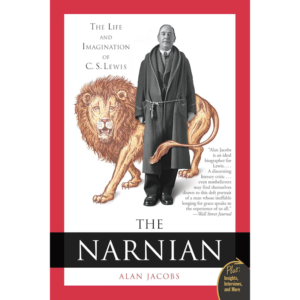
Alan Jacobs on C. S. Lewis’s critique of the modern pursuit of god-like control
Life, liberty, and the defense of dignity
In a 2003 interview, Leon Kass discussed his book Life, Liberty, and the Defense of Dignity: The Challenge for Bioethics. The unifying theme in the book’s essays is the threat of dehumanization in one form or another. (36 minutes)
The surrender of culture to technology

A.I., power, control, & knowledge
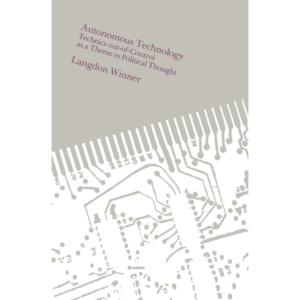
Ken Myers shares some paragraphs from Langdon Winner‘s seminal book, Autonomous Technology: Technics-out-of-Control as a Theme in Political Thought (1977) and from Roger Shattuck‘s Forbidden Knowledge: From Prometheus to Pornography (1996). An interview with Shattuck is also presented. (31 minutes)

Technology and social imaginaries
In this interview from 1999, cultural historian David Nye insists that societies have choices about how they use technologies, but that once choices are made and established, a definite momentum is established. (19 minutes)

Living into focus
As our lives are increasingly shaped by technologically defined ways of living, Arthur Boers discusses how we might choose focal practices that counter distraction and isolation. (32 minutes)
Albert Borgmann, R.I.P.
Albert Borgmann argues that, despite its promise to the contrary, technology fails to provide meaning, significance, and coherence to our lives. (47 minutes)
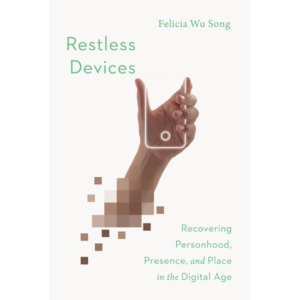

Mars Hill Audio Journal, Volume 154
FEATURED GUESTS:
Felicia Wu Song, Michael Ward, Norman Wirzba, Carl Trueman, D. C. Schindler, and Kerry McCarthy
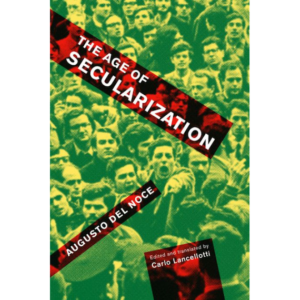
Art as aestheticism, love as eroticism, politics as totalitarianism
Augusto Del Noce on the “technological mindset” and the loss of the sense of transcendence
The consoling hum of technological society
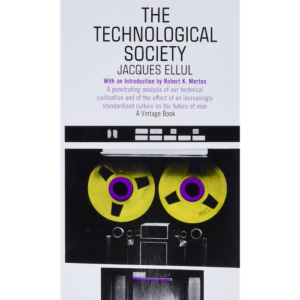
Jacques Ellul on the danger of confusing “technology” with “machines”

We are not Cybermen
Essayist L. M. Sacasas discusses some of the ideas of Ivan Illich, whose work has influenced Sacasas’s own understanding of the anti-human dynamics of technological society. (21 minutes)
What happens when the Machine stops?
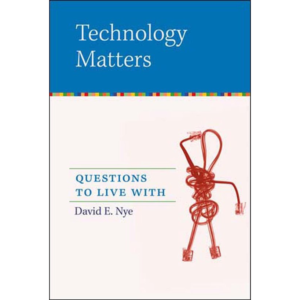
David E. Nye provides a context for evaluating the prospect of life in the Metaverse

Technological choices become culture
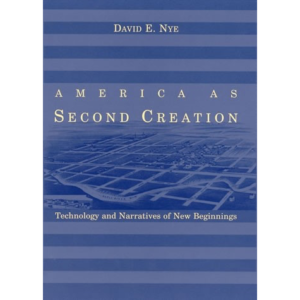
David E. Nye insists that societies do have choices about how they use technologies, but that once choices are made and established both politically and economically, a definite momentum is established. (19 minutes)

Technology as magic
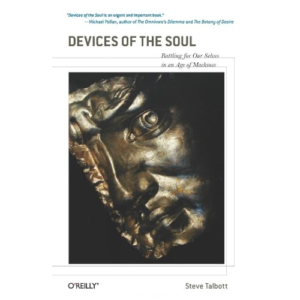
Richard Stivers describes how the hyperrationality of technological societies drives many people to lives guided by instinct, emotion, superstition, and fantasy. Also included in this Feature is an interview with David Gill, who summarizes some of the key ideas in the work of Jacques Ellul, a major influence in the writings of Stivers. (24 minutes)