PREVIEW
The player for this Journal volume is only available to current members or listeners with a legacy account. If you have an active membership, log in here. If you’d like to become a member — with access to all our audio programs — sign up here.
Guests heard on Volume 155
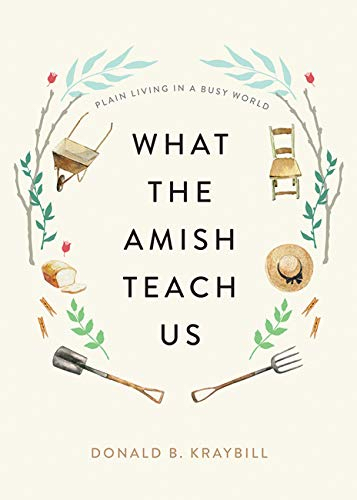
Donald Kraybill, author of What the Amish Teach Us: Plain Living in a Busy World, on how the Amish “negotiate” with modernity as communities by making decisions about the uses of technology
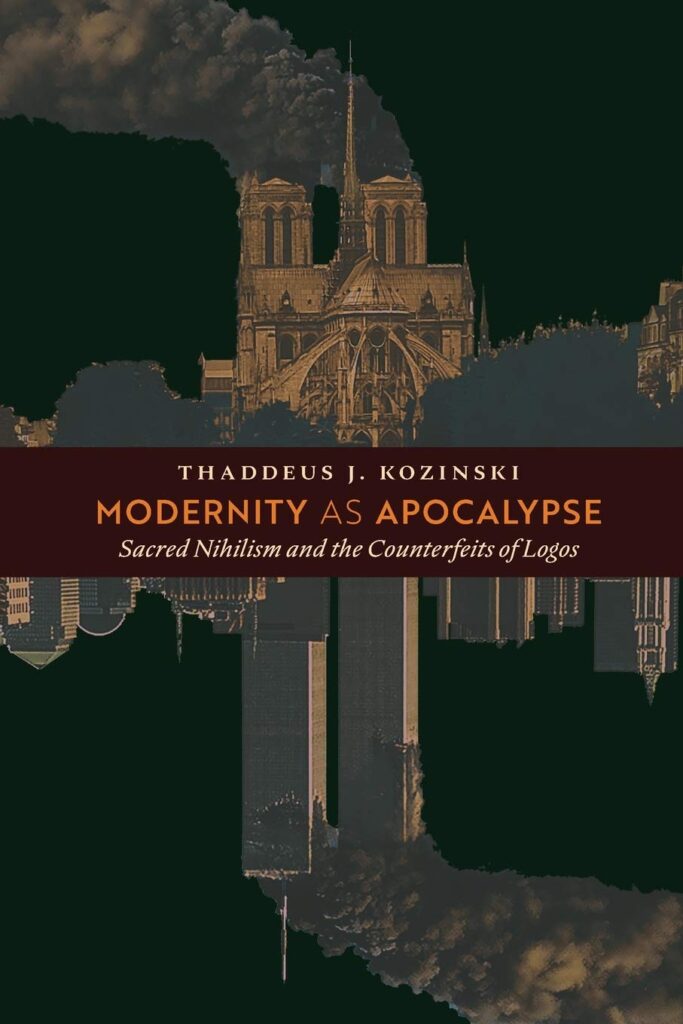
Thaddeus Kozinski, author of Modernity as Apocalypse: Sacred Nihilism and the Counterfeits of Logos, on the dubious claim within liberalism that public life can be well-ordered by entirely neutral (non-transcendent) principles
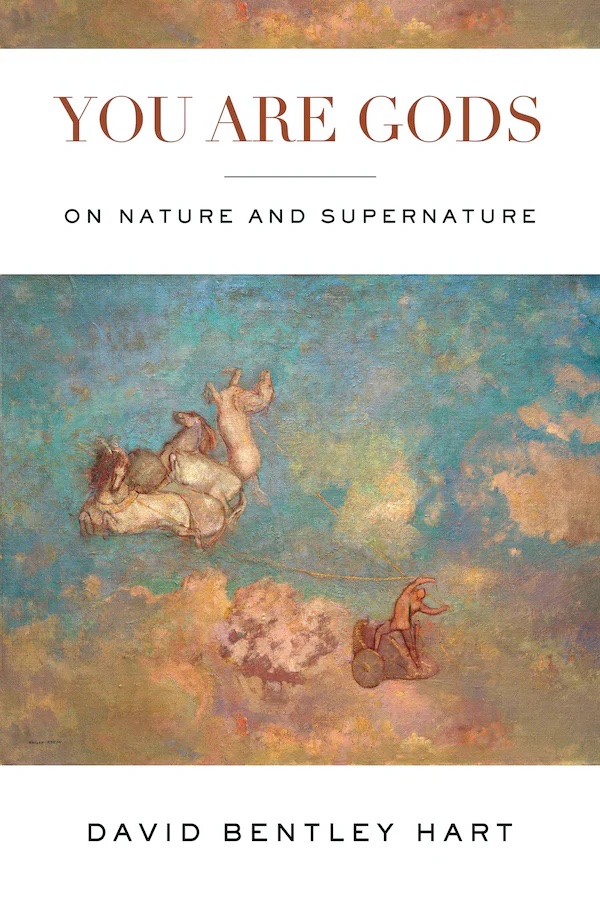
David Bentley Hart, author of You Are Gods: On Nature and Supernature, on how “two-tier Thomism” deviates from historic Christian understanding of the relationship between God and Creation (Archive Feature available)
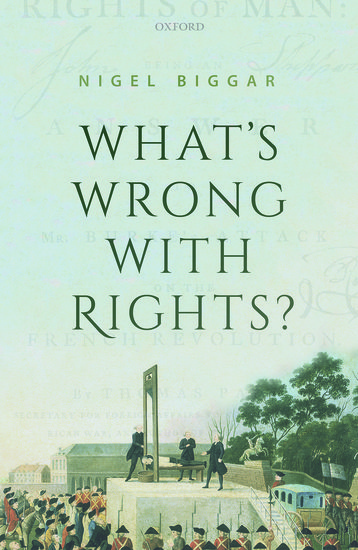
Nigel Biggar, author of What’s Wrong with Rights? on recognizing problems with the notion of “natural rights,” without denying the importance of rights understood as granted within social and political contexts
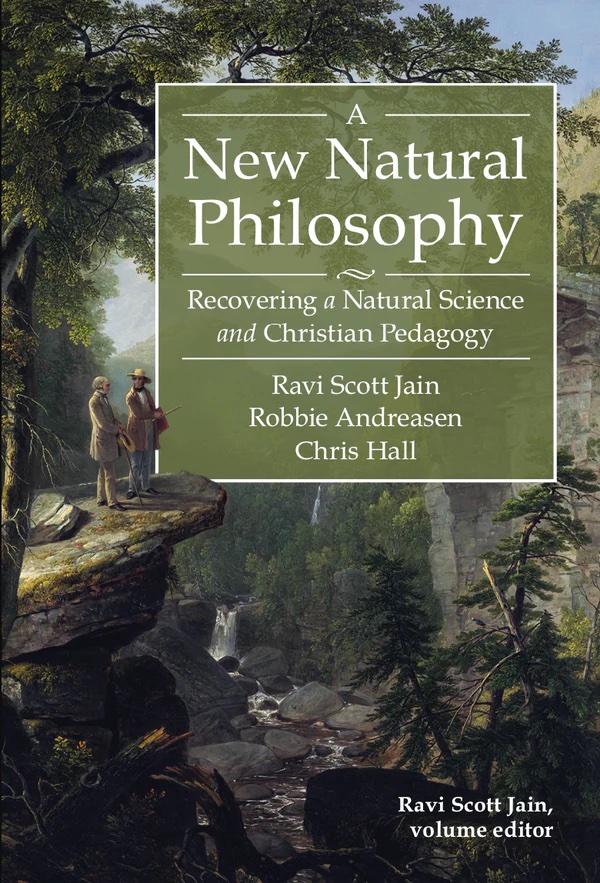
Ravi Scott Jain, co-author of A New Natural Philosophy: Recovering a Natural Science and Christian Pedagogy, on reconfiguring science and the teaching of science within the framework of natural philosophy, natural history, and natural science
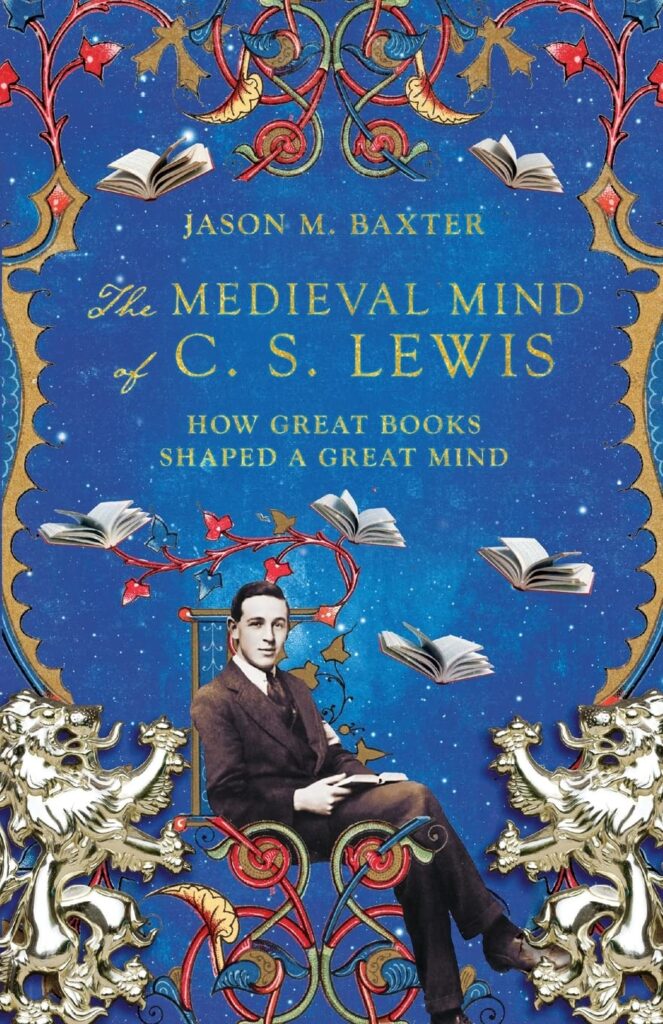
Jason Baxter, author of The Medieval Mind of C. S. Lewis: How Great Books Shaped a Great Mind, on how C. S. Lewis’s imagination was shaped by texts from the Middle Ages (Archive Feature available)
Related reading and listening
- The true places aren’t on any map — Clyde Kilby on C. S. Lewis’s claim that the Gospel is the greatest myth
- Savoring the taste of Reality — C. S. Lewis on the transporting, illuminating capacity of Myth
- When myth becomes fact — In this 1976 interview, Clyde Kilby (1902–1986) discusses C. S. Lewis’s critique of scientism and rationalism, his belief in the primacy of the imagination, and his mythic vision. (37 minutes)
- A great Reality at the core of things — Clyde Kilby on the nature and need for myths
- “A Myth Retold” — Literary critic Thomas Howard explains why he considers C. S. Lewis’s Till We Have Faces to be one of the author’s richest and most rewarding works. (18 minutes)
- Paradoxes of “nature” and “culture” — Robert Spaemann, on the destructive consequences of a merely naturalistic understanding of nature
- Christian culture and the myth of the secular — Ken Myers draws on T. S. Eliot to argue that Western civilization has broken down, not into a multiplicity of cultures, but into a “post-culture.” (47 minutes)
- How to make war on nothingness? — David Bentley Hart argues that if it rejects Christ, the only remaining option for a post-Christian culture is conscious or “narcotic” nihilism, which takes the form of absolute, meaningless volition. (66 minutes)
- The inward eye, cosmic truth, and making well — Andrew Kern takes his listeners along an “interlinear” reading of a portion of St. Augustine’s Confessions that explores the differences between how God makes and how we create. (38 minutes)
- “Investigations of divine works” — Greg Wilbur explains how closely connected music is to the order of the cosmos and how it even reveals attributes of God. (56 minutes)
- Cultural superiority and Medieval romance literature — FROM VOL. 164 Tiffany Schubert argues that Jane Austen’s novels subtly incorporate some medieval literary conventions in ways that enable modern readers to experience a sense of wonder, romance, and the benevolence of Providence. (30 minutes)
- Theology and the imagination — Jeffrey Barbeau explains what made C. S. Lewis an effective “translator” of theology for non-theologians. (21 minutes)
- Mars Hill Audio Journal, Volume 166 — FEATURED GUESTS: William Cavanaugh, Kent Burreson, Beth Hoeltke, Jeffrey Barbeau, Jason Baxter, John Betz, and Bruce Herman
- An icon of the whole world — Jason Baxter explains how Dante includes a panoply of characters and creatures in his Comedia, offering a prismatic view of all of Creation in its glory. (20 minutes)
- The soul’s awakening — FROM VOL. 145 Jason Baxter discusses the great psychological subtlety in Dante’s Divine Comedy. (20 minutes)
- How literature shaped Lewis — FROM VOL. 155 Jason Baxter explains how reading medieval literature enabled C. S. Lewis to become a “naturalized citizen of the Middle Ages.” (25 minutes)
- Technophiliac obsessions — FROM VOL. 141 Literary and media scholar Grant Wythoff talks about the “father of science fiction,” Hugo Gernsback. (26 minutes)
- The Heav’ns and All the Powers Therein — In this extended interview, Michael Ward makes a compelling case that the qualities attributed to the seven planets in the cosmology of antiquity and the Middle Ages are embodied in C. S. Lewis’s seven books about Narnia. (68 minutes)
- Mars Hill Audio Journal, Volume 165 — FEATURED GUESTS: Jeffrey Bilbro, Daniel McInerny, Joseph Minich, Carl Elliott, Nadya Williams, and Don W. King
- A mixed reception — FROM VOL. 162 Mark Noll discusses early critical reception of C. S. Lewis’s work in America. (29 minutes)
- “A man after reality” — FROM VOL. 30 Clyde Kilby discusses C. S. Lewis‘s critique of scientism and rationalism, and his belief in the primacy of the imagination. (15 minutes)
- Two versions of Shadowlands — FROM VOL. 10 Marjorie Mead examines two film portrayals of C. S. Lewis, noting which best captures Lewis’s jovial personality and the nuances of his faith. (4 minutes)
- The roots of “the indignant self-righteousness of protest” in modern politics — Alasdair MacIntyre on why unmasking nefarious motives became “one of the most characteristically modern of activities”
- Natural law as “performance” — FROM VOL. 124 R. J. Snell discusses how novel ideas about natural law focus less on moral propositions and concepts and more on the thrust for meaning and value. (27 minutes)
- Excluding cranks and dabblers — Drusilla Scott on Michael Polanyi’s insistence that the “community of science” required authority
- How discovery happens — Esther Lightcap Meek on Michael Polanyi’s account of scientific discovery
- Making contact with reality — FROM VOL. 139 Esther Lightcap Meek discusses the realism of philosopher and chemist Michael Polanyi. (23 minutes)
- Knowing the world through the body — FROM VOL. 76 Professor Martin X. Moleski explains why Michael Polanyi (1891-1976) left his career in science to become a philosopher. (16 minutes)
- Metaphysics and sub-creation — FROM VOL. 144 Jonathan McIntosh claims that scholarship has tended to ignore the depth of St. Thomas Aquinas’s influence on J. R. R. Tolkien’s work. (28 minutes)
- “The system will be first” — FROM VOL. 27 Robert Kanigel describes the transformation of work due to Frederick Winslow Taylor’s concept of scientific management. (11 minutes)
- Nature’s intelligibility — In this lecture, Christopher Blum argues that scientists need to regain a full appreciation of nature’s intelligibility, as they are apt to lose sight of reality due to the reductionism produced by their theories. (31 minutes)
- When philosophy loses its way — FROM VOL. 52 Ralph McInerny (1929–2010) speaks about themes from his 1999 Gifford Lectures, which relate how natural theology came to be regarded as pointless, resulting in a philosophical dead end.(24 minutes)
- “Prophet of holiness” — Timothy Larsen discusses a new edition of George MacDonald‘s Diary of An Old Soul, a slim book of poem-prayers to be read daily as a devotional aid. (30 minutes)
- Mars Hill Audio Journal, Volume 163 — FEATURED GUESTS: Andrew Youngblood, R. J. Snell, Nicholas Denysenko, Nigel Biggar, Robert McNamara, and David Cayley
- Aslan, the Christ-figure of Narnia — Alex Markos explores the transformational power of Aslan as the Christ figure in C. S. Lewis’s Chronicles of Narnia. (31 minutes)
- The recovery of true authority for societal flourishing — Michael Hanby addresses a confusion at the heart of our current cultural crisis: a conflation of the concepts of authority and power. (52 minutes)
- Mars Hill Audio Journal, Volume 162 — FEATURED GUESTS: Mark Noll, R. Jared Staudt, Paul Weston, William C. Hackett, Hans Boersma, and David Paul Baird
- Early evangelical response to C. S. Lewis — Historian Mark Noll discusses the reasons why American evangelicals were initially slow to warm to Lewis. (15 minutes)
- “A state of divine carelessness” — FROM VOL. 121
Daniel Gabelman attempts to correct the notion that George MacDonald prizes seriousness and sobriety. (20 minutes)
- Theological realism — Kevin J. Vanhoozer discusses theologian T. F. Torrance’s understanding of the positive relation between science and theology. (52 minutes)
- Christopher Hitchens vs. G. K. Chesterton — Ralph Wood compares Christopher Hitchens‘s view of the cosmos with that of G. K. Chesterton, arguing that Chesterton succeeded where Hitchens failed. (44 minutes)
- What does it mean to be a creature? — Canon-theologian Simon Oliver explains how and why the doctrine of Creation is cardinal and must frame all theology. (62 minutes)
- The ecstasy of the act of knowing — Theologian Paul Griffiths situates our creaturely knowing within the framework of the relation between God and Creation
- On wonder, wisdom, worship, and work — Classical educator Ravi Jain dives deeply into the nature, purpose, and interconnectedness of the liberal, common, and fine arts. (43 minutes)
- “Reading Lewis with blinders on” — Chris Armstrong explains how C. S. Lewis’s work is grounded deeply in the Christian humanist tradition. (45 minutes)
- On The Abolition of Man — FROM VOL. 154 Michael Ward explains why The Abolition of Man is one of Lewis’s most important but also most difficult books. (36 minutes)
- Seeking control, in white magic and The Green Book — Alan Jacobs on C. S. Lewis’s critique of the modern pursuit of god-like control
- Education, reason, and the Good — Justin Buckley Dyer and Micah J. Watson on C. S. Lewis’s argument about natural law
- Orienting reason and passions — In an essay titled “The Abolition of Mania” (Modern Age, Spring 2022), Michael Ward applies C. S. Lewis’s insights to the polarization that afflicts modern societies. (16 minutes)
- Faith and unbelief — FROM VOL. 98 This Archive Feature revisits two conversations, one with Roger Lundin and one with David Bentley Hart, on what makes Christian belief so implausible to non-believers. (39 minutes)