PREVIEW
The player for this Journal volume is only available to current members or listeners with a legacy account. If you have an active membership, log in here. If you’d like to become a member — with access to all our audio programs — sign up here.
Guests heard on Volume 154

Felicia Wu Song, author of Restless Devices: Recovering Personhood, Presence, and Place in the Digital Age, on how social media promote “networked individualism” and establish market-driven notions of authority
Michael Ward, author of After Humanity: A Guide to C. S. Lewis’s The Abolition of Man, on the historical background of and the central ideas in C. S. Lewis’s The Abolition of Man (Archive Feature available)
Norman Wirzba, author of This Sacred Life: Humanity’s Place in a Wounded World, on why we need to think more deeply about what Creation means and about the consequences of recognizing the presence of Christ — the Logos — in all of Creation
Carl Trueman, author of The Rise and Triumph of the Modern Self: Cultural Amnesia, Expressive Individualism, and the Road to Sexual Revolution, on the long-developing social trends that gave rise to new understandings of the self, and to new claims about human sexuality
D. C. Schindler, author of The Politics of the Real: The Church Between Liberalism and Integralism, on how liberalism — especially in its boundaries between “private” and “public” — allows for less freedom than it pretends (Archive Feature available)
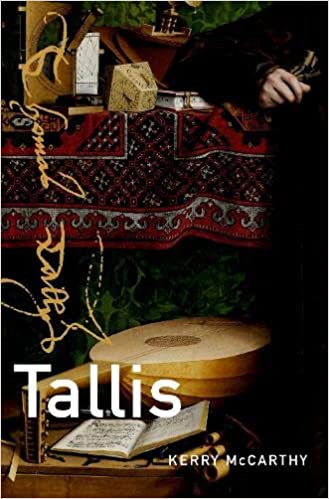
Kerry McCarthy, Tallis, on the life and accomplishments of Tudor-era composer Thomas Tallis
Related reading and listening
- The true places aren’t on any map — Clyde Kilby on C. S. Lewis’s claim that the Gospel is the greatest myth
- Savoring the taste of Reality — C. S. Lewis on the transporting, illuminating capacity of Myth
- When myth becomes fact — In this 1976 interview, Clyde Kilby (1902–1986) discusses C. S. Lewis’s critique of scientism and rationalism, his belief in the primacy of the imagination, and his mythic vision. (37 minutes)
- A great Reality at the core of things — Clyde Kilby on the nature and need for myths
- “A Myth Retold” — Literary critic Thomas Howard explains why he considers C. S. Lewis’s Till We Have Faces to be one of the author’s richest and most rewarding works. (18 minutes)
- The destructive perils of speech without a real partner — Josef Pieper and Marc Barnes on how chatbots pervert the nature of conversation
- Machines and misanthropy — Nicholas Carr on how technology has transformed our understanding of progress (and people)
- Alienation and autoamputation: the price of power — Nicholas Carr on the numbing effect of technology
- Disengagement from the world — Nicholas Carr encourages us to consider how automation technologies impact our ability to engage with the world and whether — like a good tool — they present a more inviting world or close us off from that world. (30 minutes)
- War and loving our enemy-neighbor — Oliver O’Donovan on evaluating the conduct of war in light of the evangelical command of love
- Rose without thorns — Ken Myers introduces various settings of “Ther is no rose of swych vertu,” a medieval carol that uses imagery of a rosebush to describe the Virgin Mary. (29 minutes)
- The cost of “killing” God — In this October 2023 lecture, Carl Trueman explores the concept of “desecration” as a frame for understanding the nature of modernity in our time. (42 minutes)
- “Investigations of divine works” — Greg Wilbur explains how closely connected music is to the order of the cosmos and how it even reveals attributes of God. (56 minutes)
- To be at home in the world — D. C. Schindler examines how rituals enable us to experience time in a meaningful way — how they actually make time habitable for us. (41 minutes)
- The experience of a “real presence” in sacred music — FROM VOL. 126 Jonathan Arnold explores why people of no religious commitment pay money to hear specifically sacred music. (22 minutes)
- How music blesses and teaches — FROM VOL. 64 Theologian and musician Jeremy Begbie explores what we learn about time, theology, and the structure of Creation from the experience of music. (28 minutes)
- Theology and the imagination — Jeffrey Barbeau explains what made C. S. Lewis an effective “translator” of theology for non-theologians. (21 minutes)
- Mars Hill Audio Journal, Volume 166 — FEATURED GUESTS: William Cavanaugh, Kent Burreson, Beth Hoeltke, Jeffrey Barbeau, Jason Baxter, John Betz, and Bruce Herman
- How literature shaped Lewis — FROM VOL. 155 Jason Baxter explains how reading medieval literature enabled C. S. Lewis to become a “naturalized citizen of the Middle Ages.” (25 minutes)
- Life more abundantly — Jeanne Schindler advocates for a return to an understanding and prioritizing of sensory experience — real engagement with the real world — as foundational to learning and living. (35 minutes)
- Technophiliac obsessions — FROM VOL. 141 Literary and media scholar Grant Wythoff talks about the “father of science fiction,” Hugo Gernsback. (26 minutes)
- The Heav’ns and All the Powers Therein — In this extended interview, Michael Ward makes a compelling case that the qualities attributed to the seven planets in the cosmology of antiquity and the Middle Ages are embodied in C. S. Lewis’s seven books about Narnia. (68 minutes)
- The founding of a choral ensemble — FROM VOL. 119 Founder Peter Phillips recounts the history of his choral ensemble The Tallis Scholars. (23 minutes)
- A beautiful human geometry — Musicologist Leopold Brauneiss compares Arvo Pärt’s compositional technique with Jungian archetypes
- A bridge between yesterday and today — Composer Arvo Pärt describes how he came to appropriate the mysteries of polyphony
- From the heart of silence — Conductor Paul Hillier on the sources of Arvo Pärt’s distinctive musical expression
- Prayer and complexity in Arvo Pärt’s music — In honor of Estonian composer Arvo Pärt’s 90th birthday, Ken Myers talks with Peter Bouteneff, about the singular qualities of Pärt’s music. (19 minutes)
- How to illustrate music and mystery — FROM VOL. 164 Illustrator Joonas Sildre discusses his graphic biography of Estonian composer Arvo Pärt. (19 minutes)
- Utopian dreams and cynicism — John Durham Peters discusses the history of the idea of communication, saying that our hopes are too high when we believe that the solution to social discord is just better communication. (49 minutes)
- Thinking Together — Alan Jacobs discusses some principles he’s compiled to help us think well (and charitably) in our cultural context, and he warns us to be attentive to the ways technology displaces previously fixed communities. (53 minutes)
- Man as “both mystic and hobbit” — D. C. Schindler explores how building is a quintessential human activity and an expression of our view of the meaning of reality. (47 minutes)
- What adolescence misses — FROM VOL. 94 Mark Bauerlein talks about the ways of learning and living practiced by contemporary youth, how they impact the acquisition and use of knowledge and form intellectual habits, and what this means for the future of our society. (16 minutes)
- Helping boys become virtuous men — Teacher and chaplain Mark Perkins describes forms of formation that take the body seriously 50 minutes
- The temptations of talismanic technologies — Jeffrey Bilbro on the persistence of techno-utopianism
- Mars Hill Audio Journal, Volume 165 — FEATURED GUESTS: Jeffrey Bilbro, Daniel McInerny, Joseph Minich, Carl Elliott, Nadya Williams, and Don W. King
- Living in a tool-i-fied world — Joseph Minich on how the ubiquity of technology makes atheism entirely plausible
- The amplification of distraction — FROM VOL. 152 Jeffrey Bilbro advocates a Christian posture toward our contemporary digital media ecosystem that addresses its disorienting and disintegrating effects. (23 minutes)
- Clips from five extended interviews — We are pleased to share clips from five interviews that we’ve recently produced as full-length Conversations. (30 minutes)
- Breaking out of the immanent frame — Norman Wirzba on the true character of Creation and of our creatureliness
- In the Image of Our Devices — Nicholas Carr considers how automation technologies impact our ability to engage with the world. (66 minutes)
- Good News for All Creation — Theologian Norman Wirzba helps us rethink the category of nature in terms of the Christian doctrine of creation. (66 minutes)
- What is beyond our choosing? — D. C. Schindler on our nihilistic quest for freedom
- “The search for shared ends” — Oliver O’Donovan examines whether and to what extent there might be the possibility of a unifying Christian perspective on political doctrine or policy. (59 minutes)
- Thinking coherently about politics — Ken Myers gives an introduction to political theologian Oliver O’Donovan, whose work has been instrumental in teaching many how to think about social and political life in light of the gospel of Christ. (57 minutes)
- A mixed reception — FROM VOL. 162 Mark Noll discusses early critical reception of C. S. Lewis’s work in America. (29 minutes)
- “A man after reality” — FROM VOL. 30 Clyde Kilby discusses C. S. Lewis‘s critique of scientism and rationalism, and his belief in the primacy of the imagination. (15 minutes)
- Two versions of Shadowlands — FROM VOL. 10 Marjorie Mead examines two film portrayals of C. S. Lewis, noting which best captures Lewis’s jovial personality and the nuances of his faith. (4 minutes)
- Christian unity and civil society — Oliver O’Donovan introduces listeners to Dutch lay theologian Hugo Grotius, arguing that the questions he tackled relate to perennial concerns about the relationship between divine and human agency, and between civil and ecclesiastical authority. (Lecture 2 of 3; 57 minutes)
- The recovery of an integrated ecology — In this essay, Michael Hanby unpacks the summons of Laudato si’ to an ecological way of life based on a proper understanding of creation in its fullness and integrity. (57 minutes)
- A more robust account of political life — FROM VOL. 138 John Milbank and Adrian Pabst on why politics needs to recognize the human soul in its depth (and what happens when it doesn’t). (51 minutes)