PREVIEW
The player for this Journal volume is only available to current members or listeners with a legacy account. If you have an active membership, log in here. If you’d like to become a member — with access to all our audio programs — sign up here.
Guests heard on Volume 148
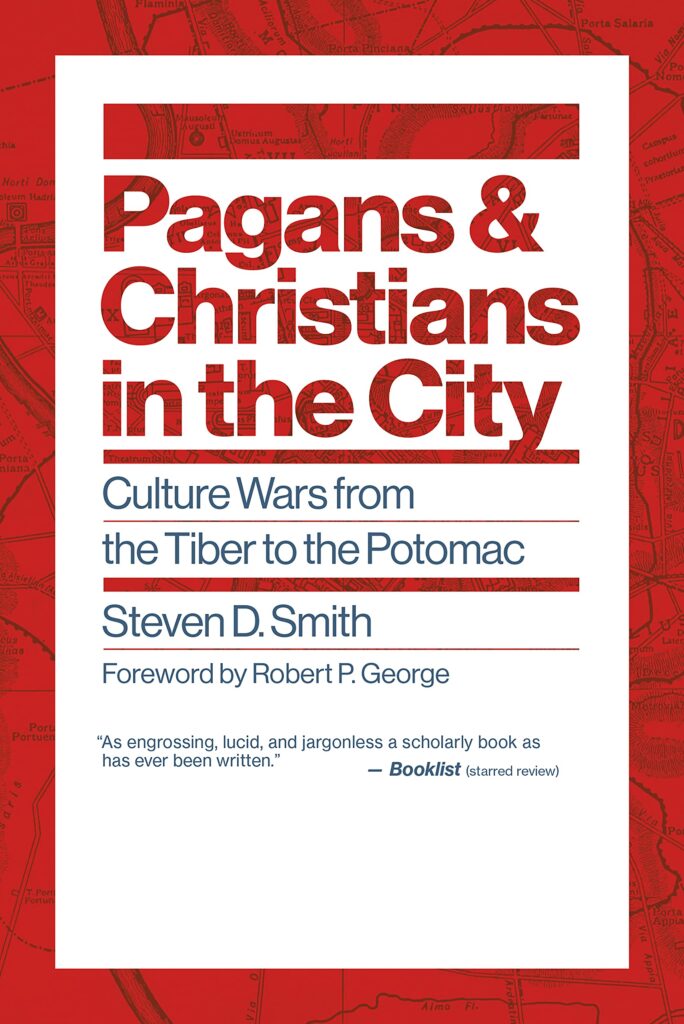
Steven D. Smith, author of Pagans and Christians in the City: Culture Wars from the Tiber to the Potomac, on how a modern “religion without God” characterizes what alleges to be secular neutrality
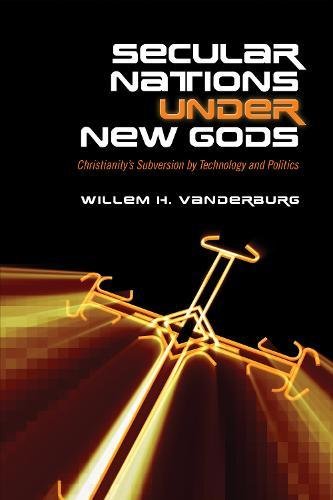
Willem Vanderburg, author of Secular Nations Under New Gods: Christianity’s Subversion by Technology and Politics, on the costs of forgetting the unity and interdependence of Creation
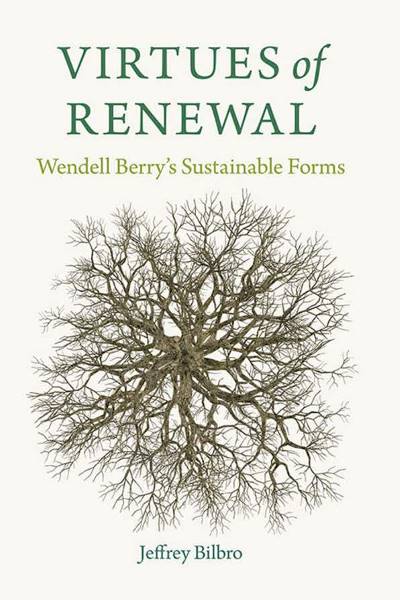
Jeffrey Bilbro, author of Virtues of Renewal: Wendell Berry’s Sustainable Forms, on lessons from Wendell Berry’s poetry, fiction, and essays about the virtues that characterize people who foster sustainable cultures
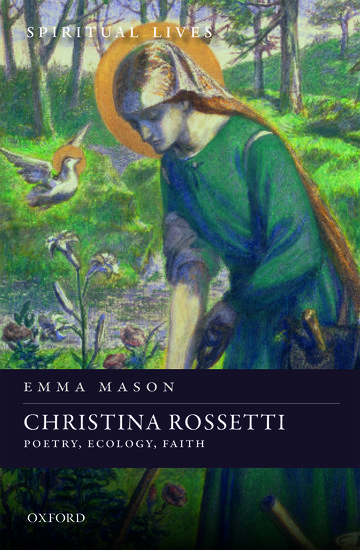
Emma Mason, author of Christina Rossetti: Poetry, Ecology, Faith, on the theological concerns evident in the poetry of Christina Rossetti
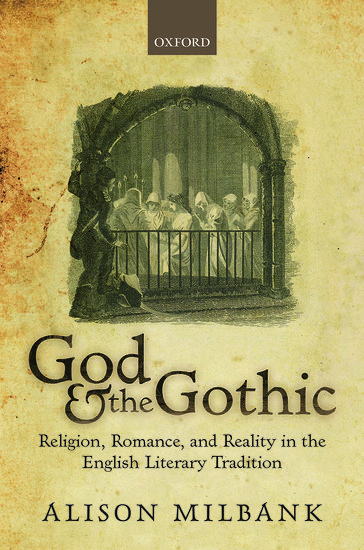
Alison Milbank, author of God and the Gothic: Religion, Romance, and Reality in the English Literary Tradition, on how the Gothic literary genre in England expressed ambivalence about the effects of the Reformation
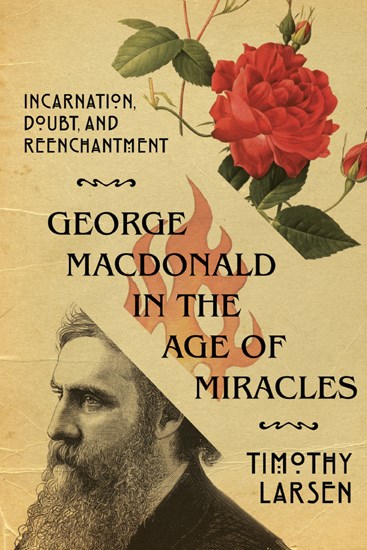
Timothy Larsen, author of George MacDonald in the Age of Miracles: Incarnation, Doubt, and Reenchantment, on George MacDonald and Victorian earnestness about faith and anxieties about doubt (Archive Feature available)
Related reading and listening
- The destructive perils of speech without a real partner — Josef Pieper and Marc Barnes on how chatbots pervert the nature of conversation
- Machines and misanthropy — Nicholas Carr on how technology has transformed our understanding of progress (and people)
- Alienation and autoamputation: the price of power — Nicholas Carr on the numbing effect of technology
- Disengagement from the world — Nicholas Carr encourages us to consider how automation technologies impact our ability to engage with the world and whether — like a good tool — they present a more inviting world or close us off from that world. (30 minutes)
- Life more abundantly — Jeanne Schindler advocates for a return to an understanding and prioritizing of sensory experience — real engagement with the real world — as foundational to learning and living. (35 minutes)
- Technophiliac obsessions — FROM VOL. 141 Literary and media scholar Grant Wythoff talks about the “father of science fiction,” Hugo Gernsback. (26 minutes)
- A false dichotomy — In this conversation from 2009, Dallas Willard (1934–2013) discusses the truth of spiritual knowledge and its epistemological validity. (63 minutes)
- Utopian dreams and cynicism — John Durham Peters discusses the history of the idea of communication, saying that our hopes are too high when we believe that the solution to social discord is just better communication. (49 minutes)
- The establishment of nonbelief — FROM VOL. 10 George Marsden explains how and why American universities became places where religious concerns are excluded. (10 minutes)
- What adolescence misses — FROM VOL. 94 Mark Bauerlein talks about the ways of learning and living practiced by contemporary youth, how they impact the acquisition and use of knowledge and form intellectual habits, and what this means for the future of our society. (16 minutes)
- Helping boys become virtuous men — Teacher and chaplain Mark Perkins describes forms of formation that take the body seriously 50 minutes
- Introducing Volume 165 — Ken Myers introduces listeners to Volume 165 of the Journal with short segments from each interview. (32 minutes)
- The temptations of talismanic technologies — Jeffrey Bilbro on the persistence of techno-utopianism
- Mars Hill Audio Journal, Volume 165 — FEATURED GUESTS: Jeffrey Bilbro, Daniel McInerny, Joseph Minich, Carl Elliott, Nadya Williams, and Don W. King
- Living in a tool-i-fied world — Joseph Minich on how the ubiquity of technology makes atheism entirely plausible
- The amplification of distraction — FROM VOL. 152 Jeffrey Bilbro advocates a Christian posture toward our contemporary digital media ecosystem that addresses its disorienting and disintegrating effects. (23 minutes)
- The reciprocity of all things — FROM VOL. 148 Jeffrey Bilbro explores the importance of sustainability through the essays, poetry and fiction of Wendell Berry. (13 minutes)
- What are students for? — FROM VOL. 140 Drawing from Wendell Berry’s works, Jack Baker and Jeffrey Bilbro discuss a vision of higher education that respects a multidimensional notion of place. (23 minutes)
- In the Image of Our Devices — Nicholas Carr considers how automation technologies impact our ability to engage with the world. (66 minutes)
- Nervousness about the shape of religion in America — Thomas Albert Howard discusses European perspectives of eighteenth-century American religious life. (21 minutes)
- Christian unity and civil society — Oliver O’Donovan introduces listeners to Dutch lay theologian Hugo Grotius, arguing that the questions he tackled relate to perennial concerns about the relationship between divine and human agency, and between civil and ecclesiastical authority. (Lecture 2 of 3; 57 minutes)
- The demoralizing effect of pagan Roman religion — Oliver O’Donovan examines St. Augustine’s critique of pagan Roman religion in Book II of his treatise City of God and asks his audience to consider what insights Augustine’s critique has for us today. (Lecture 1 of 3; 51 minutes)
- The recovery of an integrated ecology — In this essay, Michael Hanby unpacks the summons of Laudato si’ to an ecological way of life based on a proper understanding of creation in its fullness and integrity. (57 minutes)
- Poetry and Liturgy — Karen Dieleman explores the influence of liturgical practices on shaping the imaginations and poetry of Elizabeth Barrett Browning, Christina Rossetti, and Adelaide Proctor. (49 minutes)
- The downward spiral of all technocracies — Andrew Willard Jones explains the two paths that exist with the development of new technologies: one which leads to an expansion of the humane world and one which exploits and truncates both Creation and humanity. (65 minutes)
- How social media truncates relationships — In this lecture, Felicia Wu Song explains how social media industrializes and monetizes our relationships, forming us in modes of relationships and identity that are detrimental to ourselves and to society. (41 minutes)
- Cultures of chance, cultures of control — Historian Jackson Lears explains how gambling springs from a longing for an experience of “unbidden beneficence,” a repudiation of the idea of control that marks modernity. (49 minutes)
- In technology, we live and move and have our knowing — George Parkin Grant on technology’s establishment of a framework for thinking about technology
- On the Degeneration of Attentiveness — Critic Nicholas Carr talks about how technology-driven trends affect our cultural and personal lives. (56 minutes)
- Gratitude, vitalism, and the timid rationalist — In this lecture, Matthew Crawford draws a distinction between an orientation toward receiving life as gift and a timid and cramped rationalism that views man as an object to be synthetically remade. (52 minutes)
- Humans as biological hardware — In this essay, Brad Littlejohn and Clare Morell decry how modern technology tends to hack the human person in pursuit of profit. (55 minutes)
- “The system will be first” — FROM VOL. 27 Robert Kanigel describes the transformation of work due to Frederick Winslow Taylor’s concept of scientific management. (11 minutes)
- Choices about the uses of technology — This Feature presents interviews with David Nye and Brian Brock related to how we evaluate adoption of new technology and how technology influences our thinking. (31 minutes)
- What it means to be a person — FROM VOL. 147 Sociologist Craig Gay argues that in order to address the challenges of a technological approach to the world, we need to recover the Christian tradition’s robust theology of personhood. (24 minutes)
- The problem with dynamism without direction — Paulina Borsook on the biological paradigm of technolibertarianism’s love of spontaneous dynamism, whatever the costs
- The libertarian spawning-ground of tech bros — Paulina Borsook on high tech’s long-standing animosity toward government and regulation
- Tech bros and public power — Paulina Borsook discusses the “bizarrely narcissistic” and ultra-libertarian culture of Silicon Valley. (22 minutes)
- Voluntarily silencing ourselves — FROM VOL. 39 John L. Locke discusses the value of personal communication and how technology is displacing it. (12 minutes)
- Souls in cyberspace — FROM VOL. 25 Douglas Groothuis examines the worldview and mythology behind the creation and marketing of the Internet. (13 minutes)
- Life in a frictionless, synthetic world — FROM VOL. 17 Mark Slouka explores the worldview of techno-visionaries who aim to create a new era of human evolution. (11 minutes)
- The digital revolution and community — FROM VOL. 7 Ken Myers talks with Jane Metcalfe, the founder of WIRED Magazine, about technology and community. (8 minutes)
- Metaphysical impulses beneath techno-utopianism — FROM VOL. 38 Erik Davis describes his research on how humans’ fascination with technology is permeated with “mythic energy” and gnostic aspirations. (11 minutes)
- Post-Christian America and the “unlimited technological future” — George Parkin Grant on technology and the Puritan legacy of “unflinching wills”
- Education that counters alienation — In this lecture, Jeanne Schindler explores how digital technologies warp not only education but our experience of being human. (30 minutes)
- A prophetic “wake-up call” — In this 2024 lecture honoring the bicentennial of George MacDonald’s birth, Malcolm Guite explores MacDonald’s power to awaken readers’ spirits and effect in them a change of consciousness. (59 minutes)
- “You love the man at once” — Marianne Wright on the generosity and geniality of George MacDonald
- Perceiving truths that dazzle gradually — Rolland Hein on lessons from George MacDonald about the imagination as a spiritual faculty
- We wonder as they wander — Daniel Gabelman on the spiritual geography of George MacDonald’s fairyland
- Foolishness, gravity, and the Church — In this essay, Albert L. Shepherd V explains why George MacDonald’s story “The Light Princess” is meant for “all who are childlike in faith and imagination.” (8 minutes)
- Victorian ideas about belief and doubt — FROM VOL. 148 Timothy Larsen situates George MacDonald within a Victorian understanding of faith and doubt. (17 minutes)