PREVIEW
Guests heard on Volume 162

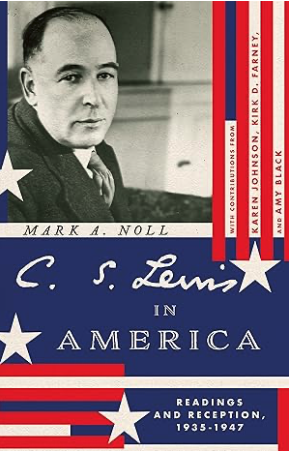
Mark Noll, author of C.S. Lewis in America: Readings and Reception, 1935–1947, on early critical reception of C. S. Lewis’s work (Archive Feature available)
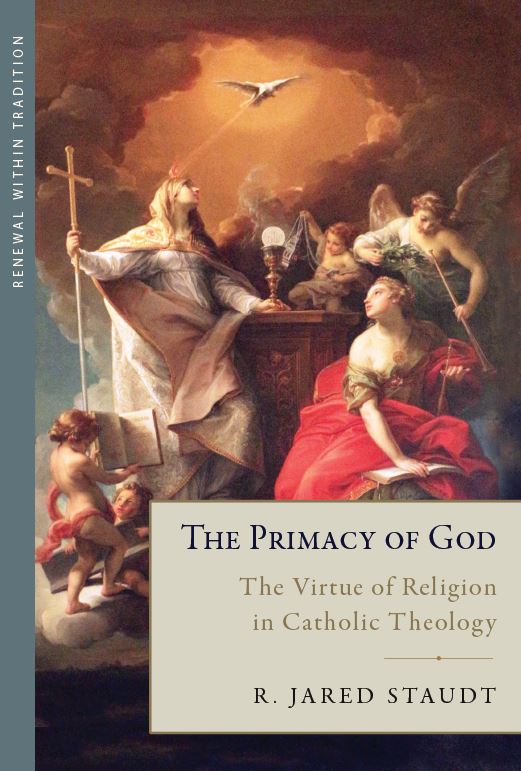
R. Jared Staudt, author of The Primacy of God: The Virtue of Religion in Catholic Theology, on religion as the chief moral virtue
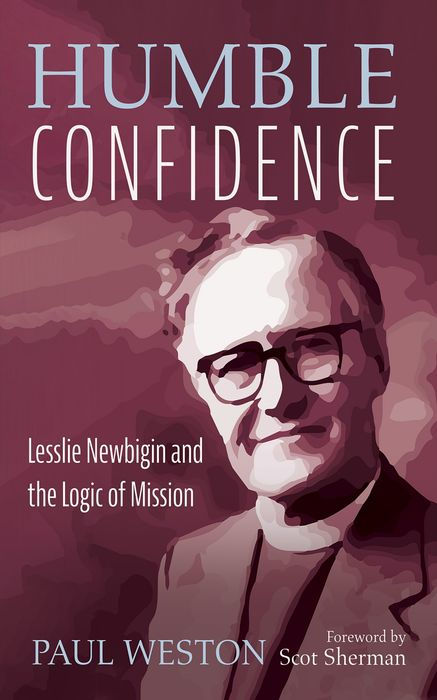
Paul Weston, author of Humble Confidence: Lesslie Newbigin and the Logic of Mission, on Newbigin’s belief in “the Gospel as public truth”
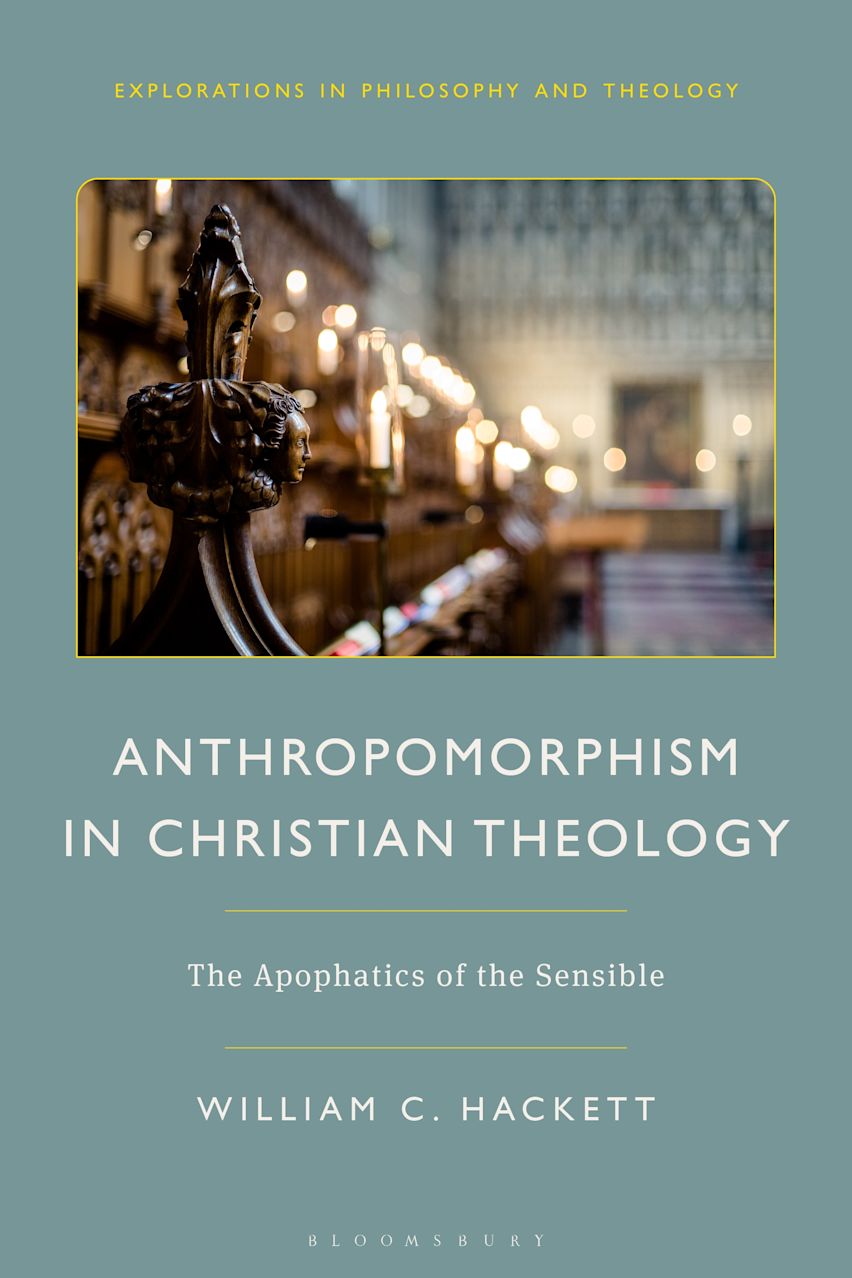
William C. Hackett, author of Anthropomorphism in Christian Theology: The Apophatics of the Sensible, on the interrelation of logos and mythos
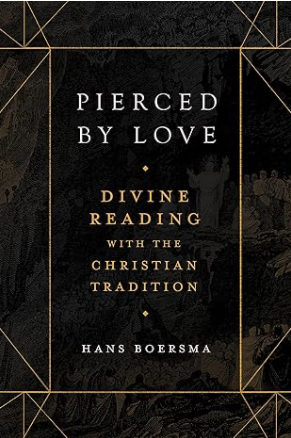
Hans Boersma, author of Pierced by Love: Divine Reading with the Christian Tradition, on how to read Scripture
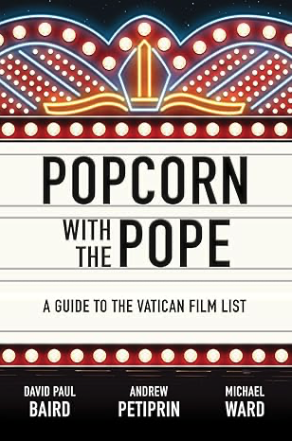
David Paul Baird, co-author (with Andrew Petiprin and Michael Ward) of Popcorn with the Pope: A Guide to the Vatican Film List, on the Vatican’s list of recommended films
Related reading and listening
- Layers in “Logos” — Peter Kreeft on the metaphysical, psychological, and linguistic referents of logos
- Creation, in harmony with the Logos — Rowan Williams on the Logos and the diverse logoi that mirror it
- We are not “stochastic parrots” — In this essay, Talbot Brewer argues that our understanding of the nature of words and their relationship to human nature is “teetering” due to artificial intelligence chatbot systems and large language models (LLMs). (42 minutes)
- The popularity of C. S. Lewis’s Mere Christianity —
FROM VOL. 133 Historian George Marsden discusses the birth and influential life of C. S. Lewis’s book Mere Christianity. (26 minutes) - Truth lives in language — Craig Gay reflects on how language is not merely a tool for humans to use, but is a part of our very being as creatures made in the image of the God who is the living Word. (52 minutes)
- Turning Petrarchan love poetry on its head — Dr. Benedict Whalen examines the influence of Petrarchan love poetry on Europe, and he reveals through a close read of Romeo and Juliet how Shakespeare subverted key features of Petrarch’s love poems to rich effect. (54 minutes)
- Human beings as “word-bearers” — In this lecture, D. C. Schindler argues that misology — hatred for reason and contempt for language — is a deep cause of our current cultural crisis. (56 minutes)
- The desire for truth — In this article, Romanus Cessario, O.P., recounts the life, theology, and influence of St. Thomas Aquinas (1224/5–1274). (38 minutes)
- Seeking to know “how truth herself stands” — Arvin Vos on how appreciating the fruitfulness of Aquinas’s work requires a recognition of his method
- A brief for “prophetic Thomism” — David Decosimo on assuming a charitable posture toward pagan virtue
- The collaboration of bodies and minds — F. C. Copleston on Aquinas’s confidence in the embodied nature of knowledge
- St. Thomas the anthropologist — G. K. Chesterton on Aquinas’s complete Science of Man
- Discipline and piety — Bishop Robert Barron on Aquinas, the man
- The true places aren’t on any map — Clyde Kilby on C. S. Lewis’s claim that the Gospel is the greatest myth
- Knowing and living our metaphysical totality — Clyde Kilby on the power of myth to bring together “the slender hints of the knowable”
- Savoring the taste of Reality — C. S. Lewis on the transporting, illuminating capacity of Myth
- When myth becomes fact — In this 1976 interview, Clyde Kilby (1902–1986) discusses C. S. Lewis’s critique of scientism and rationalism, his belief in the primacy of the imagination, and his mythic vision. (37 minutes)
- A great Reality at the core of things — Clyde Kilby on the nature and need for myths
- “A Myth Retold” — Literary critic Thomas Howard explains why he considers C. S. Lewis’s Till We Have Faces to be one of the author’s richest and most rewarding works. (18 minutes)
- A sampling of newly published lectures — Ken Myers introduces listeners to four recently released lectures, courtesy of our Partners. The lecturers are Jennifer Frey, Gary Saul Morson, N. T. Wright, and Andrew Kern. (27 minutes)
- The just war tradition and whole-life discipleship — Daniel M. Bell, Jr. discusses the just war tradition, a tradition which is often invoked by figures who, upon closer inspection, tend to lack a robust understanding of its history and criteria. (57 minutes)
- Silence at the end of history — Alan Jacobs examines several literary imaginings of “the last days” and argues that such narration is profoundly inadequate and perhaps even presumptuous. (51 minutes)
- A letter from Ken Myers — Ken Myers examines the cultural implications of the Incarnation and the deep-seated dualism of modernity that divorces spirituality from our material experience. (22 minutes)
- Theology and the imagination — Jeffrey Barbeau explains what made C. S. Lewis an effective “translator” of theology for non-theologians. (21 minutes)
- Mars Hill Audio Journal, Volume 166 — FEATURED GUESTS: William Cavanaugh, Kent Burreson, Beth Hoeltke, Jeffrey Barbeau, Jason Baxter, John Betz, and Bruce Herman
- Moral reasoning and human flourishing — Tim McIntosh describes moral philosopher Alasdair MacIntyre’s intellectual conversion to a synthesis of Aristotelian ethics and Christianity, best embodied in Thomism. (44 minutes)
- How literature shaped Lewis —
FROM VOL. 155 Jason Baxter explains how reading medieval literature enabled C. S. Lewis to become a “naturalized citizen of the Middle Ages.” (25 minutes) - Films that lead to contemplation —
FROM VOL. 162 David Paul Baird discusses some of the films on the Vatican’s list of recommended films. (25 minutes) - Mystery novels with theological concerns — In these interviews from 1993, mystery author P. D. James speaks about the philosophical and theological issues woven into her novels, and Alan Jacobs discusses James’s novel The Children of Men. (23 minutes)
- The Heav’ns and All the Powers Therein — In this extended interview, Michael Ward makes a compelling case that the qualities attributed to the seven planets in the cosmology of antiquity and the Middle Ages are embodied in C. S. Lewis’s seven books about Narnia. (68 minutes)
- Heaven and earth are full of His glory — Gerald R. McDermott examines the typological tradition of the Church, particularly through Jonathan Edwards’s thought, and he argues for a recovery of the Christian understanding of the universe as an “immense Trinitarian symbol.” (61 minutes)
- Sacred and Profane Love: Graham Greene and the Catholic Imagination — Katy Carl discusses novelist Graham Greene’s fiction and spiritual struggles in light of the concept of the Catholic imagination. (49 minutes)
- How to illustrate music and mystery —
FROM VOL. 164 Illustrator Joonas Sildre discusses his graphic biography of Estonian composer Arvo Pärt. (19 minutes) - A false dichotomy — In this conversation from 2009, Dallas Willard (1934–2013) discusses the truth of spiritual knowledge and its epistemological validity. (63 minutes)
- Utopian dreams and cynicism — John Durham Peters discusses the history of the idea of communication, saying that our hopes are too high when we believe that the solution to social discord is just better communication. (49 minutes)
- The establishment of nonbelief —
FROM VOL. 10 George Marsden explains how and why American universities became places where religious concerns are excluded. (10 minutes) - Mars Hill Audio Journal, Volume 165 — FEATURED GUESTS: Jeffrey Bilbro, Daniel McInerny, Joseph Minich, Carl Elliott, Nadya Williams, and Don W. King
- The reciprocity of all things —
FROM VOL. 148 Jeffrey Bilbro explores the importance of sustainability through the essays, poetry and fiction of Wendell Berry. (13 minutes) - Pathways of the Mind: The Joy of the Essay — Alan Jacobs thinks Christians should embrace the potential in the literary form of the essay, because of the way it corresponds to the navigation and journey of a Christian life. (48 minutes)
- Good News for All Creation — Theologian Norman Wirzba helps us rethink the category of nature in terms of the Christian doctrine of creation. (66 minutes)
- Nervousness about the shape of religion in America — Thomas Albert Howard discusses European perspectives of eighteenth-century American religious life. (21 minutes)
- The law of faith and of love — Oliver O’Donovan compares St. Augustine’s interpretation of Psalm 119 with that of others, revealing Augustine’s more nuanced understanding of the complexities of the life of faith that the psalmist explores. (64 minutes)
- A mixed reception —
FROM VOL. 162 Mark Noll discusses early critical reception of C. S. Lewis’s work in America. (29 minutes) - “A man after reality” —
FROM VOL. 30 Clyde Kilby discusses C. S. Lewis‘s critique of scientism and rationalism, and his belief in the primacy of the imagination. (15 minutes) - Two versions of Shadowlands —
FROM VOL. 10 Marjorie Mead examines two film portrayals of C. S. Lewis, noting which best captures Lewis’s jovial personality and the nuances of his faith. (4 minutes) - A Christian understanding of human nature —
FROM VOL. 35 Robert C. Roberts and Mark R. Talbot discuss the need for Christian psychologists to draw from Christianity’s deep tradition of understanding human nature. (15 minutes) - Passing on the virtues to the next generation — Theologian and ethicist Stanley Hauerwas reflects on being a godparent and the responsibility to cultivate and talk about Christian virtue. (21 minutes)
- Christian unity and civil society — Oliver O’Donovan introduces listeners to Dutch lay theologian Hugo Grotius, arguing that the questions he tackled relate to perennial concerns about the relationship between divine and human agency, and between civil and ecclesiastical authority. (Lecture 2 of 3; 57 minutes)
- The demoralizing effect of pagan Roman religion — Oliver O’Donovan examines St. Augustine’s critique of pagan Roman religion in Book II of his treatise City of God and asks his audience to consider what insights Augustine’s critique has for us today. (Lecture 1 of 3; 51 minutes)
- A life well lived — In this essay, Stanley Hauerwas explains the breadth and depth of Alasdair MacIntyre’s thought, the goal of which was to help people to act intelligibly and live morally worthy lives. (40 minutes)