PREVIEW
You are unauthorized to view this page.
Guests heard on Volume 63
Charles M. Sennott, author of The Body and the Blood, on the dwindling Christian presence in the Middle East
Nicholas Orme, author of Medieval Children, on the nature of childhood in the Middle Ages
J. Budziszewski, author of What We Can’t Not Know, on the testimony of conscience and common moral truths
Albert Borgmann, author of Power Failure: Christianity in the Culture of Technology, on the necessity of deliberate reflection about how technology shapes everyday life
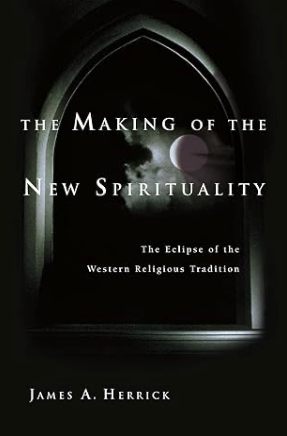
James A. Herrick, author of The Making of the New Spirituality: The Eclipse of the Western Religious Tradition, on “spiritual evolution” and a new religious synthesis
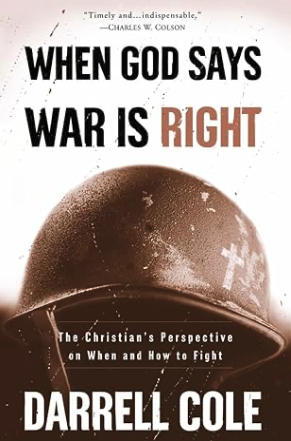
Darrell Cole, author of When God Says War Is Right: The Christian’s Perspective on When and How to Fight, on contemporary cynicism about the possibility of justice and the just war tradition
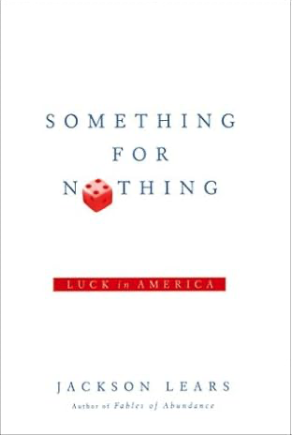
Jackson Lears, author of Something for Nothing: Luck in America, on the deeper cultural roots of contemporary attitudes toward gambling (Friday Feature available)
James A. Herrick on key spiritual movements in the West, gnosticism, and the significance of Luke Skywalker
Related reading and listening
- The destructive perils of speech without a real partner — Josef Pieper and Marc Barnes on how chatbots pervert the nature of conversation
- Machines and misanthropy — Nicholas Carr on how technology has transformed our understanding of progress (and people)
- Alienation and autoamputation: the price of power — Nicholas Carr on the numbing effect of technology
- Disengagement from the world — Nicholas Carr encourages us to consider how automation technologies impact our ability to engage with the world and whether — like a good tool — they present a more inviting world or close us off from that world. (30 minutes)
- The Bride of Christ — John Cavadini explores the different views of Origen and Augustine as to the nature and mission of the Church, and he calls for a recovery of the identity of the Church as the Bride of Christ. (38 minutes)
- Reason and the love of truth —
FROM VOL. 97 James Peters discusses historical understandings of reason and rationality and how they differ from the modern notion of rationality. (21 minutes) - Early ambivalence toward anti-Nazi resistance —
FROM VOL.107 Biographer Ferdinand Schlingensiepen talks about the memory of Dietrich Bonhoeffer in the post-war period of Germany, and how his popularity changed over the years. (15 minutes) - The just war tradition and whole-life discipleship — Daniel M. Bell, Jr. discusses the just war tradition, a tradition which is often invoked by figures who, upon closer inspection, tend to lack a robust understanding of its history and criteria. (57 minutes)
- A “cosmological omnibus” — George Grant recounts the fascinating history of Hernando Colón’s attempt in the 16th century to curate a universal library of the world’s knowledge. (41 minutes)
- Silence at the end of history — Alan Jacobs examines several literary imaginings of “the last days” and argues that such narration is profoundly inadequate and perhaps even presumptuous. (51 minutes)
- Cultural superiority and Medieval romance literature —
FROM VOL. 164 Tiffany Schubert argues that Jane Austen’s novels subtly incorporate some medieval literary conventions in ways that enable modern readers to experience a sense of wonder, romance, and the benevolence of Providence. (30 minutes) - Buying and selling holidays, identities, and ourselves — We present four interviews on American consumerism, with Leigh Eric Schmidt, David Lyon, Thomas Frank, and Sam Van Eman. (46 minutes)
- The primacy of the Body of Christ —
FROM VOL. 134 Philip Turner reflects on how Christian ethics is misplaced if it has as its central concern individual moral behavior or social justice. (28 minutes) - How literature shaped Lewis —
FROM VOL. 155 Jason Baxter explains how reading medieval literature enabled C. S. Lewis to become a “naturalized citizen of the Middle Ages.” (25 minutes) - The “sovereign uselessness of moral reflection” — Calling on the wisdom of St. Augustine, Oliver O’Donovan reminds his listeners that all knowledge participates in the eternal Logos of God and is rooted in love, not disinterested moral judgement.(Lecture 1 of 3; 52 minutes)
- Beyond a reasonable doubt — From a 1980 interview with Ken Myers, Mortimer J. Adler discusses his argument that belief in the existence of God is rational. (14 minutes)
- Life more abundantly — Jeanne Schindler advocates for a return to an understanding and prioritizing of sensory experience — real engagement with the real world — as foundational to learning and living. (35 minutes)
- Mystery novels with theological concerns — In these interviews from 1993, mystery author P. D. James speaks about the philosophical and theological issues woven into her novels, and Alan Jacobs discusses James’s novel The Children of Men. (23 minutes)
- Modern fictional “heroes” —
FROM VOL. 141 Susanna Lee discusses moral authority in the heroes of hard-boiled crime fiction. (24 minutes) - Technophiliac obsessions —
FROM VOL. 141 Literary and media scholar Grant Wythoff talks about the “father of science fiction,” Hugo Gernsback. (26 minutes) - Heaven and earth are full of His glory — Gerald R. McDermott examines the typological tradition of the Church, particularly through Jonathan Edwards’s thought, and he argues for a recovery of the Christian understanding of the universe as an “immense Trinitarian symbol.” (61 minutes)
- Rand’s influence on conservatism —
FROM VOL. 100 History professor Jennifer Burns discusses the life and legacy of “goddess of the market” Ayn Rand. (17 minutes) - A false dichotomy — In this conversation from 2009, Dallas Willard (1934–2013) discusses the truth of spiritual knowledge and its epistemological validity. (63 minutes)
- All trees, no forest — Richard Weaver on the attenuating of knowledge
- Christian belief as real knowledge — Dallas Willard on the modern divorce between faith and knowledge
- Humility and moral knowledge —
FROM VOL. 149 Steven L. Porter discusses The Disappearance of Moral Knowledge, an unfinished manuscript (which he helped to complete) by the late philosopher Dallas Willard. (22 minutes) - Harbinger of disorder — Mark Mitchell on Michael Polanyi’s recognition of the dangerous dead-end of materialistic reductionism
- The de(con)struction of the humanities (and of truth) — Historian Gertrude Himmelfarb on the skeptical tendencies of the postmodern academy
- Universities as the hosts of reciprocating speech — Robert Jenson on how the Christian understanding of Truth in a personal Word shaped the Western university
- The vice of curiosity — Stanley Hauerwas on the warning from Paul Griffiths about desiring to own knowledge
- University or “utiliversity”? — In this essay, Reinhard Hütter examines in depth John Henry Newman’s The Idea of a University and argues that its insights and prescriptions are urgently relevant to the current status of higher education. (87 minutes)
- Utopian dreams and cynicism — John Durham Peters discusses the history of the idea of communication, saying that our hopes are too high when we believe that the solution to social discord is just better communication. (49 minutes)
- Thinking Together — Alan Jacobs discusses some principles he’s compiled to help us think well (and charitably) in our cultural context, and he warns us to be attentive to the ways technology displaces previously fixed communities. (53 minutes)
- Students as arbiters of knowledge —
FROM VOL. 94 Tim Clydesdale discusses the experience of freshmen year at college, suggesting that by that time students have been effectively inoculated against a love of knowledge. (21 minutes) - What adolescence misses —
FROM VOL. 94 Mark Bauerlein talks about the ways of learning and living practiced by contemporary youth, how they impact the acquisition and use of knowledge and form intellectual habits, and what this means for the future of our society. (16 minutes) - Helping boys become virtuous men — Teacher and chaplain Mark Perkins describes forms of formation that take the body seriously 50 minutes
- The temptations of talismanic technologies — Jeffrey Bilbro on the persistence of techno-utopianism
- Living in a tool-i-fied world — Joseph Minich on how the ubiquity of technology makes atheism entirely plausible
- Pathways of the Mind: The Joy of the Essay — Alan Jacobs thinks Christians should embrace the potential in the literary form of the essay, because of the way it corresponds to the navigation and journey of a Christian life. (48 minutes)
- In the Image of Our Devices — Nicholas Carr considers how automation technologies impact our ability to engage with the world. (66 minutes)
- Nervousness about the shape of religion in America — Thomas Albert Howard discusses European perspectives of eighteenth-century American religious life. (21 minutes)
- How paintings convey meaning —
FROM VOL. 121 Theologian Walter Hansen and painter Bruce Herman question contemporary conceptions of meaning that confine it to the verbal or consider visual and verbal meaning to be completely exclusive. (20 minutes) - The whole world in his Hands — Colin Gunton on the trinitarian emphasis in St. Irenaeus’s doctrine of Creation
- “Only a real world can save us” — Oliver O’Donovan explores how the “religion” of modernity lacks a coherent world in which one may participate with full human agency and moral purpose. (Lecture 3 of 3; 61 minutes)
- Christian unity and civil society — Oliver O’Donovan introduces listeners to Dutch lay theologian Hugo Grotius, arguing that the questions he tackled relate to perennial concerns about the relationship between divine and human agency, and between civil and ecclesiastical authority. (Lecture 2 of 3; 57 minutes)
- The demoralizing effect of pagan Roman religion — Oliver O’Donovan examines St. Augustine’s critique of pagan Roman religion in Book II of his treatise City of God and asks his audience to consider what insights Augustine’s critique has for us today. (Lecture 1 of 3; 51 minutes)
- Moral knowledge of reality — Oliver O’Donovan argues that admiration is the fundamental form of knowing the world, as we cannot know fully those elements of reality (“bare facts”) that contain no significance for us. (Lecture 2 of 3; 55 minutes)
- It takes a character (and a village) — Herbert McCabe, O.P. on the Aristotelian, Thomistic, and MacIntyrean account of the moral life
- The recovery of an integrated ecology — In this essay, Michael Hanby unpacks the summons of Laudato si’ to an ecological way of life based on a proper understanding of creation in its fullness and integrity. (57 minutes)
- Manners and morals —
FROM VOL. 19 Film and literary critic Alan Jacobs discusses how modern audiences relate to the manners and morals portrayed in Jane Austen films. (16 minutes)