
“[T]o us who have been brought up in an industrialized civilization it has apparently become abnormally difficult to recognize God as the creator of the world which surrounds us and which we experience. To the great bulk of mankind throughout its history it has seemed too obvious to need argument that the finite world which impinges upon our senses draws its existence from a reality which lies beyond and behind itself, however dimly and even distortedly the nature of that reality has been conceived. For the Psalmist the fact that ‘the heavens declare the glory of God and the firmament showeth his handiwork’ is not open to question. Dr. F. Sherwood Taylor has pointed out that ‘before the separation of science and the acceptance of it as the sole valid way of apprehending nature, the vision of God in nature seems to have been the normal way of viewing the world, nor could it have been remarked as an exceptional experience,’ and Professor Herbert Butterfield has written to much the same effect:
I am not sure that in the modern age, which has produced such a tremendous preoccupation with material things, and has issued in a worldliness hitherto unachieved in our part of the globe, we have not ourselves thickened unnecessarily that screen which amongst the ancient Hebrews was so thin and in some respects so transparent; especially as we, inhabitants of cities, who yet have never really learned how to live in cities, have so greatly lost the art of meditating.
“It may thus very well be the case that for us the knowledge of God which is natural to man, as an inhabitant and a member of a world that God has created, needs help from both the experience of the mystics and from the revelation given through Christ if it is to be adequately evoked and sustained. In any case the fact remains that the contemplation of God’s creatures, while it can lead us to set our hearts on them instead of on the God who made them, can, if it is rightly directed, vastly enhance our sense of His reality and His transcendent sovereignty and glory. ‘O Lord our Governor,’ exclaims the Psalmist, ‘how excellent is thy name in all the world, thou that hast set thy glory above the heavens. . . . For I will consider the heavens, even the works of thy fingers, the moon and the stars which thou hast ordained.’ So far from it being necessary for us to despise God’s creatures in order for us to give God His due honour, the precise opposite is the case.The more we are conscious of the goodness and the beauty of the finite world, the more fully we shall be brought to recognize the infinite and transcendent goodness and beauty of God, provided only — and this is, of course, essential — that we joyfully recognize Him as their source.
‘How wonderful creation is, the work which thou didst bless,
But oh, what then must thou be like, eternal loveliness!
In wonder lost the highest heavens Mary their Queen may see;
If Mary is so beautiful, what must her Maker be?
“No Christian writer, to my knowledge, has emphasized the austere aspect of Christian spirituality and the tribulation of spirit to which a Christian may be subjected in his achievement of union with God as has the great sixteenth-century Spanish Carmelite mystic S. John of the Cross. Yet when he attempts to describe the utter beauty and wonder of God he expresses himself in poetic forms which show the most exquisite discernment and appreciation of the beauty and wonder of the natural world:
My love is as the hills
The lonely valleys clad with forest-trees,
The rushing, sounding rills,
Strange isles in distant seas,
Lover-like whisperings, murmurs of the breeze.
My love is hush-of-night,
Is dawn’s first breathings in the heav’n above,
Still music veil’d from sight,
Calm that can echoes move,
The feast that brings new strength — the feast of love.”
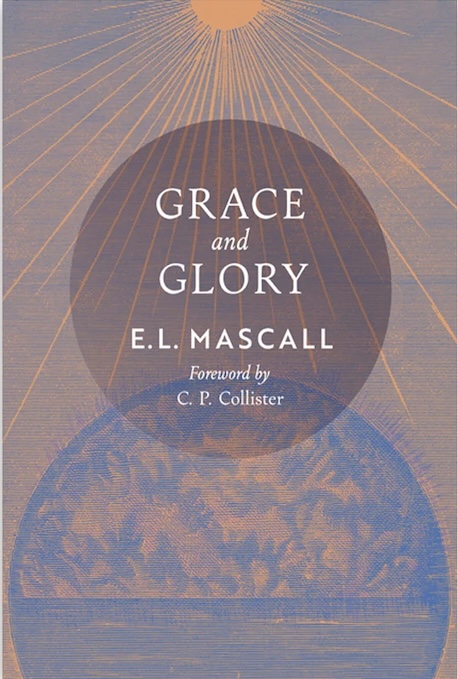
— from E. L. Mascall, Grace and Glory (Angelico Press, 1961, 2025)
Click on the tags below for listings of related readings or audio features.