In 1997, I wrote a short article for Modern Reformation magazine entitled “Is Popular Culture Either?” It was an epilogue to my 1989 book, All God’s Children and Blue Suede Shoes: Christians and Popular Culture, which began my interest in what might be called the sociology of popular culture. While many Christian apologists have focused on the message-bearing capacity of pop cultural artifacts, I have long been more interested in the deeper dynamic of how cultural forms situate us in (or out of) communities, how they shape our deepest assumptions (as opposed to our explicit beliefs), and how they shape sensibilities and emotional expectations which, in turn, become matrices of meaning.
One of the aspects of popular culture which I failed to examine as thoroughly as I should have in my book was taken up in this article. I had not yet read Wendell Berry’s powerful essay “The Work of Local Culture” (included in our Anthology, Place, Community, and Memory) which underscores the imperative of intergenerational continuity if a community is to sustain any kind of coherence. The word “culture” has historically been used to describe in summary all of the ways of living, believing, and feeling that sustain bonds of membership and obligation within a community. Culture is thus about passing on a notion of the good life from one generation to the next. A culture establishes ends and bounds that in-form the conscience by speaking deeply with morally binding address.
I suggested in that article that “popular culture” wasn’t really popular, as it was created and sustained by elites in entertainment, manufacturing, media, and marketing, and it wasn’t really culture because popular culture as we know it is deeply committed to age segregation. I addressed the ephemerality and disposability of the artifacts of popular culture in my book, but mostly in the context of the problem of superficiality. The deeper problem is the problem of culture-as-commodity rather than culture-as-legacy. When what we label as “culture” becomes a collection of accessories that individuals independently choose to shape their personal project of self-creation, cultural artifacts no longer have the capacity to bind, to join, to direct, and to in-form. Popular culture as we know it is a web of commodities (often short-lived), aspirations to independence, and the liberation of desire. Cultures as they have been experienced through most of human history have served such radically different ends that calling popular culture “culture” is at best confusing. (I won’t bother connecting the dots on the phrase “youth culture.”)
From a theological perspective, we were created for community, for membership, for mutual trinity-imitating belonging. Cultures are not simply adaptive mechanisms that facilitate survival, they are the necessary extensions of our image-bearing being. That’s why social, political, and economic institutions that encourage us to move in a direction that is (in Christopher Clausen’s term) post-cultural, or (in Philip Rieff’s formulation) anti-cultural, or (in my own phrase) auto-cultural are finally dehumanizing. In the past few decades, many Christian churches have adopted techniques of ministry that fit nicely into this post-, anti-, or auto-cultural regime. These techniques are sometimes labeled “contemporary,” and they are often consciously pitted against “traditional” forms of ministry. The leaders of the various movements that have championed these retoolings seem to be largely oblivious to the problems I have briefly outlined above. In their writings to explain the necessity of their approaches, one reads a great deal about how traditions need to be dismantled in order to reach more people. But there is no evidence that they have wrestled with the question of whether or not traditions are necessary to keep a people together (at many levels) over time. The Gospel itself is then another commodity individually appropriated, not the foundation of a community, not the announcement of a new people committed to a shared way of life forward into many generations. Such re-invented churches are successful in reaching many individuals, which is absolutely no surprise. It would be shocking if they didn’t. But if they are to become communities rather than strategies, they will have to take more seriously the necessity of traditions as vehicles of committed memory.
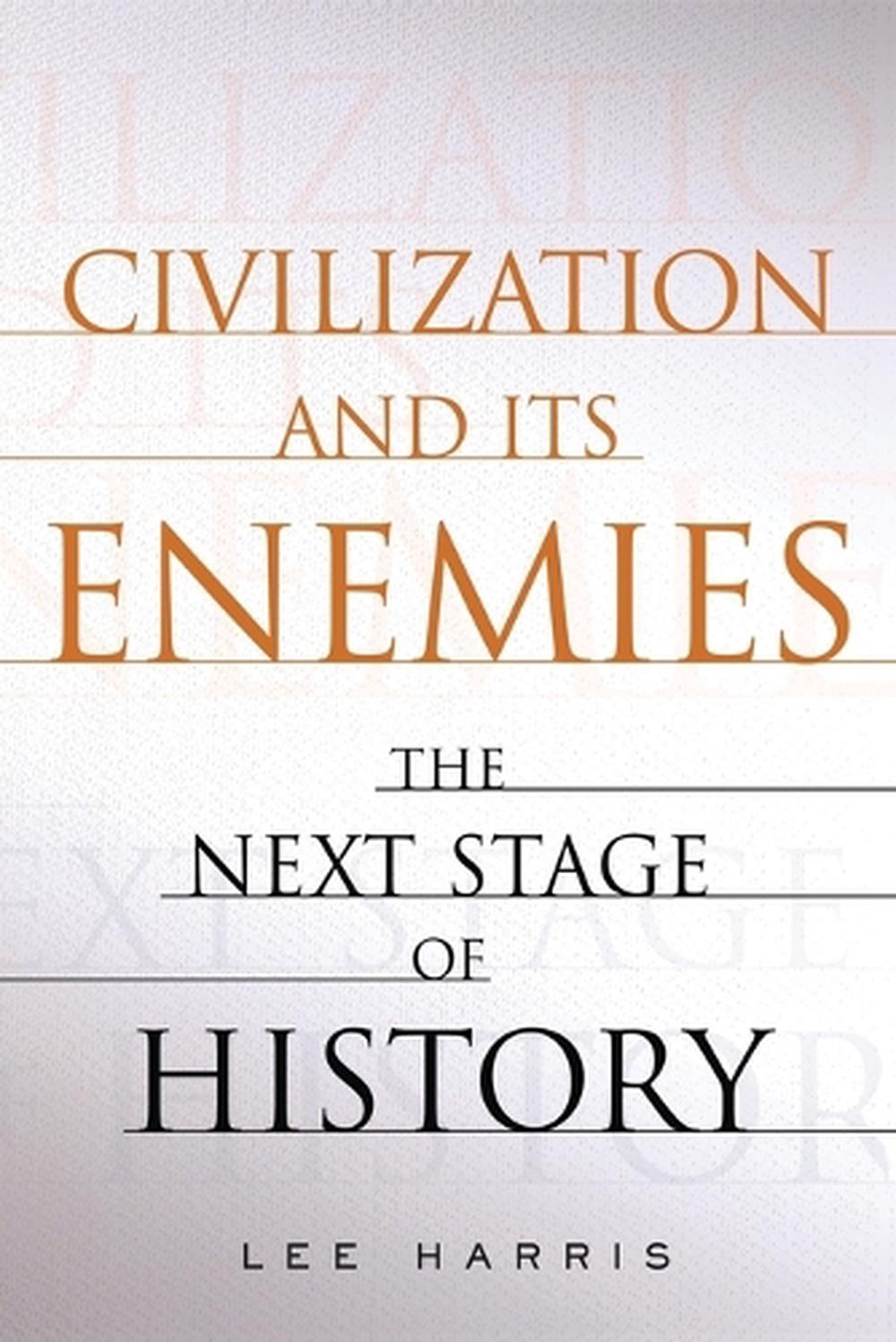
These concerns were all at the back of my mind (as they almost always are) as I was reading a recent article by Lee Harris called “The Future of Tradition,” in the June & July 2005 issue of Policy Review. Harris’s recent book Civilization and Its Enemies has gotten a lot of attention; several of our subscribers have suggested that I interview him (let me apologize here for my negligence). He has obviously thought a great deal about what allows a civilization to survive, and one of the ingredients he has identified is tradition. He says that traditions must be seen not as “reason in a somewhat garbled code,” but as a pattern of living that embodies deep “habits of the heart.”
Let me extract a few paragraphs, and suggest that you read them not just with the crisis of our own civilization in mind, but with concern for the health of the Church as a community, a people, a body through time.
“In even the shortest possible list of the attributes of a civilization, you are certain to discover the feature of transgenerational stability. A civilization must have a proven track record of cultural permanence, which is to say that it must be a multigenerational project. A civilization must be passed, with its fundaments pretty much intact, from one generation to the next; and this is especially true when we are dealing with civilizations whose civilizing process requires a stern renunciation of the id in all of its manifestations — ungovernable impulses, unruly desires, a lack of consideration or feeling for the well-being of others, sexual promiscuity, prodigal expenditures on passing fads, and so on. In short, the loftier the ethical ideal of a civilization is, the harder it must work to preserve this ideal against the return of the id.
“But how exactly is a civilization passed on from generation to generation? We can understand passing on an heirloom, like a set of fancy china, from one generation to another. But a civilization cannot be reduced merely to the physical props that are associated with it: the buildings, the transportation system, the machines and the tools, the gold and the treasure. What possible use would America’s complex superhighway system be to a generation no one had taken the trouble to teach how to drive?
“A society that wishes to reproduce itself must take care to pass on to the next generation the knowledge required to maintain itself at more or less the same level of civilization. It is not enough to pass on the good china; you must also pass on the family recipe for making the pot roast. Yet even that is not quite enough; you must also find a way to pass along the culinary skills needed to transform a recipe written in words into an actual plate of pot roast. Figuratively speaking, a civilization must pass on the china, the recipe and the cook. But even this is not quite enough. You must also make the cook realize that in addition to cooking, he must know how to replace himself, and, most critically, he must feel that he has a duty to replace himself. Not only must he teach his children to cook, but he must also teach them how to teach their children to cook.
“If a society wishes to find a way of ensuring that newly emergent and valuable techniques are passed on and preserved, its members must feel themselves under an ethical obligation to leave the best possible world not only for their children, but also for their grandchildren.
“The grandchild, far from being incidental, is decisive. Civilization persists when there is a widespread sense of an ethical obligation on the part of the present generation for the well-being of the third generation — their own grandchildren. A society where this feeling is not widespread may last as a civilization for some time — indeed, for one or two generations it might thrive spectacularly. But inevitably, a society acknowledging no transgenerational commitment to the future will decay and decline from within. Which leads to our main question: How is this task accomplished? How do you make parents feel such a deep and unshakeable ethical commitment to their grandchildren?”
Related reading and listening
- Paradoxes of “nature” and “culture” — Robert Spaemann, on the destructive consequences of a merely naturalistic understanding of nature
- Christian culture and the myth of the secular — Ken Myers draws on T. S. Eliot to argue that Western civilization has broken down, not into a multiplicity of cultures, but into a “post-culture.” (47 minutes)
- How to make war on nothingness? — David Bentley Hart argues that if it rejects Christ, the only remaining option for a post-Christian culture is conscious or “narcotic” nihilism, which takes the form of absolute, meaningless volition. (66 minutes)
- A letter from Ken Myers — Ken Myers examines the cultural implications of the Incarnation and the deep-seated dualism of modernity that divorces spirituality from our material experience. (22 minutes)
- How communities remember who they are — Oliver O’Donovan on the necessity of tradition in sustaining communal identity
- How common loves shape communities — Oliver O’Donovan discusses how communities mediate love and knowledge to their members and what challenges arise as a community’s traditions are confronted by sin, error, and plurality. (Lecture 2 of 3; 49 minutes)
- City of God, City of Man — Architect Philip Bess discusses how our modern-day confusion and moral illiteracy are worked out visibly in the cities and buildings our architects create. (57 minutes)
- “Emerging adulthood” — FROM VOL. 100 Christian Smith discusses the aimless cultural world of emerging adulthood and on how it makes the idea of objective moral order implausible. (17 minutes)
- Media as agencies of order — Media theorist John Durham Peters wants us to reexamine the purposes of media and how fundamental media are. (59 minutes)
- What adolescence misses — FROM VOL. 94 Mark Bauerlein talks about the ways of learning and living practiced by contemporary youth, how they impact the acquisition and use of knowledge and form intellectual habits, and what this means for the future of our society. (16 minutes)
- Postmodern culture and the gospel — FROM VOL. 6 Roger Lundin discusses the ethical and theological consequences of our postmodern culture. (9 minutes)
- How the Enlightenment blinded us — Alasdair MacIntyre on the dependence of rationality on a lived tradition
- Cultivating the Virtue of Reverence — Paul Woodruff (1943–2023) discusses the importance of reverence as a virtue that enriches relationships, elevates civic life, and helps leaders to wield power wisely. (53 minutes)
- Antagonism or fruitfulness? — FROM VOL. 108 Jean Porter describes how natural law justifies legal and moral authority within the life of the human person. (17 minutes)
- The moral complicity of movie audiences — Film critic David Thomson explains why Alfred Hitchcock’s film Psycho achieves a kind of unique synergy with American culture, raising unsettling questions about alienation and identity. (33 minutes)
- “The Emersonian elixir” — FROM VOL. 20 Robert Richardson and Roger Lundin discuss how Ralph Waldo Emerson’s legacy lingers in American culture. (18 minutes)
- The importance of literary reading — FROM VOL. 70 Dana Gioia discusses the important role literary reading plays in society and the 2004 publication from the NEA about such reading. (13 minutes)
- From culture war to culture care — In this 2016 lecture, artist Makoto Fujimura asks what would it look like for Christians to be stewards of beauty and human flourishing in all areas of life and culture. (48 minutes)
- Etiquette and ethics — In this essay, Judith Martin (a.k.a. Miss Manners) argues that etiquette is “civilization’s first necessity” and an indispensable societal virtue. (21 minutes)
- America as the Republic of Entertainment — Neal Gabler on the modern devotion to pleasure
- “Detachment as a whole way of life” — FROM VOL. 85 Professor Christopher Shannon discusses how early twentieth-century social scientists encouraged the American idea that individual identity works against communal membership. (17 minutes)
- Courtesy as a theological issue — FROM VOL. 37 Donald McCullough discusses his insights into the increasingly coarse nature of society and the theological foundations for courtesy. (12 minutes)
- Is American culture now story-less? — From our archives, Michael Kammen compares popular and mass culture, and Philip Fisher analyzes the idea that new cultural forms inevitably dissolve old ones. (26 minutes)
- Recovering the primacy of contemplation — Augusto Del Noce finds in St. Augustine resources to diagnose the fatal flaw in progressivism
- Sports in America — FROM VOL. 21 Robert Higgs looks at the history of sports in American experience and at how organized religion has interacted with that history. (12 minutes)
- A fearful darkness in mind, heart, and spirit — Roberta Bayer draws on the work of George Parkin Grant (1918–1988) to argue that our “culture of death” must be countered with an understanding of reality based in love, redemptive suffering, and a recognition of limitations to individual control. (33 minutes)
- Only a dying civilization neglects its dead — Historian Dermot Quinn discusses the work of fellow historian Christopher Dawson (1889–1970). (15 minutes)
- Christopher Dawson: Chronicler of Christendom’s Rise and Fall — Dermot Quinn discusses historian Christopher Dawson’s meta-historical perspective and his wisdom about what makes cultures healthy or unhealthy. (54 minutes)
- “How deep the problems go” — FROM VOL. 103Eric Miller discusses the late historian and social critic Christopher Lasch’s intense commitment to understand the logic of American cultural confusion. (20 minutes)
- Nihilism in popular culture — FROM VOL. 44Thomas Hibbs, author of Shows about Nothing, discusses the nihilism that runs through films and television shows in recent American popular culture. (9 minutes)
- Welcoming one another — Christine Pohl describes the practice of hospitality in Church history and the particular challenges to hospitality we face in our era. (30 minutes)
- On moral authority and medicine — Continuing our time travel back to 1992, we hear two more interviews from the pilot tape for the Mars Hill Tapes, with sociologist James Davison Hunter and bioethicist Nigel Cameron. (28 minutes)
- Don’t feel bad — James Twitchell discusses a few of the themes in his book about the confusing state of the evolution of shame and shamelessness. (20 minutes)
- The Liberal Arts tradition, II — context and extension — Kevin Clark explains how the book he co-authored defines a framework in which the Trivium and the Quadrivium are the core of a curriculum that includes piety, gymnastics, music, philosophy, and theology. (20 minutes)
- Mars Hill Audio Journal, Volume 146 — FEATURED GUESTS:
Mark Mitchell, Hans Boersma, Henry T. Edmondson, III, Brian Clayton, Douglas Kries, Conor Sweeney, and Carole Vanderhoof
- The Liberal Arts tradition, I — science and harmony — Ravi Scott Jain discusses the place of the Quadrivium — the four mathematical arts — within the larger framework of the classical approach to education. (21 minutes)
- Culture as legacy — Hannah Arendt on the place of authority and tradition in education
- The disabling consequences of winsomeness — Stanley Hauerwas on how many modern Christians offered atheists less and less in which to disbelieve.
- Mars Hill Audio Journal, Volume 101 — FEATURED GUESTS: James Davison Hunter, Paul Spears, Steven Loomis, James K. A. Smith, Thomas Long, and William T. Cavanaugh
- Mars Hill Audio Journal, Volume 100 — FEATURED GUESTS: Jennifer Burns, Christian Smith, Dallas Willard, Peter Kreeft, P. D. James, James Davison Hunter, Paul McHugh, Ted Prescott, Ed Knippers, Martha Bayles, Dominic Aquila, Gilbert Meilaender, Neil Postman, and Alan Jacobs
- Mars Hill Audio Journal, Volume 94 — FEATURED GUESTS: Maggie Jackson, Mark Bauerlein, Tim Clydesdale, Andy Crouch, and Jeremy Begbie
- Mars Hill Audio Journal, Volume 77 — FEATURED GUESTS: Eric Miller, Lisa de Boer, Peter J. Schakel, and Alan Jacobs
- Mars Hill Audio Journal, Volume 76 — FEATURED GUESTS: D. H. Williams, Catherine Edwards Sanders, Ted Prescott, Martin X. Moleski, Stephen Prickett, and Barrett Fisher
- Mars Hill Audio Journal, Volume 67 — FEATURED GUESTS: Eric O. Jacobsen, Allan C. Carlson, Terence L. Nichols, R. R. Reno, David Bentley Hart, J. A. C. Redford, and Scott Cairns
- Mars Hill Audio Journal, Volume 65 — FEATURED GUESTS: Stephen G. Post, Glenn C. Altschuler, Mark Oppenheimer, Johnny Cash, George Marsden, and Julian Johnson
- Mars Hill Audio Journal, Volume 62 — FEATURED GUESTS: Craig A. Bernthal, James Turner Johnson, Alissa Quart, Stephen M. Barr, Lilian Calles Barger, and Corby Kummer
- Life after culture — The modern elevation of individual autonomy leads to postmodern suspicion of all authority, and eventually to postculturalism. Insights from Christopher Clausen and Philip Rieff.
- Mars Hill Audio Journal, Volume 49 — FEATURED GUESTS: David Lyon, Christopher Wolfe, Patrick Fagan, Joseph Davis, Morris Berman, Frank Burch Brown, Robert K. Johnston, and Ralph C. Wood
- Sources of Ancient Wisdom — Excerpts from two books about pre-modern Christian understanding: Reading Scripture with the Church Fathers, by Christopher A. Hall, and Retrieving the Tradition and Renewing Evangelicalism: A Primer for Suspicious Protestants, by D. H. Williams. (95 minutes)
- Mars Hill Audio Journal, Volume 47 — FEATURED GUESTS: Christopher Clausen, Don Eberly, George Weigel, Luci Shaw, Steve Wilkens, David Harvey, John Durham Peters, and Masaaki Suzuki