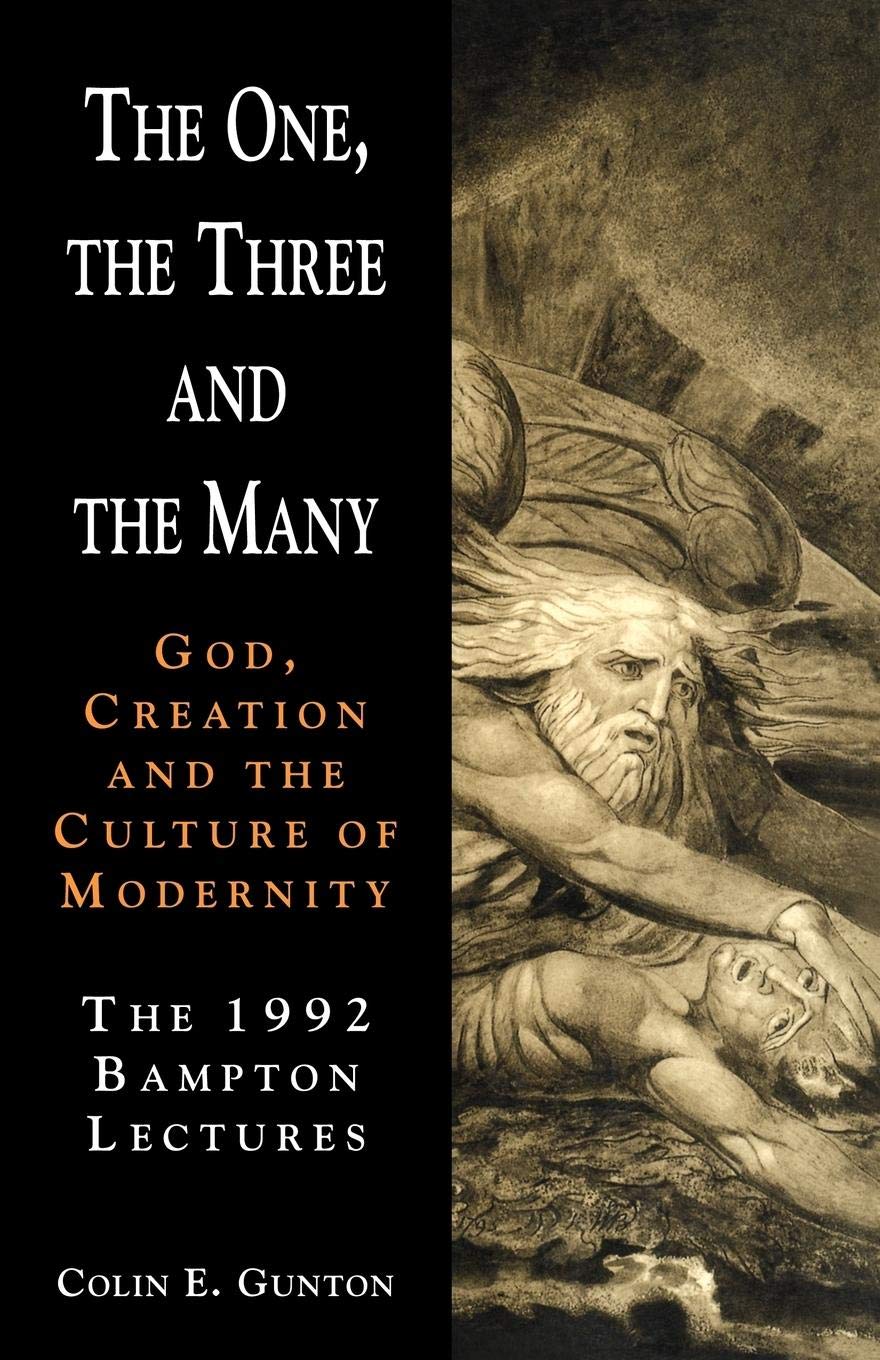
“The enquiry [in a chapter in Colin Gunton’s book] begins with a consideration of the concept of economy, though not that understood in the dismal and reductionist sense that characterizes so much of modernity. An interesting account of an early theological use of the concept has been given by Frances Young and David Ford in their study of the Second Letter to Corinth. From its simple and original meaning of the management of the home, the word comes to be used in the New Testament, particularly by Paul, as an explicitly financial metaphor to express forms of both human and divine action. Christology is the heart of the matter: “You know the grace of our Lord Jesus Christ, that though he was rich, yet for your sake he became poor. . . . (2 Corinthians 8.9). Paul uses the idea of an economy of divine generosity to overcome human conceptions of economy based on mere reciprocity and prudence. Above all there comes into view ‘the central, generative exchange of Christ’s sufferings and death’. Through the divine economy a new human way of being in the world is realized: ‘The exchange of Christ, his costly work, which involved suffering the most intractable realities of sin and death, has generated “the power of Christ” (12.9), a new creation, a new currency which can, through the downpayment of the Spirit, be spent now in living the sort of life which Christ’s pattern of humility and weakness laid down.’ [Frances Young and David F. Ford, Meaning and Truth in 2 Corinthians (London: SPCK, 1987), p. 175.]
“After such a beginning, it happened that a household word, along with its transferred application to the organization of finances and the running of the state, was commandeered for theology by some of the early Fathers — Ignatius, Clement of Alexandria and Origen, for example — to express aspects of the divine dispensation. The concept of economy became a way of integrating a plurality, of maintaining the richness and diversity of the ways of the one God towards and in the world. Irenaeus has a rich conception of the divine economy. Against the gnostic divorce of creation from redemption, he argued that the different aspects of God’s agency formed a unity through time and space: from beginning in creation to the final eschatological completion, which was, however, anticipated in Christ and in life in the Spirit. Creation, fall, redemption and eschatology all therefore had due part, thought together in their distinctness, but not separateness, and interrelatedness. By means of his trinitarian conception of the divine economy, Irenaeus was able to allow history to be itself, by virtue of its very relation to God. Because all that God does is achieved by means of his two hands, the Son and the Spirit, it is done both effectively and in due recognition of the integrity of created being. Von Balthasar, who sees that in Irenaeus there is a kind of aesthetic of the divine economy — one of the sections of his chapter on this theologian is entitled ‘God’s Temporal Art’ — comments that ‘there is no extraction of a permanent content from lost time as in the Platonists; recapitulation gives time itself validity before eternity’. Putting the matter otherwise, we may say that Irenaeus is able to give a remarkably coherent and satisfying account of the divine constitution of and involvement in the created world’s time and space. Time and space are given their distinctive dynamic of interrelatedness by God’s creating, upholding, redeeming and perfecting activity.
“It is arguable that few later theologies have achieved so adequate an integration of time and eternity, the one and the many, as Irenaeus. His work should not be idealized, for he also bequeathed problems to the tradition, but in general we shall not go far astray if we use him as a measure against which to assess prospective accounts of the economy. In contrast to him, some theologies are in danger of emphasizing creation at the expense of redemption, and the reverse. The typical Western theology, for example, tends to stress salvation to the neglect of creation, and this accounts for the fact that much recent discussion of christology — for example, in connection with the quest of the historical Jesus — abstracts it from its broader context. This is important, because different conceptions of the divine economy bring in their train different ways of understanding God’s relatedness to time and space. Those different emphases in their turn bring varying accounts of what it is to live in the world.”
— from Colin E. Gunton, The One, the Three and the Many: God, Creation and the Culture of Modernity (Cambridge University Press, 1993)
Related reading and listening
When myth becomes fact — In this 1976 interview, Clyde Kilby (1902–1986) discusses C. S. Lewis’s critique of scientism and rationalism, his belief in the primacy of the imagination, and his mythic vision. (37 minutes)
A sampling of newly published lectures — Ken Myers introduces listeners to four recently released lectures, courtesy of our Partners. The lecturers are Jennifer Frey, Gary Saul Morson, N. T. Wright, and Andrew Kern. (27 minutes)
The inward eye, cosmic truth, and making well — Andrew Kern takes his listeners along an “interlinear” reading of a portion of St. Augustine’s Confessions that explores the differences between how God makes and how we create. (38 minutes)
“Investigations of divine works” — Greg Wilbur explains how closely connected music is to the order of the cosmos and how it even reveals attributes of God. (56 minutes)
A letter from Ken Myers — Ken Myers examines the cultural implications of the Incarnation and the deep-seated dualism of modernity that divorces spirituality from our material experience. (22 minutes)
Theologian and musician Jeremy Begbie explores what we learn about time, theology, and the structure of Creation from the experience of music. (28 minutes)
Mars Hill Audio Journal, Volume 166 — FEATURED GUESTS: William Cavanaugh, Kent Burreson, Beth Hoeltke, Jeffrey Barbeau, Jason Baxter, John Betz, and Bruce Herman
An icon of the whole world — Jason Baxter explains how Dante includes a panoply of characters and creatures in his Comedia, offering a prismatic view of all of Creation in its glory. (20 minutes)
Cosmic realities in the built world — Christopher and Christine Perrin discuss the implications of architect Christopher Alexander’s (1936–2022) discovery of patterns of building that cohere with the the created cosmos and with ourselves as human creatures. (59 minutes)
The “book” of Creation — Alan Noble explains why the modern world makes it profoundly difficult to experience Creation as revelation, and he encourages unmediated encounters with Creation that lead to meditation. (52 minutes)
Life more abundantly — Jeanne Schindler advocates for a return to an understanding and prioritizing of sensory experience — real engagement with the real world — as foundational to learning and living. (35 minutes)
Heaven and earth are full of His glory — Gerald R. McDermott examines the typological tradition of the Church, particularly through Jonathan Edwards’s thought, and he argues for a recovery of the Christian understanding of the universe as an “immense Trinitarian symbol.” (61 minutes)
An invitation to a feast — Christina Bieber Lake explains how poetry is an invitation to experience the beauty and goodness of Creation as gift. (44 minutes)
Fred Bahnson talks about how a Christian understanding of God’s redemptive work on the earth should influence our practices of growing and sharing food. (19 minutes)
Junius Johnson warns that the pursuit of beauty is both perilous and an experience that points to the desire for God. (25 minutes)
Clips from five extended interviews — We are pleased to share clips from five interviews that we’ve recently produced as full-length Conversations. (30 minutes)
Good News for All Creation — Theologian Norman Wirzba helps us rethink the category of nature in terms of the Christian doctrine of creation. (66 minutes)
Lives of generosity — Jonathan Wilson distinguishes between two fundamental ways of viewing Creation: a true Christian account of the world and a “survival of the fittest” one. (21 minutes)
The recovery of an integrated ecology — In this essay, Michael Hanby unpacks the summons of Laudato si’ to an ecological way of life based on a proper understanding of creation in its fullness and integrity. (57 minutes)
Speaking the word in love — In this lecture, D. C. Schindler examines core insights from Ferdinand Ulrich on the central vocation of man and the meaning of being. (32 minutes)
Music, silence, and the order of Creation — In this lecture, Ken Myers explains how it is that our participation in harmonic beauty in music is a kind of participation in the life of God, in Whom all order and beauty coheres and is sustained. (61 minutes)
The gift of liturgical time — In this lecture, Gregory Wilbur explains how liturgy and liturgical time align us to the rhythms and order of Creation, forming us as disciples. (45 minutes)
Festivity and the goodness of Creation — Drawing on Josef Pieper’s ideas, Ken Myers explains why the spirit of festivity is the spirit of worship, and that “entertainment” is ultimately an artificial, contrived, and empty effort to achieve festivity. (25 minutes)
Forms as portals to reality — Ken Myers explains the ancient classical and Christian view that music embodies an order and forms that correspond to the whole of created reality, in its transcendence and materiality. (54 minutes)
Farming and our primal vocation — Shawn and Beth Dougherty make a theological case for biomimicry, or fulfilling our original vocation of tending the earth by working according to the nature of Nature. (68 minutes)
Popular innovator and speaker on farming practices Joel Salatin talks about the challenges of caring for Creation within an agricultural and food system that pays little attention to the purposes and inclinations of Creation. (25 minutes)
Our bodies, our selves — Douglas Farrow on the insistence of St. Irenaeus that the Ascension of Christ means that our bodies — not just our souls — are beneficiaries of redemption
St. Irenaeus against the Gnostics — In this reading of an essay by theologian Khaled Anatolios, St. Irenaeus is remembered for his synthesis of faith and reason. (52 minutes)
What does it mean to be a creature? — Canon-theologian Simon Oliver explains how and why the doctrine of Creation is cardinal and must frame all theology. (62 minutes)
“Reading Lewis with blinders on” — Chris Armstrong explains how C. S. Lewis’s work is grounded deeply in the Christian humanist tradition. (45 minutes)
David Bentley Hart describes how the Christian understanding of Creation as beauty and gift, as the outward expression of the delight the Trinity has in itself, reveals a vision of reality different from the pagan or fatalist vision of reality. (12 minutes)
The Life was the Light of men — In a lecture from 2018, Ken Myers contrasts the Enlightenment’s understanding of reason with the Christocentric conception of reason. (57 minutes)
Discerning an alternative modernity — In a lecture from 2019, Simon Oliver presents a summary of the cultural consequences of the comprehensiveness of the work of Christ. (28 minutes)
Lessons from Leviticus — The book of Leviticus may be assumed to be irrelevant for charting a way through the challenges of modernity. Theologian Peter J. Leithart disagrees. (22 minutes)
A theology of active beauty — In a 2010 lecture, George Marsden examines a few ways in which the distorting effects of Enlightenment rationalism were resisted in the work of Jonathan Edwards.(64 minutes)
Mars Hill Audio Journal, Volume 161 — FEATURED GUESTS: Andrew Wilson, Kyle Edward Williams, Andrew James Spencer, Landon Loftin, Esther Lightcap Meek, Andrew Davison
Theologian and priest Andrew Davison believes that retrieving the historic doctrine of participation is vital to help Christians escape from the default philosophy of the age. (32 minutes)
Hans Boersma — author of Heavenly Participation: The Weaving of a Sacramental Tapestry — explains why Christians should reject the modern separation of Heaven and Earth and recover a “sacramental ontology.” (26 minutes)
Making peace with the land — Fred Bahnson challenges us to consider how we might honor our created and redeemed relationship with the earth as God’s stewards. (48 minutes)