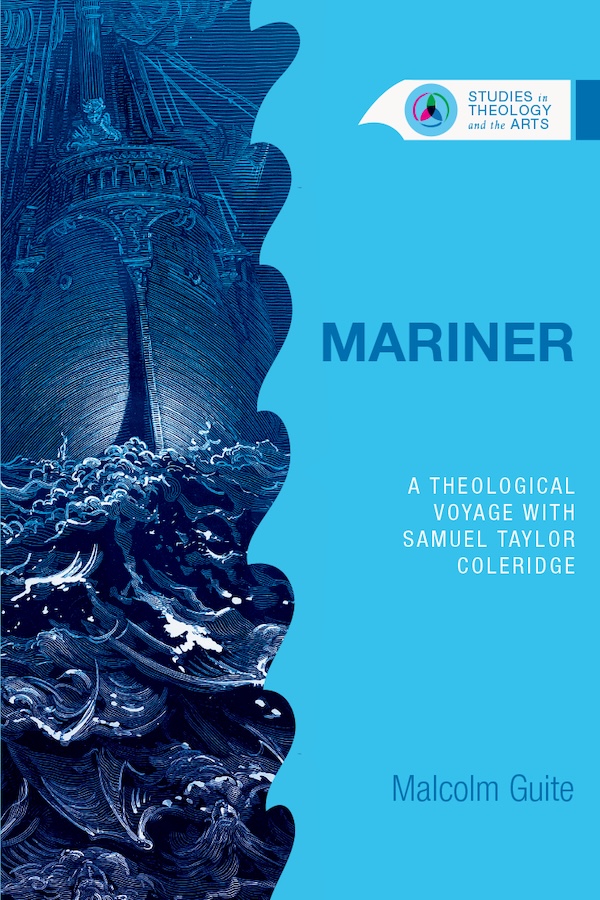
“Though Coleridge gave The Ancient Mariner a medieval setting, and the verse was meant to imitate early ballads, it was written in the midst of that massive shift in the way we see things and configure the world, which issued from the Enlightenment. The poem is fully alive to that shift and crisis and is indeed a parable about its failings and problems and a prophecy about their resolution. Thomas Pfau, the cultural historian, has shown, in his excellent recent book Minding the Modern, how The Ancient Mariner engages with the problems of alienation and anomie, with the crisis over the very nature of personhood which modernity has brought us. He goes so far as to say that The Ancient Mariner is ‘a parable about the philosophical predicament of modernity’ (p. 454), and in the final section of his book, ‘Retrieving the Human,’ Coleridge emerges as something of a hero and a prophet for our times — an opinion with which I entirely concur.
“One aspect of the Enlightenment which had huge implications for modernism was the divorce between reason and imagination and the consequent reduction of knowledge itself to a so-called ‘objective’ realm of quantifiable fact from which all value or meaning had been drained, which in turn led to a reductive, mechanistic, and purely material account of the cosmos.
“Coleridge was living and working in the midst of this process. He saw from within, as it developed, the deadening effect of a falsely rationalistic and materialist philosophy. As a leading figure in the ‘Romantic Movement,’ he was already part of the reaction against a purely mechanical and materialist view of the world, but unlike some of the other Romantic poets he was concerned with more than creating beautiful fantasies as an alternative to grim reality. He wanted to challenge the philosophers on their own ground and show that the insights of imagination are insights into reality itself. In particular he wanted to deliver his age from what he called ‘the tyranny of the eye,’ to alert us to the formative reality of invisible qualities and values to counterbalance our obsession with ‘visible’ facts, with the quantifiable, with dead things that can only be weighed and measured.
“When at last Coleridge published The Rime of the Ancient Mariner under his own name and with his own interpretive gloss in 1817, he prefaced the whole poem with an epigraph: a quotation in Latin from a work by Thomas Burnet: Arcaeologiae Philosophicae, a seventeenth-century work which combined mysticism and science, of which Coleridge possessed the 1692 edition. The very fact that he chose to preface his poem with a passage from such a work signaled that he no longer regarded The Mariner as a piece of gothic frippery but saw it as a serious contribution to our spiritual understanding. The content of the quotation that Coleridge selected makes his intentions for the whole poem even clearer:
I readily believe that there are more invisible beings in the universe than visible. But who will declare to us the nature of all these, the rank, relationships, distinguishing characteristics and qualities of each? What is it they do? Where is it they dwell? Always the human intellect circles around the knowledge of these mysteries, never touching the centre. Meanwhile it is, I deny not, oft-times well pleasing to behold sketched upon the mind, as upon a tablet, a picture of the greater and better world; so shall not the spirit, wonted to the petty concerns of daily life, narrow itself over much, nor sink utterly into trivialities. But meanwhile we must diligently seek after truth, and maintain a temperate judgment, if we would distinguish certainty from uncertainty, day from night.
“Two key elements from this epigraph are especially relevant to this poem: ‘I readily believe that there are more invisible beings in the universe than visible’; and second, from the central part of the passage, an encouragement for us ‘to behold sketched upon the mind, as upon a tablet, a picture of the greater and better world; so shall not the spirit, wonted to the petty concerns of daily life, narrow itself over much nor sink utterly into trivialities.’ These elements alert us to two key features in the poem, opening our minds to a deeper reading. We are asked to remember the reality of the invisible as well as the visible, to remember that there is always more both to our cosmos and to our own minds than we can at any given moment comprehend. Indeed, a large part of the power and purpose of Coleridge’s poetry is to make the invisible realities visible to us, to clothe them for a moment in visible symbols, which can move and change us. The second element also touches on one of the central themes of The Rime of the Ancient Mariner and more widely, one of Coleridge’s most important assertions as a poet: the danger that the petty concerns of daily life, the apparent ordinariness of a world taken for granted, should narrow the mind and sink it into triviality. Burnet’s way of curing this is to suggest that the mind should behold a greater and a better world. Certainly Coleridge’s method in this poem is to take us out of the realm of the familiar, transferring us both literally and metaphorically to an entirely different hemisphere and opening the mind to heights and depths, sublimities and horrors, which are the visible representation of the mind’s own invisible potentialities.”
— from Malcolm Guite, Mariner: A Theological Voyage with Samuel Taylor Coleridge (InterVarsity Academic, 2018)
Related reading and listening
- The epistemology of love — In this lecture, N. T. Wright examines the epistemology of love and how it counters the reductionism of Enlightenment and Epicurean ways of knowing. (63 minutes)
- Cultural superiority and Medieval romance literature — FROM VOL. 164 Tiffany Schubert argues that Jane Austen’s novels subtly incorporate some medieval literary conventions in ways that enable modern readers to experience a sense of wonder, romance, and the benevolence of Providence. (30 minutes)
- Mars Hill Audio Journal, Volume 166 — FEATURED GUESTS: William Cavanaugh, Kent Burreson, Beth Hoeltke, Jeffrey Barbeau, Jason Baxter, John Betz, and Bruce Herman
- The pathos of sin — FROM VOL. 15 Poet Robert Pinsky discusses his translation of Dante’s Inferno. (9 minutes)
- Existential preparation for reading literature — FROM VOL. 128 Rod Dreher recounts how he thought he was reading Dante’s Commedia, when in reality the poem was reading him. (18 minutes)
- An icon of the whole world — Jason Baxter explains how Dante includes a panoply of characters and creatures in his Comedia, offering a prismatic view of all of Creation in its glory. (20 minutes)
- Moral reasoning and human flourishing — Tim McIntosh describes moral philosopher Alasdair MacIntyre’s intellectual conversion to a synthesis of Aristotelian ethics and Christianity, best embodied in Thomism. (44 minutes)
- Guite, Malcolm — FROM THE GUEST PAGE: Malcolm Guite is a poet and priest who lectures widely in England and North America on theology and literature and has published poetry, theology, and literary criticism.
- An invitation to a feast — Christina Bieber Lake explains how poetry is an invitation to experience the beauty and goodness of Creation as gift. (44 minutes)
- Abstraction, immanence, & the cultural landscape — Artist, philosopher, and art historian discuss the tension between self-expression, transcendence, and the material world.
- How the Enlightenment blinded us — Alasdair MacIntyre on the dependence of rationality on a lived tradition
- Poetry and Liturgy — Karen Dieleman explores the influence of liturgical practices on shaping the imaginations and poetry of Elizabeth Barrett Browning, Christina Rossetti, and Adelaide Proctor. (49 minutes)
- The Transformed Vision of Samuel Taylor Coleridge — Poet Malcolm Guite explores the dramatic and even prophetic parallels between the life of Samuel Taylor Coleridge and that of the titular character in his famous poem “The Rime of the Ancient Mariner.” (59 minutes)
- The dramatic ecstasy of reason — FROM VOL. 120 D. C. Schindler argues that the Enlightenment was not wrong for giving too much to reason; it was wrong in endorsing an impoverished conception of reason. (19 minutes)
- Sacramental Poetics — Poet and Eastern Orthodox believer Scott Cairns explains how a good poem functions like an icon: it assists the process of our becoming aware of what is real, and it is generative in the ways it keeps opening up new understandings. (56 minutes)
- Poetry and piety — FROM VOL. 48 James Trott discusses insights he learned while editing A Sacrifice of Praise: An Anthology of Christian Poetry in English from Caedman to the Mid-Twentieth Century. (7 minutes)
- A poet’s relationship to time — FROM VOL. 57 Poet Wilmer Mills (1969–2011) discusses how his agricultural and cross-cultural childhood in Brazil shaped his imagination and his relationship with modernity. (11 minutes)
- The life of the city in poetry — FROM VOL. 1 Ken Myers talks with W. H. Auden’s biographer and literary executor, Edward Mendelson, about political and social themes in Auden’s poetry. (7 minutes)
- Joy & sorrow, destitution & abundance — In this poetry reading and talk, poet Christian Wiman discusses his own faith journey and how his struggles worked themselves into his poems. (40 minutes)
- Seeing Creation Anew: The Life & Poetry of Gerard Manley Hopkins — Dana Gioia examines Gerard Manley Hopkins‘s poetic genius and dedication to Christ in spite of his personal trials and difficult cultural context. (55 minutes)
- “The essence of a moment, clearly perceived” — Haiku poet Gary Hotham reads his poetry and discusses how the form of haiku reveals the connection between creatures and creation. (45 minutes)
- The joy and mystery of poetry — FROM VOL. 98 Jeanne Murray Walker discusses how she helps students approach and appreciate poetry as the mysteriously meaningful literature it is, rather than as a linguistic cage containing static meaning to be abstracted from the words of the poem. (23 minutes)
- The idiom for the revelation of mystery — Dana Gioia on the foundational place of poetry in Christian faith
- Breaking the frozen sea — Dana Gioia on how poetry enchants
- John Donne’s Passion in Life, Faith, & Verse — Poet Dana Gioia discusses the remarkable life of poet John Donne and how his spiritual and intellectual struggles created the conditions for his unique poetic voice. (53 minutes)
- Longfellow’s appeal — FROM VOL. 53 Poet and critic Dana Gioia explains why Henry Wadsworth Longfellow (1807-1882) is one of the three great American poets. (30 minutes)
- Sacramental correspondence — FROM VOL. 51 Poet Dana Gioia discusses the state of contemporary poetry and the sacramental relationship between language and reality. (15 minutes)
- “A sign of contradiction” — In this lecture, Daniel Gibbons compares and contrasts understandings of sacramental poetics proposed by Augustine, Aquinas, and Sydney. (36 minutes)
- Education as a pilgrimage and a mystery — In this lecture, James Matthew Wilson gives a compelling argument for understanding the role of a literary or poetic education as an immersion of the whole being in truth and beauty. (43 minutes)
- A prophetic “wake-up call” — In this 2024 lecture honoring the bicentennial of George MacDonald’s birth, Malcolm Guite explores MacDonald’s power to awaken readers’ spirits and effect in them a change of consciousness. (59 minutes)
- “Prophet of holiness” — Timothy Larsen discusses a new edition of George MacDonald‘s Diary of An Old Soul, a slim book of poem-prayers to be read daily as a devotional aid. (30 minutes)
- Touch’d with a coal from heav’n — Daniel Ritchie finds in the poetry of William Cowper (1731–1800) an anticipation of Michael Polanyi’s epistemology
- How we know the world — Daniel Ritchie argues that poet and hymnodist William Cowper was ahead of his time in critiquing the Enlightenment’s reductionist view of knowledge. (16 minutes)
- William Cowper: Reconciling the Heart with the Head — Daniel E. Ritchie discusses the life and work of poet William Cowper (1731–1800), comparing his commitment to understanding reality through personal knowledge, intuition, and rigorous contemplation with the thought of Michael Polanyi. (43 minutes)
- Approaches to knowing — FROM VOL. 104 Daniel Ritchie describes how many of the figures he studies in his new book emphasize the significance of human experience, enculturation, and contingency to human knowledge. (21 minutes)
- The Gospel as the foundation of dialogue — FROM VOL. 83 Professor Paul Weston discusses theologian Lesslie Newbigin’s time in India and how it influenced his thought and work. (17 minutes)
- Bearing witness through poetry — Roger Lundin discusses the incarnational witness of poet Czesław Miłosz (1911–2004), exploring his service to truth and to his native tongue, Polish. (16 minutes)
- Czesław Miłosz: A Poet of Luminous Things — Roger Lundin discusses the themes, breadth, and depth of poet Czesław Miłosz‘s work, explaining how Milosz incarnated in his life and work a sense of exile and alienation so common to modern man. (43 minutes)
- No neutral view of the cosmos — Ken Myers argues that Christians need to recover a “whole-earth discipleship” that enables them to think Christianly about all areas of life, including public life. (50 minutes)
- Soundings of the human soul — Professor John H. Timmerman discusses the poetry of the late Jane Kenyon (1947-1995) and his visit to her home, Eagle Pond Farm. (16 minutes)
- Jane Kenyon: Living and Dying at Eagle Pond Farm — Biographer John H. Timmerman discusses the life and work of poet Jane Kenyon (1947–1995). (53 minutes)
- The formative power of hymns and hymnbooks — FROM VOL. 149 Christopher Phillips discusses the cultural and spiritual effects of hymns and the “thingness” of hymnals. (18 minutes)
- The Life was the Light of men — In a lecture from 2018, Ken Myers contrasts the Enlightenment’s understanding of reason with the Christocentric conception of reason. (57 minutes)
- The rediscovery of meaning — Poet and theologian Malcolm Guite explains Owen Barfield’s idea of the development of consciousness over time, an evolution made evident through language that reveals an earlier, pre-modern way of seeing the world. (63 minutes)
- Pfau, Thomas — FROM THE GUEST PAGE: Thomas Pfau (PhD 1989, SUNY Buffalo) is the Alice Mary Baldwin Professor of English, with a secondary appointment in the Divinity School at Duke University.
- The rich significance of everyday life — In this interview from 2000, Roger Lundin — a frequent guest on our Journal — explains how the poetry of Richer Wilbur connects with the verse of other New England poets. (24 minutes)
- The desires of the heart, the constraints of creation — Roger Lundin describes how Richard Wilbur’s poetry connects aesthetic experience to life in the world.
- Mars Hill Audio Journal, Volume 159 — FEATURED GUESTS:
Kirk Farney, Andrew Willard Jones, James L. Nolan, Jr., Andrew Kaethler, Peter Ramey, and Kathryn Wehr
- The dispiriting consequences of the commodification of knowledge — Thomas Pfau asks why so many students in universities are regarded only as consumers, who expect a good return on their investment. He also muses on some strategies for “re-spiritualizing” education. (30 minutes)
- Mars Hill Audio Journal, Volume 158 — FEATURED GUESTS:
David Setran, Vigen Guroian, Michael Dominic Taylor, Thomas Pfau, Jason Paone, and Matthew Levering