PREVIEW
The player for this Journal volume is only available to current members or listeners with a legacy account. If you have an active membership, log in here. If you’d like to become a member — with access to all our audio programs — sign up here.
Guests heard on Volume 159
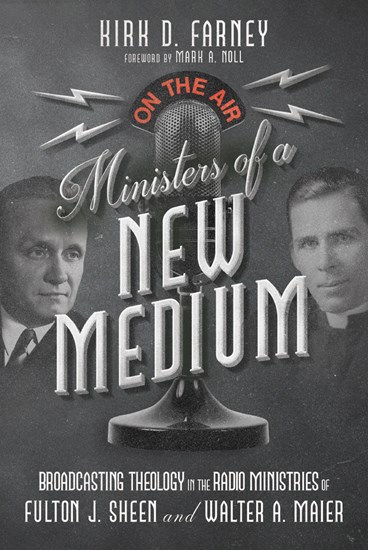
Kirk Farney, author of Ministers of a New Medium: Broadcasting Theology in the Radio Ministries of Fulton J. Sheen and Walter A. Maier, on two pioneers of religious broadcasting
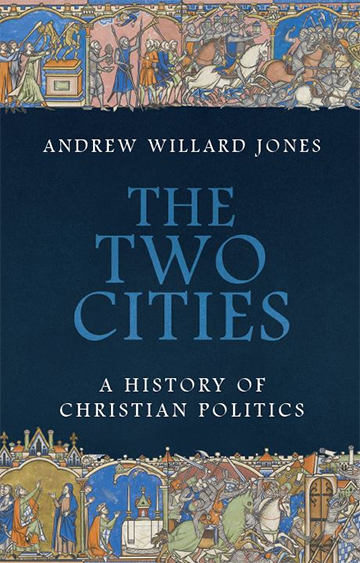
Andrew Willard Jones, author of The Two Cities: A History of Christian Politics, on how the fact of the Incarnation affects political realities
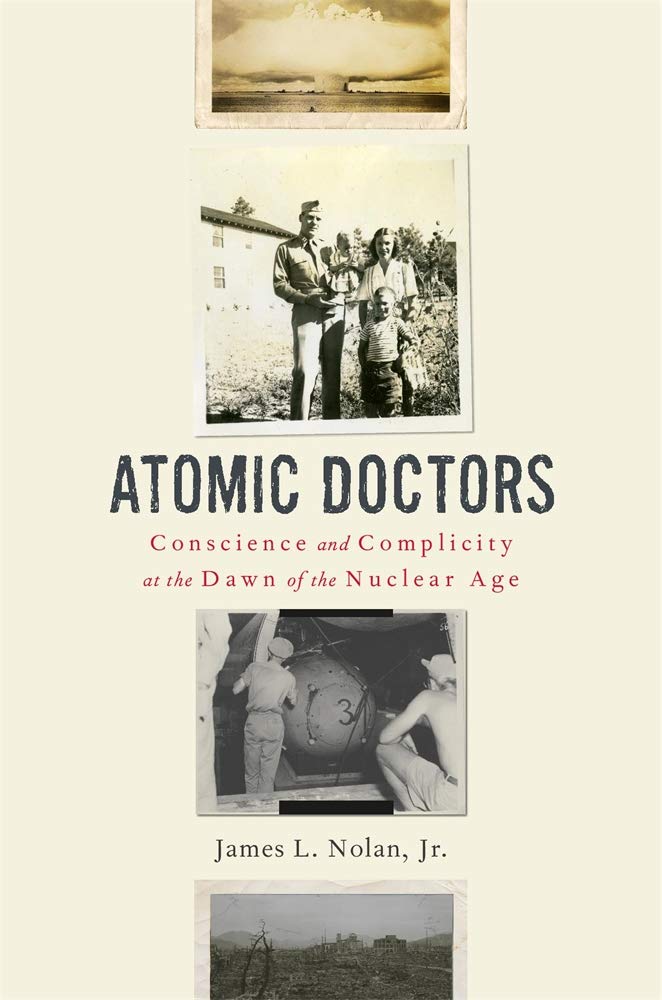
James L. Nolan, Jr., author of Atomic Doctors: Conscience and Complicity at the Dawn of the Nuclear Age, on the moral dynamics of the Manhattan Project
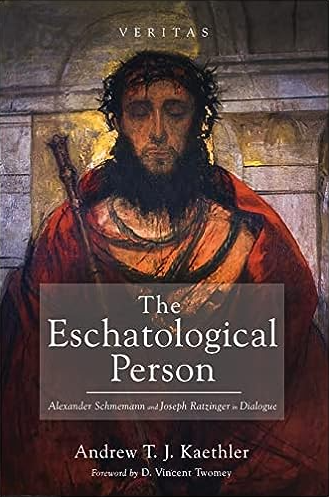
Andrew T. J. Kaethler author of The Eschatological Person: Alexander Schmemann and Joseph Ratzinger in Dialogue, on the relational theology of personhood in the work of two major theologians
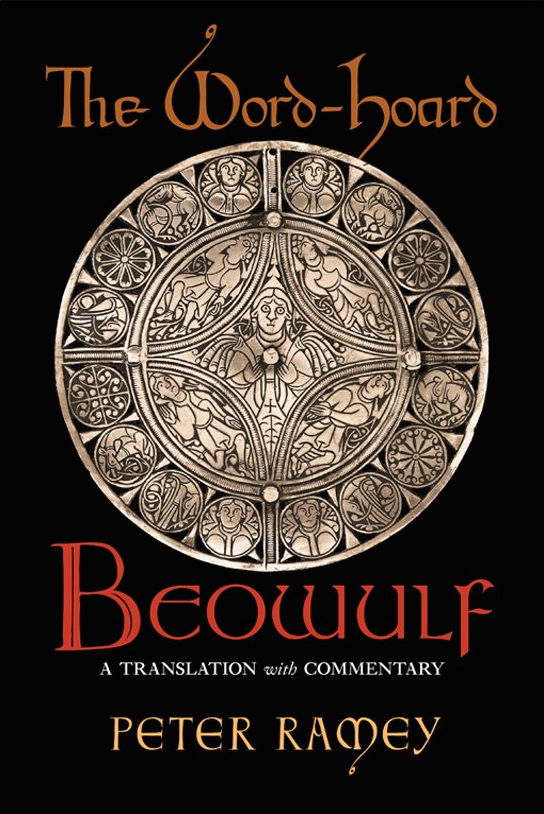
Peter Ramey, author of The Word-Hoard: Beowulf, a Translation and Commentary, on the Christian imagination behind a famous Old English poem
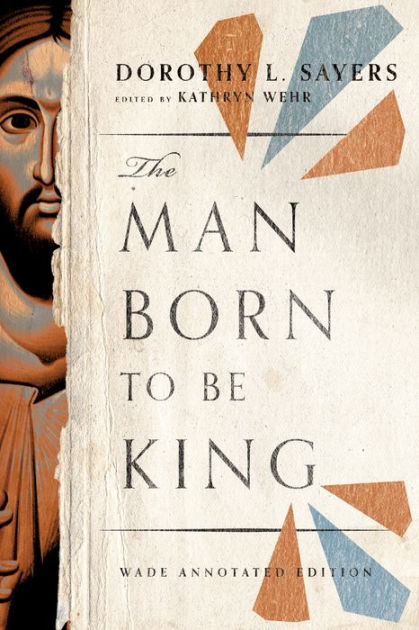
Kathryn Wehr, editor of the Wade Annotated Edition of Dorothy L. Sayers’s The Man Born to Be King, on the background to a remarkable series of twelve radio plays originally broadcast in the 1940s
Related reading and listening
- St. Thomas the anthropologist — G. K. Chesterton on Aquinas’s complete Science of Man
- Taking up the tale — In this lecture, Malcolm Guite explains how the literary tradition is received, studied, indwelt, and then passed on as a living thing. (105 minutes)
- Volume 106 excerpts — Hear excerpts of interviews with Adam Briggle, John C. Médaille, Christopher Page, Christian Smith, Herman Daly, and Thomas Hibbs (33 minutes)
- “It takes character to read a book” — Joel Halldorf examines how our relationship to texts and reading changes as technology shifts. (53 minutes)
- “Ecce homo” — In this lecture, Orthodox theologian John Behr draws from the book of Genesis and early Church Fathers Irenaeus, Ignatius, Maximus to answer the question, What is a human being? (53 minutes)
- The construction of the empty self — Angela Franks explains the history of the modern concept of identity as a project and shows how it falls short of a holistic Christian view of the self. (minutes)
- The mystery and dignity of the human person — Jens Zimmermann reflects on why a defense of personhood is a crucial task for the future of humanity. (47 minutes)
- A courageous witness — Geoffrey Zokal discusses his forthcoming film on the life and witness of Jesuit priest and theologian Henri de Lubac (1896–1991). (23 minutes)
- Reality and the relations that constitute us — Reuben Slife discusses key concerns in the work of David L. Schindler (1943–2022). 31 (minutes)
- Implications of an “absent” God — David L. Schindler (1943–2022) explores the implications for a civilization that discards the reality that being is grounded in God. (66 minutes)
- Ungodly confusion about “the secular” — David L. Schindler on the theological mistakes behind the miniaturization of God
- Mars Hill Audio Journal, Volume 168 — FEATURED GUESTS: Brian Brock, Fr. Luke Bell, Peter Harrison, Katie Calloway, Brent Strawn, and Petroc Willey
- David Cayley, R.I.P. — David Cayley (1946–2026) describes Ivan Illich’s insights into the “instrumental attitude” that defines modernity, in particular the blurring of the distinction between mechanisms and organisms. (39 minutes)
- Feelings made articulate — Glenn C. Arbery on poetry and the intelligibility of the inner life
- The utopian pursuit of endless youth — FROM VOL. 118 Gilbert Meilaender explains why anti-aging research cannot be a metaphysically neutral topic, and argues against the utopianism of escaping the body. (23 minutes)
- Poetry and the shaping of virtue — Glenn C. Arbery discusses the Vanderbilt Agrarians, poetry, and the moral imagination and the shaping of virtue. (32 minutes)
- The unmasking of self-fictions — Glenn Arbery describes what the genre of tragedy reveals about human experience and how it does this work of revelation. (63 minutes)
- “The secret at the heart of poetry” — Glenn Arbery explores how lyric poetry works to reveal essential insights into human and transcendent experience. (47 minutes)
- The plausibility of “post-human” aspirations — FROM VOL. 140 James Herrick discusses the “post-human” aspirations of the transhumanist movement, and how its plausibility is established by stories. (28 minutes)
- Problems of Christian nationalism — in Byzantium — Alexander Schmemann on the danger of neglecting the duty to speak truth to power
- Quiet misanthropy vs. Christian humanism — Bishop Robert Barron explores the misanthropic and inherently unstable anthropology at the heart of the modern university and offers an alternative for human flourishing. (46 minutes)
- The “two-foldness” of human nature — In this lecture, Marc Barnes critiques the current reigning system of gender for its ironies, internal inconsistencies, and failure to satisfy or “work” on its own terms. (32 minutes)
- Excerpts from Volume 112 — Hear excerpts from interviews with Christian Smith, David L. Schindler, Sara Anson Vaux, Melvyn Bragg, Timothy Larsen, and Ralph C. Wood. (34 minutes)
- The nature of things — In this 2026 lecture, Mary Harrington explores modernity’s “Thomophobic epistemological straitjacket” that bans serious inquiry into the nature of things. (41 minutes)
- A very figurative and metaphorical God — David Lyle Jeffrey on the poetic character of the voice of God
- The story of the demotion of stories — Malcolm Guite on the Enlightenment’s rash dismissal of poetic knowledge
- The desires of the heart, the constraints of creation — Roger Lundin describes how Richard Wilbur’s poetry connects aesthetic experience to life in the world.
- Poetry and attention — Poet Scott Cairns reflects on the beauty of language and the power of words. (18 minutes)
- We are not “stochastic parrots” — In this essay, Talbot Brewer argues that our understanding of the nature of words and their relationship to human nature is “teetering” due to artificial intelligence chatbot systems and large language models (LLMs). (42 minutes)
- The popularity of C. S. Lewis’s Mere Christianity — FROM VOL. 133 Historian George Marsden discusses the birth and influential life of C. S. Lewis’s book Mere Christianity. (26 minutes)
- Mid-20th century intellectual consensus — FROM VOL. 122 George Marsden discusses the influence of public intellectuals in America during the 1950s and their concerns for national moral consensus. (22 minutes)
- Catechesis in “Screentopia” — In this lecture, Brad East builds a case for why he believes digital technology is the greatest threat facing American Christians today. (57 minutes)
- On disposable experience — Todd Gitlin argues that we simultaneously resent and crave the experience of media saturation, and that it ultimately cheapens our lives. (33 minutes)
- Social(izing) medium — Todd Gitlin on the ways in which television and other media have shaped our ways of having emotions
- Looking past the juicy distraction — Marshall McLuhan on the necessity of evaluating how — not just what — various media convey
- Immediately yours — Todd Gitlin on the effect of media on our sense of time
- Truth lives in language — Craig Gay reflects on how language is not merely a tool for humans to use, but is a part of our very being as creatures made in the image of the God who is the living Word. (52 minutes)
- Modern isolation — FROM VOL. 150 Eric Jacobsen argues that the emblematic items of the car windshield, the television, and the cell phone — “three pieces of glass” —have led to alienation from people and the places where we live. (22 minutes)
- How tech is making us less human — Christine Rosen argues that we must reckon with serious moral and ethical questions raised by the acceleration of “artificial intelligence” into almost every area of life. (31 minutes)
- Turning Petrarchan love poetry on its head — Dr. Benedict Whalen examines the influence of Petrarchan love poetry on Europe, and he reveals through a close read of Romeo and Juliet how Shakespeare subverted key features of Petrarch’s love poems to rich effect. (54 minutes)
- A living tradition — In this lecture, James Matthew Wilson explores the nature of tradition as a “condition of possibility” that situates both reason and poetry. (49 minutes)
- Human beings as “word-bearers” — In this lecture, D. C. Schindler argues that misology — hatred for reason and contempt for language — is a deep cause of our current cultural crisis. (56 minutes)
- Mars Hill Audio Journal, Volume 167 — FEATURED GUESTS: Nicholas Carr, Thomas Ward, Joseph Stuart, Steven Knepper, Robert Wyllie, Ephraim Radner, and Andrew Willard Jones
- Nietzsche, technology, and desire — Steven Knepper and Robert Wyllie discuss philosopher Byung-Chul Han’s thought on Nietzsche and on the effects of digital media on concepts of freedom, desire, and receptivity to others. (14 minutes)
- Knowing and living our metaphysical totality — Clyde Kilby on the power of myth to bring together “the slender hints of the knowable”
- Modernity’s crisis of place — Craig Bartholomew reflects on the importance of place to our humanity. (58 minutes)
- The Bride of Christ — John Cavadini explores the different views of Origen and Augustine as to the nature and mission of the Church, and he calls for a recovery of the identity of the Church as the Bride of Christ. (38 minutes)
- Reason and the love of truth — FROM VOL. 97 James Peters discusses historical understandings of reason and rationality and how they differ from the modern notion of rationality. (21 minutes)
- Early ambivalence toward anti-Nazi resistance — FROM VOL.107 Biographer Ferdinand Schlingensiepen talks about the memory of Dietrich Bonhoeffer in the post-war period of Germany, and how his popularity changed over the years. (15 minutes)
- The inward eye, cosmic truth, and making well — Andrew Kern takes his listeners along an “interlinear” reading of a portion of St. Augustine’s Confessions that explores the differences between how God makes and how we create. (38 minutes)
Click on the tags below for listings of related readings or audio features.
Tags:
DramaFarney, KirkHistoryHuman natureIncarnationJones, Andrew WillardKaethler, AndrewMaier, Walter A.Manhattan ProjectMediaNolan, James L., Jr.PoetryPolitical theologyRamey, PeterRatzinger, Joseph CardinalReligion and public lifeSayers, Dorothy L.Schmemann, AlexanderSheen, Fulton J.Wehr, Kathryn