PREVIEW
The player for this Journal volume is only available to current members or listeners with a legacy account. If you have an active membership, log in here. If you’d like to become a member — with access to all our audio programs — sign up here.
Guests heard on Volume 141
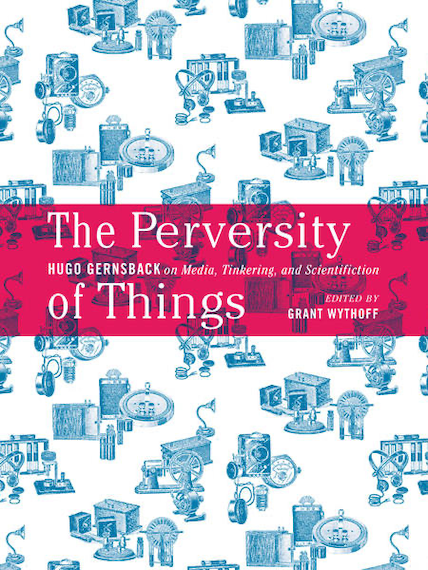
Grant Wythoff, author of The Perversity of Things: Hugo Gernsback on Media, Tinkering, and Scientification, on the technophiliac obsessions of Hugo Gernsback, the geeky midwife of modern science fiction
Susanna Lee, author of Hard-Boiled Crime Fiction and the Decline of Moral Authority, on how the hard-boiled protagonists of crime fiction in the 1930s and ’40s were replaced by more nihilistic tough guys in the 1950s and ’60s
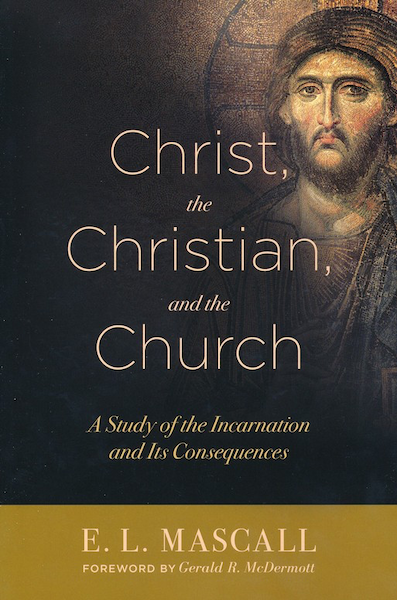
Gerald R. McDermott, contributor to E. L. Mascall’s Christ, the Christian, and the Church, on how the work of theologian E. L. Mascall can expose blind spots in contemporary Christian thought
Carlos Eire, author of Reformations: The Early Modern World, 1450–1650, on how and why religion became “interiorized” in the wake of the reformations of the sixteenth century
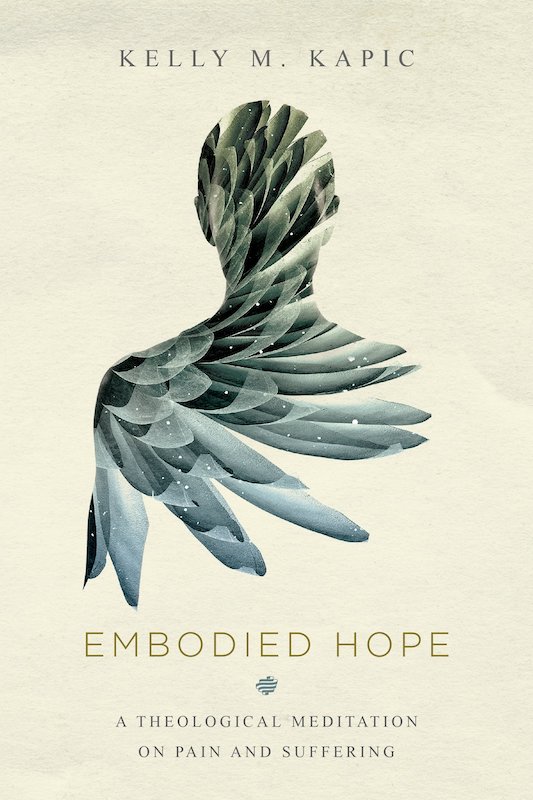
Kelly Kapic, author of Embodied Hope: A Theological Meditation on Pain and Suffering, on theology’s use of experience and why the Incarnation is the ground of Christian hope
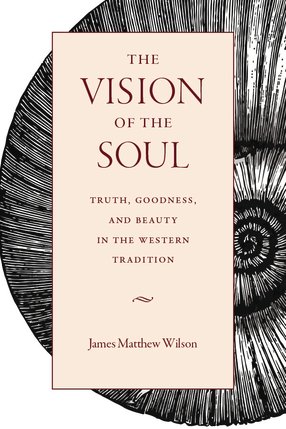
James Matthew Wilson, author of The Vision of the Soul: Truth, Goodness, and Beauty in the Western Tradition, on the beauty of truth and goodness, and on the necessity of cultivating “intellectual vision”
Related reading and listening
- We are not “stochastic parrots” — In this essay, Talbot Brewer argues that our understanding of the nature of words and their relationship to human nature is “teetering” due to artificial intelligence chatbot systems and large language models (LLMs). (42 minutes)
- The strengths of Christian scholarship — FROM VOL. 25 George Marsden explores the culture of suspicion in academia toward Christian scholarship and argues for its inclusion as intellectually viable and coherent with regard to reality. (11 minutes)
- Mid-20th century intellectual consensus — FROM VOL. 122 George Marsden discusses the influence of public intellectuals in America during the 1950s and their concerns for national moral consensus. (22 minutes)
- Catechesis in “Screentopia” — In this lecture, Brad East builds a case for why he believes digital technology is the greatest threat facing American Christians today. (57 minutes)
- “Your life is a miracle” — In this lecture, L. M. Sacasas questions whether Byung-Chul Han’s critique of modern life as a “burnout society” is still accurate. (40 minutes)
- On disposable experience — Todd Gitlin argues that we simultaneously resent and crave the experience of media saturation, and that it ultimately cheapens our lives. (33 minutes)
- Social(izing) medium — Todd Gitlin on the ways in which television and other media have shaped our ways of having emotions
- Looking past the juicy distraction — Marshall McLuhan on the necessity of evaluating how — not just what — various media convey
- Immediately yours — Todd Gitlin on the effect of media on our sense of time
- Modern isolation — FROM VOL. 150 Eric Jacobsen argues that the emblematic items of the car windshield, the television, and the cell phone — “three pieces of glass” —have led to alienation from people and the places where we live. (22 minutes)
- How tech is making us less human — Christine Rosen argues that we must reckon with serious moral and ethical questions raised by the acceleration of “artificial intelligence” into almost every area of life. (31 minutes)
- A living tradition — In this lecture, James Matthew Wilson explores the nature of tradition as a “condition of possibility” that situates both reason and poetry. (49 minutes)
- Human beings as “word-bearers” — In this lecture, D. C. Schindler argues that misology — hatred for reason and contempt for language — is a deep cause of our current cultural crisis. (56 minutes)
- Mars Hill Audio Journal, Volume 167 — FEATURED GUESTS: Nicholas Carr, Thomas Ward, Joseph Stuart, Steven Knepper, Robert Wyllie, Ephraim Radner, and Andrew Willard Jones
- Contemplative, receptive, tender, graceful — Byung-Chul Han on the true shape of hope
- Nietzsche, technology, and desire — Steven Knepper and Robert Wyllie discuss philosopher Byung-Chul Han’s thought on Nietzsche and on the effects of digital media on concepts of freedom, desire, and receptivity to others. (14 minutes)
- The destructive perils of speech without a real partner — Josef Pieper and Marc Barnes on how chatbots pervert the nature of conversation
- How to make war on nothingness? — David Bentley Hart argues that if it rejects Christ, the only remaining option for a post-Christian culture is conscious or “narcotic” nihilism, which takes the form of absolute, meaningless volition. (66 minutes)
- Machines and misanthropy — Nicholas Carr on how technology has transformed our understanding of progress (and people)
- Alienation and autoamputation: the price of power — Nicholas Carr on the numbing effect of technology
- Disengagement from the world — Nicholas Carr encourages us to consider how automation technologies impact our ability to engage with the world and whether — like a good tool — they present a more inviting world or close us off from that world. (30 minutes)
- A sampling of newly published lectures — Ken Myers introduces listeners to four recently released lectures, courtesy of our Partners. The lecturers are Jennifer Frey, Gary Saul Morson, N. T. Wright, and Andrew Kern. (27 minutes)
- “If there is no God, all is permitted” — Gary Saul Morson explores the consequences of belief and disbelief in God through Russian literature. (51 minutes)
- Grace and Christian realism — Jennifer Frey explores Thomist elements in Flannery O’Connor’s theology and writing, with a particular emphasis on a Thomist understanding of art. (39 minutes)
- Rose without thorns — Ken Myers introduces various settings of “Ther is no rose of swych vertu,” a medieval carol that uses imagery of a rosebush to describe the Virgin Mary. (29 minutes)
- The beauty of truth and goodness — FROM VOL. 141 James Matthew Wilson talks about how cultivating the desire to perceive the interior life of things sustains the basic human capacity for recognizing truth, pursuing wisdom, and contemplating beauty. (23 minutes)
- A flood of images — Oliver O’Donovan describes the distinctive character of publicity in modernity, which drowns us in a flood of ever-changing representations that do not serve the common good. (37 minutes)
- Life more abundantly — Jeanne Schindler advocates for a return to an understanding and prioritizing of sensory experience — real engagement with the real world — as foundational to learning and living. (35 minutes)
- Mystery novels with theological concerns — In these interviews from 1993, mystery author P. D. James speaks about the philosophical and theological issues woven into her novels, and Alan Jacobs discusses James’s novel The Children of Men. (23 minutes)
- Modern fictional “heroes” — FROM VOL. 141 Susanna Lee discusses moral authority in the heroes of hard-boiled crime fiction. (24 minutes)
- Technophiliac obsessions — FROM VOL. 141 Literary and media scholar Grant Wythoff talks about the “father of science fiction,” Hugo Gernsback. (26 minutes)
- Heaven and earth are full of His glory — Gerald R. McDermott examines the typological tradition of the Church, particularly through Jonathan Edwards’s thought, and he argues for a recovery of the Christian understanding of the universe as an “immense Trinitarian symbol.” (61 minutes)
- Ontology and reality in fiction — Katy Carl discusses Catholic novelist Graham Greene’s skill in portraying the struggle between spiritual belief and doubt. (27 minutes)
- Sacred and Profane Love: Graham Greene and the Catholic Imagination — Katy Carl discusses novelist Graham Greene’s fiction and spiritual struggles in light of the concept of the Catholic imagination. (49 minutes)
- Media as agencies of order — Media theorist John Durham Peters wants us to reexamine the purposes of media and how fundamental media are. (59 minutes)
- Utopian dreams and cynicism — John Durham Peters discusses the history of the idea of communication, saying that our hopes are too high when we believe that the solution to social discord is just better communication. (49 minutes)
- Thinking Together — Alan Jacobs discusses some principles he’s compiled to help us think well (and charitably) in our cultural context, and he warns us to be attentive to the ways technology displaces previously fixed communities. (53 minutes)
- What adolescence misses — FROM VOL. 94 Mark Bauerlein talks about the ways of learning and living practiced by contemporary youth, how they impact the acquisition and use of knowledge and form intellectual habits, and what this means for the future of our society. (16 minutes)
- Helping boys become virtuous men — Teacher and chaplain Mark Perkins describes forms of formation that take the body seriously 50 minutes
- The temptations of talismanic technologies — Jeffrey Bilbro on the persistence of techno-utopianism
- Living in a tool-i-fied world — Joseph Minich on how the ubiquity of technology makes atheism entirely plausible
- The amplification of distraction — FROM VOL. 152 Jeffrey Bilbro advocates a Christian posture toward our contemporary digital media ecosystem that addresses its disorienting and disintegrating effects. (23 minutes)
- In the Image of Our Devices — Nicholas Carr considers how automation technologies impact our ability to engage with the world. (66 minutes)
- Georges Bernanos & the Mystery of the Human Person — Translator J. C. Whitehouse praises French novelist Georges Bernanos’s profundity in exploring the depths of the human soul through the vehicle of fiction. (58 minutes)
- The vocation of the life of the mind — FROM VOL. 117 Jeffry Davis and Philip Ryken explain why the liberal arts ought to be recognized as a calling that enriches Christian living. (26 minutes)
- The recovery of an integrated ecology — In this essay, Michael Hanby unpacks the summons of Laudato si’ to an ecological way of life based on a proper understanding of creation in its fullness and integrity. (57 minutes)
- Truth, goodness, and beauty (and why they matter) — FROM VOL. 147 Philosopher D. C. Schindler examines how postmodernism poses a unique threat to our sense of an interior self. (28 minutes)
- The downward spiral of all technocracies — Andrew Willard Jones explains the two paths that exist with the development of new technologies: one which leads to an expansion of the humane world and one which exploits and truncates both Creation and humanity. (65 minutes)
- Flannery at 100 — In honor of Flannery O’Connor’s 100th birthday, we have gathered here an aural feast of interviews with O’Connor scholars and aficionados discussing her life, work, and faith. (3 hours, 28 minutes)
- How social media truncates relationships — In this lecture, Felicia Wu Song explains how social media industrializes and monetizes our relationships, forming us in modes of relationships and identity that are detrimental to ourselves and to society. (41 minutes)