PREVIEW
The player for this Journal volume is only available to current members or listeners with a legacy account. If you have an active membership, log in here. If you’d like to become a member — with access to all our audio programs — sign up here.
Guests heard on Volume 152
Elisabeth Lasch-Quinn, author of Ars Vitae: The Fate of Inwardness and the Return of the Ancient Arts of Living, on the revival of interest in pre-Christian philosophical schools (in response to postmodern nihilism)
Jeffrey Bilbro, author of Reading the Times: A Literary and Theological Inquiry into the News, on resisting the disorienting and disintegrating effects of modern media
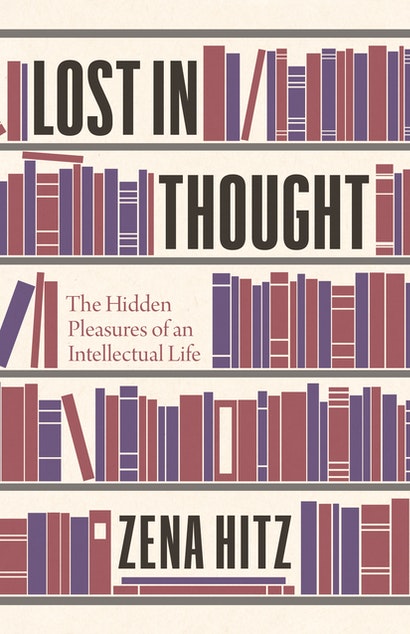
Zena Hitz, author of Lost in Thought: The Hidden Pleasures of an Intellectual Life, on the love of learning and the freedom animated by the intellectual life
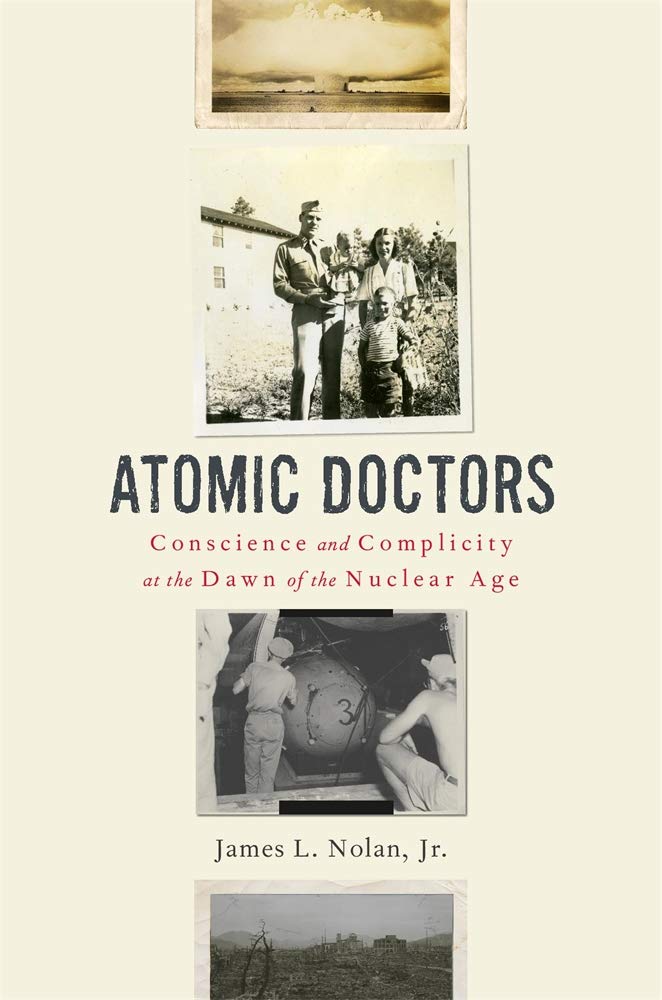
James L. Nolan, Jr., author of Atomic Doctors: Conscience and Complicity at the Dawn of the Nuclear Age, on the lessons we should have learned from the experience of the Manhattan Project
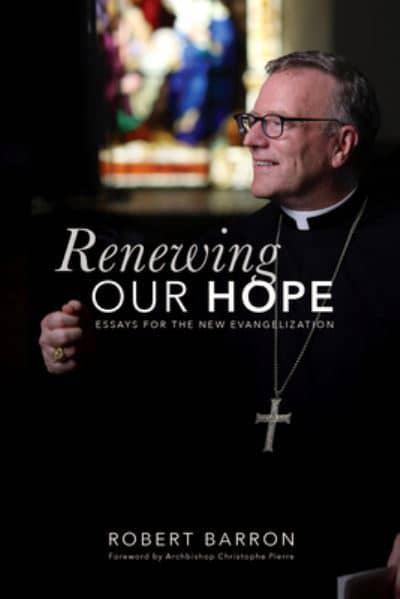
Bishop Robert Barron, author of Renewing Our Hope: Essays for the New Evangelization, on God, freedom, faith, reason, and the need to keep theology linked with sanctity
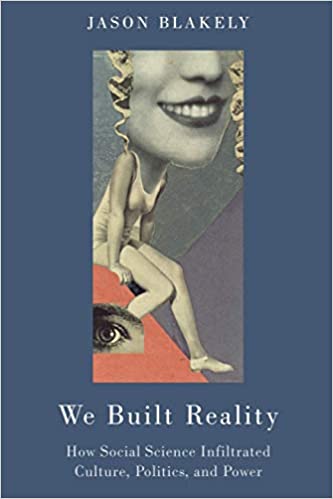
Jason Blakely, author of We Built Reality: How Social Sciences Infiltrated Culture, Politics, and Power, on how the social sciences are interpretive disciplines, more like the humanities than the “hard” sciences
Related reading and listening
- How to make war on nothingness? — David Bentley Hart argues that if it rejects Christ, the only remaining option for a post-Christian culture is conscious or “narcotic” nihilism, which takes the form of absolute, meaningless volition. (66 minutes)
- “Subtraction stories” and a longing for transcendence — In this lecture, James K. A. Smith explores key elements of Charles Taylor’s understanding of what it means to live in a secular age. (43 minutes)
- The beauty of truth and goodness — FROM VOL. 141 James Matthew Wilson talks about how cultivating the desire to perceive the interior life of things sustains the basic human capacity for recognizing truth, pursuing wisdom, and contemplating beauty. (23 minutes)
- A flood of images — Oliver O’Donovan describes the distinctive character of publicity in modernity, which drowns us in a flood of ever-changing representations that do not serve the common good. (37 minutes)
- Beyond a reasonable doubt — From a 1980 interview with Ken Myers, Mortimer J. Adler discusses his argument that belief in the existence of God is rational. (14 minutes)
- Christian belief as real knowledge — Dallas Willard on the modern divorce between faith and knowledge
- Media as agencies of order — Media theorist John Durham Peters wants us to reexamine the purposes of media and how fundamental media are. (59 minutes)
- Thinking Together — Alan Jacobs discusses some principles he’s compiled to help us think well (and charitably) in our cultural context, and he warns us to be attentive to the ways technology displaces previously fixed communities. (53 minutes)
- Introducing Volume 165 — Ken Myers introduces listeners to Volume 165 of the Journal with short segments from each interview. (32 minutes)
- The temptations of talismanic technologies — Jeffrey Bilbro on the persistence of techno-utopianism
- Mars Hill Audio Journal, Volume 165 — FEATURED GUESTS: Jeffrey Bilbro, Daniel McInerny, Joseph Minich, Carl Elliott, Nadya Williams, and Don W. King
- The amplification of distraction — FROM VOL. 152 Jeffrey Bilbro advocates a Christian posture toward our contemporary digital media ecosystem that addresses its disorienting and disintegrating effects. (23 minutes)
- The reciprocity of all things — FROM VOL. 148 Jeffrey Bilbro explores the importance of sustainability through the essays, poetry and fiction of Wendell Berry. (13 minutes)
- What are students for? — FROM VOL. 140 Drawing from Wendell Berry’s works, Jack Baker and Jeffrey Bilbro discuss a vision of higher education that respects a multidimensional notion of place. (23 minutes)
- Immediately yours — Todd Gitlin on the effect of media on our sense of time
- The vocation of the life of the mind — FROM VOL. 117 Jeffry Davis and Philip Ryken explain why the liberal arts ought to be recognized as a calling that enriches Christian living. (26 minutes)
- Seneca’s moral courage — Dana Gioia explains how Seneca’s family was interwoven with the Roman governing class, ultimately leading to the philospher’s death at the hands of Emperor Nero. (27 minutes)
- Wonder, being, skepticism, and reason — FROM VOL. 135 Matthew Levering talks about the long and rich tradition of reasoning about God. (23 minutes)
- Impact of “infotainment” on community — Neil Gabler and C. John Sommerville discuss how the mentalities conveyed by our experience with communications media work against the nurturing of community. (36 minutes)
- Defined by what we buy — FROM VOL. 48 Gary Cross argues that Americans are uniquely susceptible to the temptation to define ourselves by what we buy. (10 minutes)
- Sensory overload — FROM VOL. 59 Todd Gitlin discusses the effects of media saturation on our mental and emotional lives. (14 minutes)
- When philosophy loses its way — FROM VOL. 52 Ralph McInerny (1929–2010) speaks about themes from his 1999 Gifford Lectures, which relate how natural theology came to be regarded as pointless, resulting in a philosophical dead end.(24 minutes)
- The need for robust Christian intellectual life — In this lecture, Robert Benne surveys the contemporary landscape in which Christian scholars attempt to integrate their faith and their intellectual life. (43 minutes)
- Treating Truth with sovereign respect — Henri de Lubac on the urgency of intellectual activity
- Mars Hill Audio Journal, Volume 163 — FEATURED GUESTS: Andrew Youngblood, R. J. Snell, Nicholas Denysenko, Nigel Biggar, Robert McNamara, and David Cayley
- Embodied knowledge — FROM VOL. 121 James K. A. Smith advocates for a return to some pre-modern conceptualizations of the human body. (18 minutes)
- From shadows to the light of reality — FROM VOL. 153 Louis Markos argues that Plato needs to be recognized for his unique and serendipitous role in preparing the world for Christ. (24 minutes)
- Faith as the pathway to knowledge — Lesslie Newbigin on authority and the Author of all being
- St. Irenaeus against the Gnostics — In this reading of an essay by theologian Khaled Anatolios, St. Irenaeus is remembered for his synthesis of faith and reason. (52 minutes)
- The life was the light of men — Robert Jenson reflects on the relationship that should be sustained between the Church and those of her members with an “intellectual” vocation.
- Infrastructures of addiction — Christopher Lasch on the subversive effects of the expectation of novelty
- Bilbro, Jeffrey — FROM THE GUEST PAGE: Jeffrey Bilbro is Associate Professor of English at Grove City College and Editor-in-Chief at the Front Porch Republic.
- Barron, Bishop Robert — FROM THE GUEST PAGE: Bishop Robert Barron is the bishop of the Diocese of Winona-Rochester (Minnesota) and the founder of Word on Fire Catholic Ministries.
- Blakely, Jason — FROM THE GUEST PAGE: Jason Blakely is Associate Professor of Political Science at Pepperdine University in California. He is a writer whose books and essays straddle deep divides of Left and Right, religious and secular, academic and popular.
- Mars Hill Audio Journal, Volume 159 — FEATURED GUESTS:
Kirk Farney, Andrew Willard Jones, James L. Nolan, Jr., Andrew Kaethler, Peter Ramey, and Kathryn Wehr
- Among Oppenheimer’s company — James L. Nolan, Jr., the author of Atomic Doctors: Conscience and Complicity at the Dawn of the Nuclear Age, discusses the Manhattan Project as a case study in the dangers of technological enthusiasm outpacing wisdom and caution. (27 minutes)
- A frail, fedora-wearing Prometheus — Roger Shattuck on the moral confusion of J. Robert Oppenheimer
- Alice von Hildebrand centennial — Today’s Feature presents a recording of remarks made by Alice von Hildebrand at an event celebrating her 90th birthday, where she spoke of gratitude and the gifts of God in her life. (17 minutes)
- Mars Hill Audio Journal, Volume 156 — FEATURED GUESTS:
Kimbell Kornu, Paul Tyson, Mark Noll, David Ney, William C. Hackett, and Marian Schwartz
- Postmodern man in search of a soul — Christopher Kaczor argues that celebrity psychologist Jordan Peterson asks important, forgotten questions as a “fellow traveler” to Christianity. (27 minutes)
- Fuller and truer ways of being — Zena Hitz on some of the blessings of the love of learning
- Trails, furrows, and bookish virtues — Zena Hitz offers some rich reflections on the remarkable feature of human life that is the love of learning. (16 minutes)
- What is really true? Why does beauty matter? — Bishop Robert Barron talks about the necessity of persuading people that theological claims are about things that are objectively true, not just personally meaningful. (14 minutes)
- Discovering inherited metaphysical commitments — Andrew Davison on the importance for theology of becoming more philosophically self-conscious
- Diagnosing our political conflicts — Michael Hanby explains why the modern pursuit of freedom — obeying its founding logic — has taken such a destructive turn. (36 minutes)
- Religious pluralism & the calling of Christian intellectuals — From our archives, Robert Wilken talks about religious pluralism in Christian history, and Robert Jenson discusses his essay on the calling of Christian intellectuals. (25 minutes)
- Mars Hill Audio Journal, Volume 148 — FEATURED GUESTS:
Steven D. Smith, Willem Vanderburg, Jeffrey Bilbro, Emma Mason, Alison Milbank, and Timothy Larsen
- The paradoxes of therapeutic culture — Stephen Gardner and Elisabeth Lasch-Quinn discuss Philip Reiff’s diagnosis of how psychology replaced the social roles of religion, morality, and custom, redefining the meaning of what is public. (39 minutes)
- Mars Hill Audio Journal, Volume 147 — FEATURED GUESTS:
R. Jared Staudt, Jason Peters, D. C. Schindler, Craig Gay, Mary Hirschfeld, and Patrick Samway
- Lessons from quarantine: Making do with tinned fruit — In this audio reprint of “Wendell Berry and Zoom,” Front Porch Republic editor Jeffrey Bilbro reflects on two metaphors that can help put our new-found “dependency” on web-based video conferencing into perspective: tinned fruit and a prosthetic limb. (17 minutes)