
PREVIEW
The player for this Journal volume is only available to current members or listeners with a legacy account. If you have an active membership, log in here. If you’d like to become a member — with access to all our audio programs — sign up here.
Guests heard on Volume 153
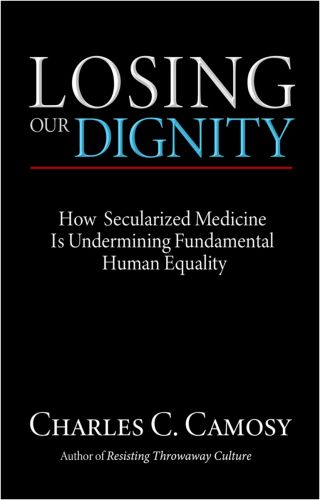
Charles C. Camosy, author of Losing Our Dignity: How Secularized Medicine is Undermining Fundamental Human Equality, on how the exclusion of theological affirmations in bioethics threatens human dignity
read more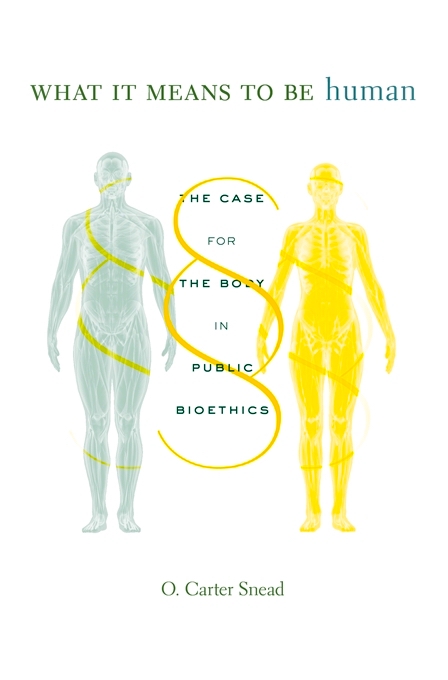
O. Carter Snead, author of What It Means to Be Human: The Case for the Body in Public Bioethics, on how laws and public regulations conceal an implicit theological anthropology
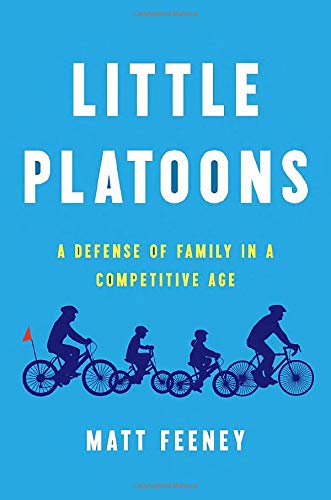
Matt Feeney, author of Little Platoons: A Defense of Family in a Competitive Age, on how anticipation of the college admissions process encourages “competitive parenting”
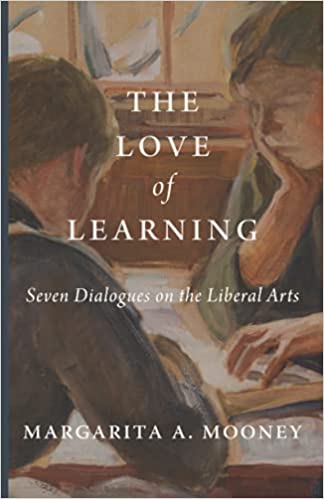
Margarita A. Mooney, author of The Love of Learning: Seven Dialogues on the Liberal Arts, on how the liberal arts promote a love of learning
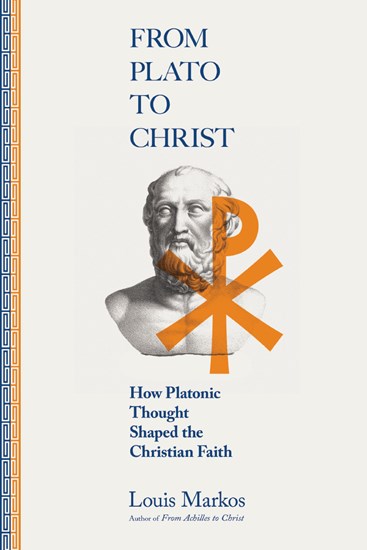
Louis Markos, author of From Plato to Christ: How Platonic Thought Shaped the Christian Faith, on why Christians shouldn’t ignore the gifts to the Church given by Plato’s philosophical insights (Archive Feature available)
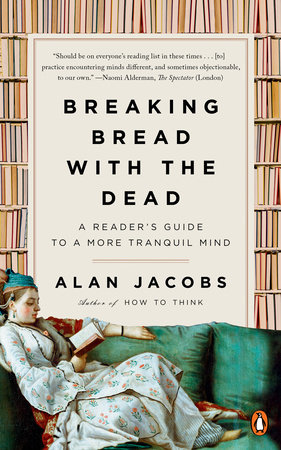
Alan Jacobs, author of Breaking Bread with the Dead: A Reader’s Guide to a More Tranquil Mind, on escaping the tempestuous climate of modern media by reading books by dead people
Related reading and listening
- Knowing and living our metaphysical totality — Clyde Kilby on the power of myth to bring together “the slender hints of the knowable”
- Modernity’s crisis of place — Craig Bartholomew reflects on the importance of place to our humanity. (58 minutes)
- The inward eye, cosmic truth, and making well — Andrew Kern takes his listeners along an “interlinear” reading of a portion of St. Augustine’s Confessions that explores the differences between how God makes and how we create. (38 minutes)
- The cost of “killing” God — In this October 2023 lecture, Carl Trueman explores the concept of “desecration” as a frame for understanding the nature of modernity in our time. (42 minutes)
- Silence at the end of history — Alan Jacobs examines several literary imaginings of “the last days” and argues that such narration is profoundly inadequate and perhaps even presumptuous. (51 minutes)
- How music blesses and teaches —
FROM VOL. 64 Theologian and musician Jeremy Begbie explores what we learn about time, theology, and the structure of Creation from the experience of music. (28 minutes) - Cosmic realities in the built world — Christopher and Christine Perrin discuss the implications of architect Christopher Alexander’s (1936–2022) discovery of patterns of building that cohere with the the created cosmos and with ourselves as human creatures. (59 minutes)
- Life more abundantly — Jeanne Schindler advocates for a return to an understanding and prioritizing of sensory experience — real engagement with the real world — as foundational to learning and living. (35 minutes)
- Mystery novels with theological concerns — In these interviews from 1993, mystery author P. D. James speaks about the philosophical and theological issues woven into her novels, and Alan Jacobs discusses James’s novel The Children of Men. (23 minutes)
- Alert to the magic in the world — Junius Johnson discusses the importance of teaching stories, particularly fairy stories, in classical education. (25 minutes)
- The de(con)struction of the humanities (and of truth) — Historian Gertrude Himmelfarb on the skeptical tendencies of the postmodern academy
- Universities as the hosts of reciprocating speech — Robert Jenson on how the Christian understanding of Truth in a personal Word shaped the Western university
- University or “utiliversity”? — In this essay, Reinhard Hütter examines in depth John Henry Newman’s The Idea of a University and argues that its insights and prescriptions are urgently relevant to the current status of higher education. (87 minutes)
- Utopian dreams and cynicism — John Durham Peters discusses the history of the idea of communication, saying that our hopes are too high when we believe that the solution to social discord is just better communication. (49 minutes)
- Thinking Together — Alan Jacobs discusses some principles he’s compiled to help us think well (and charitably) in our cultural context, and he warns us to be attentive to the ways technology displaces previously fixed communities. (53 minutes)
- The “scandal” of theology in the university — Edward T. Oakes, S.J. explains why John Henry Newman’s eloquent defense of the nature of university education, The Idea of a University, continues to inspire, challenge, and even frustrate its sympathizers. (24 minutes)
- Man as “both mystic and hobbit” — D. C. Schindler explores how building is a quintessential human activity and an expression of our view of the meaning of reality. (47 minutes)
- Setting the liberal arts free — In addressing the state of liberal arts education in the U.S., Gilbert Meilaender raises some core questions and makes some surprising proposals. (28 minutes)
- The establishment of nonbelief —
FROM VOL. 10 George Marsden explains how and why American universities became places where religious concerns are excluded. (10 minutes) - Students as arbiters of knowledge —
FROM VOL. 94 Tim Clydesdale discusses the experience of freshmen year at college, suggesting that by that time students have been effectively inoculated against a love of knowledge. (21 minutes) - Helping boys become virtuous men — Teacher and chaplain Mark Perkins describes forms of formation that take the body seriously 50 minutes
- Still connected to the land — Nadya Williams on the inescapably earthy character of human flourishing
- The amplification of distraction —
FROM VOL. 152 Jeffrey Bilbro advocates a Christian posture toward our contemporary digital media ecosystem that addresses its disorienting and disintegrating effects. (23 minutes) - What are students for? —
FROM VOL. 140 Drawing from Wendell Berry’s works, Jack Baker and Jeffrey Bilbro discuss a vision of higher education that respects a multidimensional notion of place. (23 minutes) - The avant garde of secularization —
FROM VOL. 38 Alvin Kernan explains sweeping changes in American university education since the 19th century. (11 minutes) - Christ-animated learning —
FROM VOL. 142 Perry L. Glanzer and Nathan F. Alleman discuss the fragmentation of modern higher education and why we need theology to unify universities. 26 minutes) - Clips from five extended interviews — We are pleased to share clips from five interviews that we’ve recently produced as full-length Conversations. (30 minutes)
- Wayfaring, but not strange — Alan Jacobs on being on the way
- Pathways of the Mind: The Joy of the Essay — Alan Jacobs thinks Christians should embrace the potential in the literary form of the essay, because of the way it corresponds to the navigation and journey of a Christian life. (48 minutes)
- The vocation of the life of the mind —
FROM VOL. 117 Jeffry Davis and Philip Ryken explain why the liberal arts ought to be recognized as a calling that enriches Christian living. (26 minutes) - A Christian understanding of human nature —
FROM VOL. 35 Robert C. Roberts and Mark R. Talbot discuss the need for Christian psychologists to draw from Christianity’s deep tradition of understanding human nature. (15 minutes) - Postmodern culture and the gospel —
FROM VOL. 6 Roger Lundin discusses the ethical and theological consequences of our postmodern culture. (9 minutes) - The recovery of an integrated ecology — In this essay, Michael Hanby unpacks the summons of Laudato si’ to an ecological way of life based on a proper understanding of creation in its fullness and integrity. (57 minutes)
- Manners and morals —
FROM VOL. 19 Film and literary critic Alan Jacobs discusses how modern audiences relate to the manners and morals portrayed in Jane Austen films. (16 minutes) - Politics and the good —
FROM VOL. 160 D. C. Schindler argues that political order cannot be disentangled from the social, and that fundamental questions of what humans are and what the good is cannot be bracketed from politics. (30 minutes) - The profound drama of human sexuality — In this lecture, D. C. Schindler explains the cosmological significance of human sexuality and why it is paradigmatic of the relationship between nature and freedom. (32 minutes)
- A poet’s relationship to time —
FROM VOL. 57 Poet Wilmer Mills (1969–2011) discusses how his agricultural and cross-cultural childhood in Brazil shaped his imagination and his relationship with modernity. (11 minutes) - The downward spiral of all technocracies — Andrew Willard Jones explains the two paths that exist with the development of new technologies: one which leads to an expansion of the humane world and one which exploits and truncates both Creation and humanity. (65 minutes)
- To see people as people — Anthony Bradley argues that a recovery of Christian personalism is needed to counter the dehumanization, polarization, and tribalism of our day. (45 minutes)
- The importance of literary reading —
FROM VOL. 70 Dana Gioia discusses the important role literary reading plays in society and the 2004 publication from the NEA about such reading. (13 minutes) - Ideas made incarnate — In this lecture, Karen Swallow Prior examines the power of great literature to shape lives, nourish imaginations, and develop a vision of the good life. (43 minutes)
- Ethical issues in neurobiological interventions — William Hurlbut explores current neurobiological advancements and the ethics and dangers of biotechnology interventions that go beyond therapy. (62 minutes)
- An impoverished anthropology —
FROM VOL. 146 Mark Mitchell asks whether there is anything that truly binds Americans together beyond their commitment to self-creation. (34 minutes) - An embedded life — Following a move from one state to another, Gilbert Meilaender explores the tension between being simultaneously a sojourner and a body located in place and time. (30 minutes)
- Against hacking babies — Oliver O’Donovan raises questions about IVF and the technologically ordered motive for efficiency
- On the Degeneration of Attentiveness — Critic Nicholas Carr talks about how technology-driven trends affect our cultural and personal lives. (56 minutes)
- Gratitude, vitalism, and the timid rationalist — In this lecture, Matthew Crawford draws a distinction between an orientation toward receiving life as gift and a timid and cramped rationalism that views man as an object to be synthetically remade. (52 minutes)
- Humans as biological hardware — In this essay, Brad Littlejohn and Clare Morell decry how modern technology tends to hack the human person in pursuit of profit. (55 minutes)
- A richer, deeper view of human dignity —
FROM VOL. 98 Moral philosopher Gilbert Meilaender examines the question of human dignity and its place within political discourse. (25 minutes) - “The system will be first” —
FROM VOL. 27 Robert Kanigel describes the transformation of work due to Frederick Winslow Taylor’s concept of scientific management. (11 minutes)