PREVIEW
You are unauthorized to view this page.
Guests heard on Volume 54
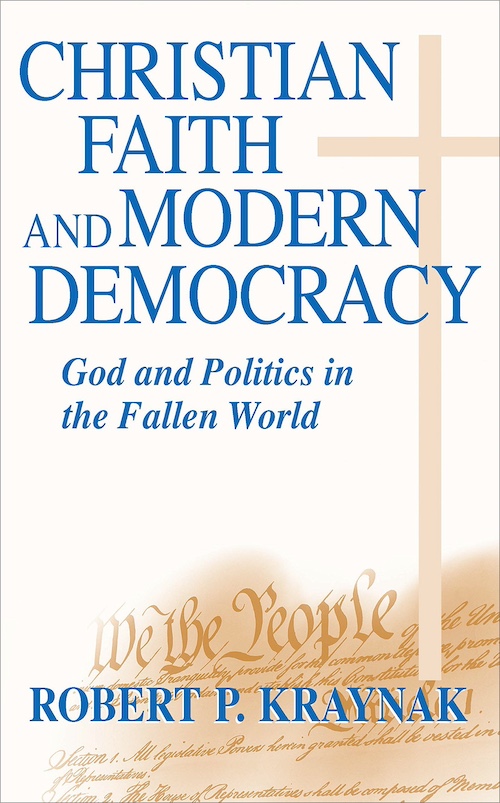
Robert P. Kraynak, author of Christian Faith and Modern Democracy: God and Politics in a Fallen World, on the complicated relationship between religion and government
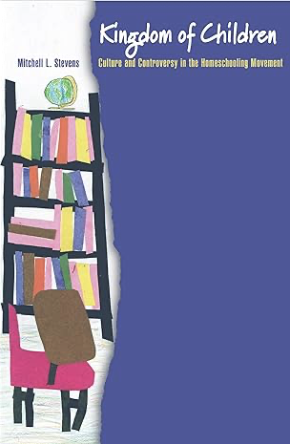
Mitchell L. Stevens, author of Kingdom of Children: Culture and Controversy in the Homeschooling Movement, on homeschooling and the individuality of children
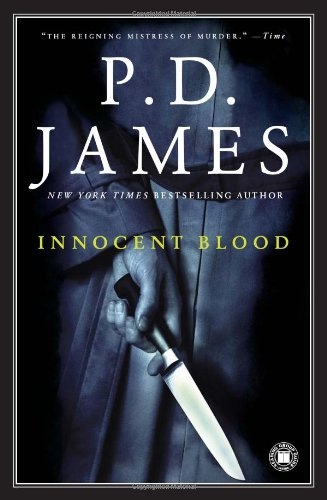
Ralph C. Wood on the Christian achievement of detective novelist P. D. James
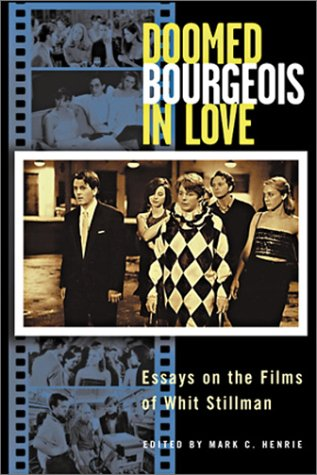
Mark Henrie, author Doomed, Bourgeois, In Love: Essays on the Films of Whit Stillman, on the films of Whit Stallman and the overcoming of irony
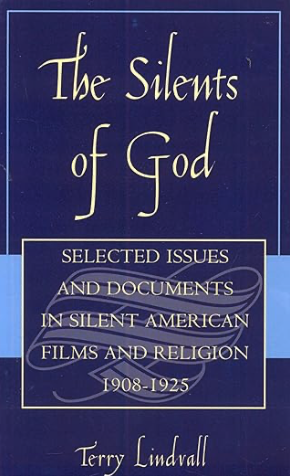
Terry Lindvall, author of The Silents of God: Selected Issues and Documents in Silent American Film and Religion, 1908–1925, on the responses of American churches to the advent of motion pictures
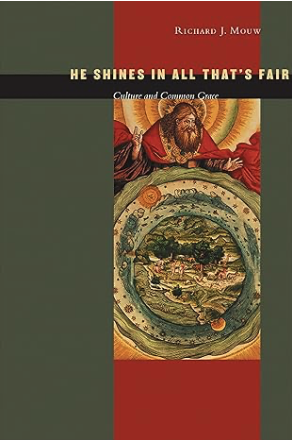
Richard J. Mouw, , author of He Shines in All That’s Fair: Culture and Common Grace, on sin, culture, and common grace
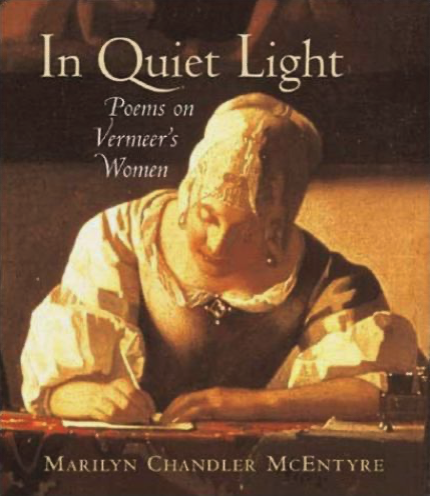
Marilyn Chandler McEntyre on her book In Quiet Light: Poems on Vermeer’s Women

Bonus: Mark C. Henrie on his interest in Whit Stillman’s films
Related reading and listening
- The reclaiming of authentic liberalism — John Médaille examines the Christian roots of liberalism and how liberalism might be recovered from the heresy of secularism. (51 minutes)
- “Your life is a miracle” — In this lecture, L. M. Sacasas questions whether Byung-Chul Han’s critique of modern life as a “burnout society” is still accurate. (40 minutes)
- Turning Petrarchan love poetry on its head — Dr. Benedict Whalen examines the influence of Petrarchan love poetry on Europe, and he reveals through a close read of Romeo and Juliet how Shakespeare subverted key features of Petrarch’s love poems to rich effect. (54 minutes)
- A living tradition — In this lecture, James Matthew Wilson explores the nature of tradition as a “condition of possibility” that situates both reason and poetry. (49 minutes)
- Mars Hill Audio Journal, Volume 167 — FEATURED GUESTS: Nicholas Carr, Thomas Ward, Joseph Stuart, Steven Knepper, Robert Wyllie, Ephraim Radner, and Andrew Willard Jones
- How to make war on nothingness? — David Bentley Hart argues that if it rejects Christ, the only remaining option for a post-Christian culture is conscious or “narcotic” nihilism, which takes the form of absolute, meaningless volition. (66 minutes)
- The contested idea of beauty in art —
FROM VOL.58 Ted Prescott describes the turn that the role of art in the West took in the 19th century in response to the weight of the “canons” and philosophy of beauty developed during the 17th and 18th centuries. (23 minutes) - A sampling of newly published lectures — Ken Myers introduces listeners to four recently released lectures, courtesy of our Partners. The lecturers are Jennifer Frey, Gary Saul Morson, N. T. Wright, and Andrew Kern. (27 minutes)
- Grace and Christian realism — Jennifer Frey explores Thomist elements in Flannery O’Connor’s theology and writing, with a particular emphasis on a Thomist understanding of art. (39 minutes)
- Mars Hill Audio Journal, Volume 166 — FEATURED GUESTS: William Cavanaugh, Kent Burreson, Beth Hoeltke, Jeffrey Barbeau, Jason Baxter, John Betz, and Bruce Herman
- The pathos of sin —
FROM VOL. 15 Poet Robert Pinsky discusses his translation of Dante’s Inferno. (9 minutes) - Existential preparation for reading literature —
FROM VOL. 128 Rod Dreher recounts how he thought he was reading Dante’s Commedia, when in reality the poem was reading him. (18 minutes) - An icon of the whole world — Jason Baxter explains how Dante includes a panoply of characters and creatures in his Comedia, offering a prismatic view of all of Creation in its glory. (20 minutes)
- Art that witnesses, consoles, and strengthens — Artist Margaret Adams Parker explores the human need to lament and reveals how various “arts of lament” console, strengthen, bear witness to those who engage with them. (51 minutes)
- Politics and idolatry —
FROM VOL. 109 Theologian William Cavanaugh explains how the modern state is a unique kind of political entity, inviting a new kind of idolatry. (26 minutes) - The modern invention of “religion” —
FROM VOL. 101 Theologian William Cavanaugh examines the emptiness of the myth of religious violence. (22 minutes) - Films that lead to contemplation —
FROM VOL. 162 David Paul Baird discusses some of the films on the Vatican’s list of recommended films. (25 minutes) - Life more abundantly — Jeanne Schindler advocates for a return to an understanding and prioritizing of sensory experience — real engagement with the real world — as foundational to learning and living. (35 minutes)
- Mystery novels with theological concerns — In these interviews from 1993, mystery author P. D. James speaks about the philosophical and theological issues woven into her novels, and Alan Jacobs discusses James’s novel The Children of Men. (23 minutes)
- Modern fictional “heroes” —
FROM VOL. 141 Susanna Lee discusses moral authority in the heroes of hard-boiled crime fiction. (24 minutes) - Technophiliac obsessions —
FROM VOL. 141 Literary and media scholar Grant Wythoff talks about the “father of science fiction,” Hugo Gernsback. (26 minutes) - An invitation to a feast — Christina Bieber Lake explains how poetry is an invitation to experience the beauty and goodness of Creation as gift. (44 minutes)
- Ontology and reality in fiction — Katy Carl discusses Catholic novelist Graham Greene’s skill in portraying the struggle between spiritual belief and doubt. (27 minutes)
- Sacred and Profane Love: Graham Greene and the Catholic Imagination — Katy Carl discusses novelist Graham Greene’s fiction and spiritual struggles in light of the concept of the Catholic imagination. (49 minutes)
- Alert to the magic in the world — Junius Johnson discusses the importance of teaching stories, particularly fairy stories, in classical education. (25 minutes)
- Students as arbiters of knowledge —
FROM VOL. 94 Tim Clydesdale discusses the experience of freshmen year at college, suggesting that by that time students have been effectively inoculated against a love of knowledge. (21 minutes) - Helping boys become virtuous men — Teacher and chaplain Mark Perkins describes forms of formation that take the body seriously 50 minutes
- Mars Hill Audio Journal, Volume 165 — FEATURED GUESTS: Jeffrey Bilbro, Daniel McInerny, Joseph Minich, Carl Elliott, Nadya Williams, and Don W. King
- Georges Bernanos & the Mystery of the Human Person — Translator J. C. Whitehouse praises French novelist Georges Bernanos’s profundity in exploring the depths of the human soul through the vehicle of fiction. (58 minutes)
- “The greatest works of art are endless” — Daniel McInerny argues that more robust reflection about how we attend to art enables us to discover deeper meaning in it and to experience greater sensory and intellectual joy. (16 minutes)
- From enthusiasm to discernment — Hans Urs von Balthasar on how the assumption that taste is entirely subjective is a function of immaturity
- Abstraction, immanence, & the cultural landscape — Artist, philosopher, and art historian discuss the tension between self-expression, transcendence, and the material world.
- Only religion can save the arts — Camille Paglia: “For the fine arts to revive, they must recover their spiritual center.”
- Art and whateverism — Jed Perl on why great art is triumphantly intolerant
- Power to the people — Nathan O. Hatch on the DIY spirit of early American Christianity
- Two versions of Shadowlands —
FROM VOL. 10 Marjorie Mead examines two film portrayals of C. S. Lewis, noting which best captures Lewis’s jovial personality and the nuances of his faith. (4 minutes) - Christian unity and civil society — Oliver O’Donovan introduces listeners to Dutch lay theologian Hugo Grotius, arguing that the questions he tackled relate to perennial concerns about the relationship between divine and human agency, and between civil and ecclesiastical authority. (Lecture 2 of 3; 57 minutes)
- Manners and morals —
FROM VOL. 19 Film and literary critic Alan Jacobs discusses how modern audiences relate to the manners and morals portrayed in Jane Austen films. (16 minutes) - Beauty, Spirit, & Embodiment: A Christian View of Art — Adrienne Chaplin explains why a Christian approach to art must involve various levels of inquiry and not be limited to discussions of worldview or meaning alone. (46 minutes)
- Poetry and Liturgy — Karen Dieleman explores the influence of liturgical practices on shaping the imaginations and poetry of Elizabeth Barrett Browning, Christina Rossetti, and Adelaide Proctor. (49 minutes)
- The troubled marriage of art and democracy — Historian David Smith explains the idealistic (and naïve) political motivations behind the establishing of the National Endowment for the Arts, founded in 1965. (52 minutes)
- The moral complicity of movie audiences — Film critic David Thomson explains why Alfred Hitchcock’s film Psycho achieves a kind of unique synergy with American culture, raising unsettling questions about alienation and identity. (33 minutes)
- Sacramental Poetics — Poet and Eastern Orthodox believer Scott Cairns explains how a good poem functions like an icon: it assists the process of our becoming aware of what is real, and it is generative in the ways it keeps opening up new understandings. (56 minutes)
- Poetry and piety —
FROM VOL. 48 James Trott discusses insights he learned while editing A Sacrifice of Praise: An Anthology of Christian Poetry in English from Caedman to the Mid-Twentieth Century. (7 minutes) - A poet’s relationship to time —
FROM VOL. 57 Poet Wilmer Mills (1969–2011) discusses how his agricultural and cross-cultural childhood in Brazil shaped his imagination and his relationship with modernity. (11 minutes) - The life of the city in poetry —
FROM VOL. 1 Ken Myers talks with W. H. Auden’s biographer and literary executor, Edward Mendelson, about political and social themes in Auden’s poetry. (7 minutes) - Joy & sorrow, destitution & abundance — In this poetry reading and talk, poet Christian Wiman discusses his own faith journey and how his struggles worked themselves into his poems. (40 minutes)
- Seeing Creation Anew: The Life & Poetry of Gerard Manley Hopkins — Dana Gioia examines Gerard Manley Hopkins‘s poetic genius and dedication to Christ in spite of his personal trials and difficult cultural context. (55 minutes)
- “The essence of a moment, clearly perceived” — Haiku poet Gary Hotham reads his poetry and discusses how the form of haiku reveals the connection between creatures and creation. (45 minutes)
- The joy and mystery of poetry —
FROM VOL. 98 Jeanne Murray Walker discusses how she helps students approach and appreciate poetry as the mysteriously meaningful literature it is, rather than as a linguistic cage containing static meaning to be abstracted from the words of the poem. (23 minutes)