PREVIEW
The player for this Journal volume is only available to current members or listeners with a legacy account. If you have an active membership, log in here. If you’d like to become a member — with access to all our audio programs — sign up here.
Guests heard on Volume 89
Jerome Wakefield, author of The Loss of Sadness: How Psychiatry Transformed Normal Sadness into Depressive Disorder, on how psychiatry began ignoring causes of mental suffering and so defined sadness as a disease
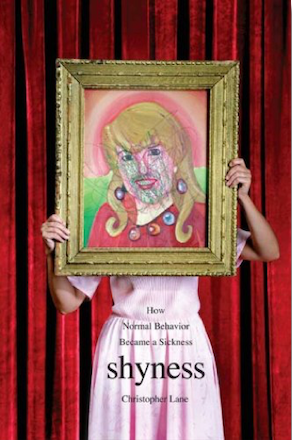
Christopher Lane, author of Shyness: How Normal Behavior Became a Sickness, on the complex characteristics of anxiety and the tendency to treat the absence of ease with drugs
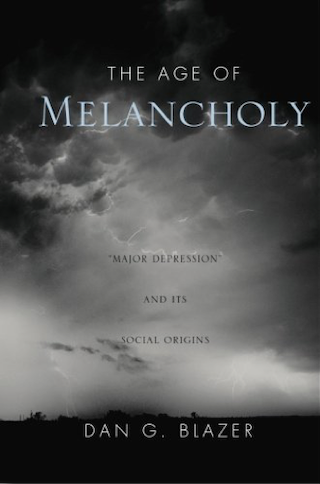
Dan Blazer, author of The Age of Melancholy: “Major Depression” and Its Social Origins, on why psychiatric disorders require attention to the story of patients’ lives
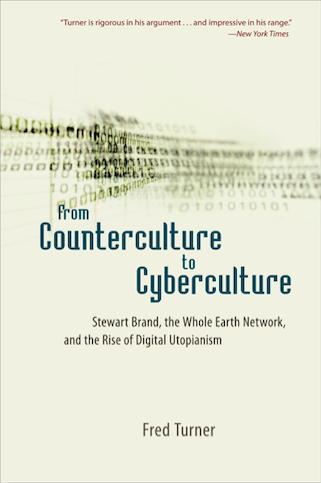
Fred Turner, author of From Counterculture to Cyberculture: Stewart Brand, the Whole Earth Network, and the Rise of Digital Utopianism, on 1960s dreams of countercultural change and the rise of the Whole Earth Catalog
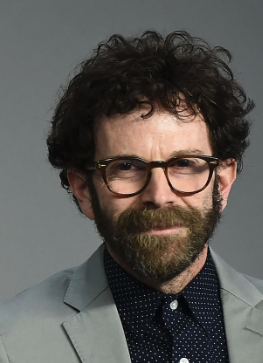
Barrett Fisher, on the films of screenwriter Charlie Kaufman (Being John Malkovich, Eternal Sunshine of the Spotless Mind, etc.)
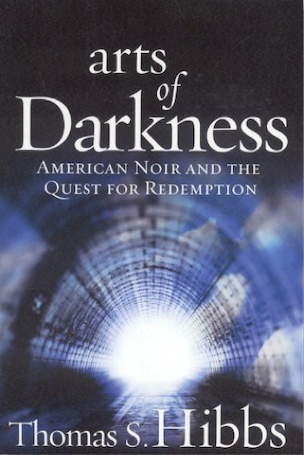
Thomas Hibbs, author of Arts of Darkness: American Noir and the Quest for Redemption, on the theme of the possibility of redemption in film noir, “neo-noir,” and similar films

Bonus: Jerome Wakefield on the role of drug companies in promoting new assumptions about the nature of mental health, and on the benefits of negative emotions
Related reading and listening
- We are not “stochastic parrots” — In this essay, Talbot Brewer argues that our understanding of the nature of words and their relationship to human nature is “teetering” due to artificial intelligence chatbot systems and large language models (LLMs). (42 minutes)
- God at the center of all — George Marsden discusses the unique philosophical and theological insights Jonathan Edwards (1703–1758) had into his own era. (35 minutes)
- Catechesis in “Screentopia” — In this lecture, Brad East builds a case for why he believes digital technology is the greatest threat facing American Christians today. (57 minutes)
- Modern isolation — FROM VOL. 150 Eric Jacobsen argues that the emblematic items of the car windshield, the television, and the cell phone — “three pieces of glass” —have led to alienation from people and the places where we live. (22 minutes)
- How tech is making us less human — Christine Rosen argues that we must reckon with serious moral and ethical questions raised by the acceleration of “artificial intelligence” into almost every area of life. (31 minutes)
- Human beings as “word-bearers” — In this lecture, D. C. Schindler argues that misology — hatred for reason and contempt for language — is a deep cause of our current cultural crisis. (56 minutes)
- Mars Hill Audio Journal, Volume 167 — FEATURED GUESTS: Nicholas Carr, Thomas Ward, Joseph Stuart, Steven Knepper, Robert Wyllie, Ephraim Radner, and Andrew Willard Jones
- Nietzsche, technology, and desire — Steven Knepper and Robert Wyllie discuss philosopher Byung-Chul Han’s thought on Nietzsche and on the effects of digital media on concepts of freedom, desire, and receptivity to others. (14 minutes)
- The destructive perils of speech without a real partner — Josef Pieper and Marc Barnes on how chatbots pervert the nature of conversation
- Machines and misanthropy — Nicholas Carr on how technology has transformed our understanding of progress (and people)
- Alienation and autoamputation: the price of power — Nicholas Carr on the numbing effect of technology
- Disengagement from the world — Nicholas Carr encourages us to consider how automation technologies impact our ability to engage with the world and whether — like a good tool — they present a more inviting world or close us off from that world. (30 minutes)
- Films that lead to contemplation — FROM VOL. 162 David Paul Baird discusses some of the films on the Vatican’s list of recommended films. (25 minutes)
- Life more abundantly — Jeanne Schindler advocates for a return to an understanding and prioritizing of sensory experience — real engagement with the real world — as foundational to learning and living. (35 minutes)
- Technophiliac obsessions — FROM VOL. 141 Literary and media scholar Grant Wythoff talks about the “father of science fiction,” Hugo Gernsback. (26 minutes)
- Utopian dreams and cynicism — John Durham Peters discusses the history of the idea of communication, saying that our hopes are too high when we believe that the solution to social discord is just better communication. (49 minutes)
- What adolescence misses — FROM VOL. 94 Mark Bauerlein talks about the ways of learning and living practiced by contemporary youth, how they impact the acquisition and use of knowledge and form intellectual habits, and what this means for the future of our society. (16 minutes)
- Helping boys become virtuous men — Teacher and chaplain Mark Perkins describes forms of formation that take the body seriously 50 minutes
- The temptations of talismanic technologies — Jeffrey Bilbro on the persistence of techno-utopianism
- Living in a tool-i-fied world — Joseph Minich on how the ubiquity of technology makes atheism entirely plausible
- Pathologizing personalities — FROM VOL. 41 David Healy discusses how definitions of health are shaped not just by medical science, but also by intertwining social, cultural, and economic forces. (16 minutes)
- In the Image of Our Devices — Nicholas Carr considers how automation technologies impact our ability to engage with the world. (66 minutes)
- Abstraction, immanence, & the cultural landscape — Artist, philosopher, and art historian discuss the tension between self-expression, transcendence, and the material world.
- Two versions of Shadowlands — FROM VOL. 10 Marjorie Mead examines two film portrayals of C. S. Lewis, noting which best captures Lewis’s jovial personality and the nuances of his faith. (4 minutes)
- The recovery of an integrated ecology — In this essay, Michael Hanby unpacks the summons of Laudato si’ to an ecological way of life based on a proper understanding of creation in its fullness and integrity. (57 minutes)
- Manners and morals — FROM VOL. 19 Film and literary critic Alan Jacobs discusses how modern audiences relate to the manners and morals portrayed in Jane Austen films. (16 minutes)
- The moral complicity of movie audiences — Film critic David Thomson explains why Alfred Hitchcock’s film Psycho achieves a kind of unique synergy with American culture, raising unsettling questions about alienation and identity. (33 minutes)
- The downward spiral of all technocracies — Andrew Willard Jones explains the two paths that exist with the development of new technologies: one which leads to an expansion of the humane world and one which exploits and truncates both Creation and humanity. (65 minutes)
- How social media truncates relationships — In this lecture, Felicia Wu Song explains how social media industrializes and monetizes our relationships, forming us in modes of relationships and identity that are detrimental to ourselves and to society. (41 minutes)
- In technology, we live and move and have our knowing — George Parkin Grant on technology’s establishment of a framework for thinking about technology
- Impact of “infotainment” on community — Neil Gabler and C. John Sommerville discuss how the mentalities conveyed by our experience with communications media work against the nurturing of community. (36 minutes)
- On the Degeneration of Attentiveness — Critic Nicholas Carr talks about how technology-driven trends affect our cultural and personal lives. (56 minutes)
- Gratitude, vitalism, and the timid rationalist — In this lecture, Matthew Crawford draws a distinction between an orientation toward receiving life as gift and a timid and cramped rationalism that views man as an object to be synthetically remade. (52 minutes)
- Humans as biological hardware — In this essay, Brad Littlejohn and Clare Morell decry how modern technology tends to hack the human person in pursuit of profit. (55 minutes)
- “The system will be first” — FROM VOL. 27 Robert Kanigel describes the transformation of work due to Frederick Winslow Taylor’s concept of scientific management. (11 minutes)
- Choices about the uses of technology — This Feature presents interviews with David Nye and Brian Brock related to how we evaluate adoption of new technology and how technology influences our thinking. (31 minutes)
- What it means to be a person — FROM VOL. 147 Sociologist Craig Gay argues that in order to address the challenges of a technological approach to the world, we need to recover the Christian tradition’s robust theology of personhood. (24 minutes)
- The problem with dynamism without direction — Paulina Borsook on the biological paradigm of technolibertarianism’s love of spontaneous dynamism, whatever the costs
- The libertarian spawning-ground of tech bros — Paulina Borsook on high tech’s long-standing animosity toward government and regulation
- Tech bros and public power — Paulina Borsook discusses the “bizarrely narcissistic” and ultra-libertarian culture of Silicon Valley. (22 minutes)
- Voluntarily silencing ourselves — FROM VOL. 39 John L. Locke discusses the value of personal communication and how technology is displacing it. (12 minutes)
- Souls in cyberspace — FROM VOL. 25 Douglas Groothuis examines the worldview and mythology behind the creation and marketing of the Internet. (13 minutes)
- Life in a frictionless, synthetic world — FROM VOL. 17 Mark Slouka explores the worldview of techno-visionaries who aim to create a new era of human evolution. (11 minutes)
- The digital revolution and community — FROM VOL. 7 Ken Myers talks with Jane Metcalfe, the founder of WIRED Magazine, about technology and community. (8 minutes)
- Metaphysical impulses beneath techno-utopianism — FROM VOL. 38 Erik Davis describes his research on how humans’ fascination with technology is permeated with “mythic energy” and gnostic aspirations. (11 minutes)
- Post-Christian America and the “unlimited technological future” — George Parkin Grant on technology and the Puritan legacy of “unflinching wills”
- Progress and God’s providence in American history — Historians Daniel Walker Howe and George McKenna explain religious understandings of God’s purpose for America in the 19th century and colonial era, respectively. (34 minutes)
- Education that counters alienation — In this lecture, Jeanne Schindler explores how digital technologies warp not only education but our experience of being human. (30 minutes)
- What is lost with labor-saving devices — Romano Guardini on what is lost when cultural pursuits eclipse natural order
- Cosmetic surgery and human perfectibility — Elizabeth Haiken examines the shift that occurred in 20th century America from a focus on developing character to a focus on developing “personality” and achieving physical perfection. (19 minutes)