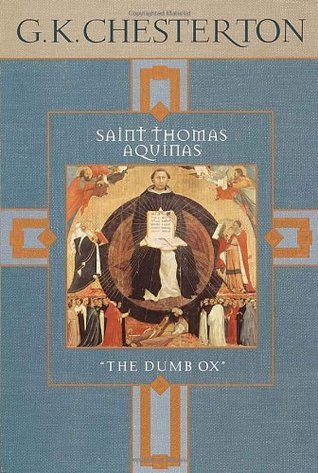
“It is a pity that the word Anthropology has been degraded to the study of Anthropoids. It is now incurably associated with squabbles between prehistoric professors (in more senses than one) about whether a chip of stone is the tooth of a man or an ape; sometimes settled as in that famous case, when it was found to be the tooth of a pig. It is very right that there should be a purely physical science of such things; but the name commonly used might well, by analogy, have been dedicated to things not only wider and deeper, but rather more relevant. Just as, in America, the new Humanists have pointed out to the old Humanitarians that their humanitarianism has been largely concentrated on things that are not specially human, such as physical conditions, appetites, economic needs, environment and so on — so in practice those who are called Anthropologists have to narrow their minds to the materialistic things that are not notably anthropic. They have to hunt through history and pre-history something which emphatically is not Homo Sapiens, but is always in fact regarded as Simius Insipiens.Homo Sapiens can only be considered in relation to Sapientia and only a book like that of St. Thomas is really devoted to the intrinsic idea of Sapientia. In short, there ought to be a real study called Anthropology corresponding to Theology. In this sense Saint Thomas Aquinas, perhaps more than he is anything else, is a great anthropologist.
“I apologise for the opening words of this chapter to all those excellent and eminent men of science, who are engaged in the real study of humanity in its relation to biology. But I rather fancy that they will be the last to deny that there has been a somewhat disproportionate disposition, in popular science, to turn the study of human beings into the study of savages. And savagery is not history; it is either the beginning of history or the end of it. I suspect that the greatest scientists would agree that only too many professors have thus been lost in the bush or the jungle; professors who wanted to study anthropology and never got any further than anthropophagy. But I have a particular reason for prefacing this suggestion of a higher anthropology by an apology to any genuine biologists who might seem to be included, but are certainly not included, in a protest against cheap popular science. For the first thing to be said about St. Thomas as an anthropologist, is that he is really remarkably like the best sort of modern biological anthropologist; of the sort who would call themselves Agnostics. This fact is so sharp and decisive a turning point in history, that the history really needs to be recalled and recorded.
“St. Thomas Aquinas closely resembles the great Professor Huxley, the Agnostic who invented the word Agnosticism. He is like him in his way of starting the argument, and he is unlike everybody else, before and after, until the Huxleyan age. He adopts almost literally the Huxleyan definition of the Agnostic method; ‘To follow reason as far as it will go;’ the only question is — where does it go? He lays down the almost startlingly modern or materialist statement; ‘Every thing that is in the intellect has been in the senses.’ This is where he began, as much as any modern man of science, nay, as much as any modern materialist who can now hardly be called a man of science; at the very opposite end of enquiry from that of the mere mystic. The Platonists, or at least the Neo-Platonists, all tended to the view that the mind was lit entirely from within; St. Thomas insisted that it was lit by five windows, that we call the windows of the senses. But he wanted the light from without to shine on what was within. He wanted to study the nature of Man, and not merely of such moss and mushrooms as he might see through the window, and which he valued as the first enlightening experience of man. And starting from this point, he proceeds to climb the House of Man, step by step and story by story, until he has come out on the highest tower and beheld the largest vision.
“In other words, he is an anthropologist, with a complete theory of Man, right or wrong. Now the modern Anthropologists, who called themselves Agnostics, completely failed to be Anthropologists at all. Under their limitations, they could not get a complete theory of Man, let alone a complete theory of nature. They began by ruling out something which they called the Unknowable. The incomprehensibility was almost comprehensible, if we could really understand the Unknowable in the sense of the Ultimate. But it rapidly became apparent that all sorts of things were Unknowable, which were exactly the things that a man has got to know. It is necessary to know whether he is responsible or irresponsible, perfect or imperfect, perfectible or unperfectible, mortal or immortal, doomed or free, not in order to understand God, but in order to understand Man. Nothing that leaves these things under a cloud of religious doubt can possibly pretend to be a Science of Man; it shrinks from anthropology as completely as from theology. Has a man free will; or is his sense of choice an illusion? Has he a conscience, or has his conscience any authority; or is it only the prejudice of the tribal past? Is there real hope of settling these things by human reason; and has that any authority? Is he to regard death as final; and is he to regard miraculous help as possible? Now it is all nonsense to say that these are unknowable in any remote sense, like the distinction between the Cherubim and the Seraphim, or the Procession of the Holy Ghost. The Schoolmen may have shot too far beyond our limits in pursuing the Cherubim and Seraphim. But in asking whether a man can choose or whether a man will die, they were asking ordinary questions in natural history; like whether a cat can scratch or whether a dog can smell. Nothing calling itself a complete Science of Man can shirk them. And the great Agnostics did shirk them. They may have said they had no scientific evidence; in that case they failed to produce even a scientific hypothesis. What they generally did produce was a wildly unscientific contradiction. Most Monist moralists simply said that Man has no choice; but he must think and act heroically as if he had. Huxley made morality, and even Victorian morality, in the exact sense, supernatural. He said it had arbitrary rights above nature; a sort of theology without theism.”
— from G. K. Chesterton, St. Thomas Aquinas: “The Dumb Ox” (Image Books, 1956, 1933)
Modernity’s crisis of place — Craig Bartholomew reflects on the importance of place to our humanity. (58 minutes)
A sampling of newly published lectures — Ken Myers introduces listeners to four recently released lectures, courtesy of our Partners. The lecturers are Jennifer Frey, Gary Saul Morson, N. T. Wright, and Andrew Kern. (27 minutes)
The inward eye, cosmic truth, and making well — Andrew Kern takes his listeners along an “interlinear” reading of a portion of St. Augustine’s Confessions that explores the differences between how God makes and how we create. (38 minutes)
God also was a Cave-man — G. K. Chesterton on the convergence of omnipotence and impotence in Bethlehem
The cost of “killing” God — In this October 2023 lecture, Carl Trueman explores the concept of “desecration” as a frame for understanding the nature of modernity in our time. (42 minutes)
Theologian and musician Jeremy Begbie explores what we learn about time, theology, and the structure of Creation from the experience of music. (28 minutes)
Moral reasoning and human flourishing — Tim McIntosh describes moral philosopher Alasdair MacIntyre’s intellectual conversion to a synthesis of Aristotelian ethics and Christianity, best embodied in Thomism. (44 minutes)
Cosmic realities in the built world — Christopher and Christine Perrin discuss the implications of architect Christopher Alexander’s (1936–2022) discovery of patterns of building that cohere with the the created cosmos and with ourselves as human creatures. (59 minutes)
Utopian dreams and cynicism — John Durham Peters discusses the history of the idea of communication, saying that our hopes are too high when we believe that the solution to social discord is just better communication. (49 minutes)
Man as “both mystic and hobbit” — D. C. Schindler explores how building is a quintessential human activity and an expression of our view of the meaning of reality. (47 minutes)
Setting the liberal arts free — In addressing the state of liberal arts education in the U.S., Gilbert Meilaender raises some core questions and makes some surprising proposals. (28 minutes)
Robert C. Roberts and Mark R. Talbot discuss the need for Christian psychologists to draw from Christianity’s deep tradition of understanding human nature. (15 minutes)
The recovery of an integrated ecology — In this essay, Michael Hanby unpacks the summons of Laudato si’ to an ecological way of life based on a proper understanding of creation in its fullness and integrity. (57 minutes)
D. C. Schindler argues that political order cannot be disentangled from the social, and that fundamental questions of what humans are and what the good is cannot be bracketed from politics. (30 minutes)
The profound drama of human sexuality — In this lecture, D. C. Schindler explains the cosmological significance of human sexuality and why it is paradigmatic of the relationship between nature and freedom. (32 minutes)
Poet Wilmer Mills (1969–2011) discusses how his agricultural and cross-cultural childhood in Brazil shaped his imagination and his relationship with modernity. (11 minutes)
The downward spiral of all technocracies — Andrew Willard Jones explains the two paths that exist with the development of new technologies: one which leads to an expansion of the humane world and one which exploits and truncates both Creation and humanity. (65 minutes)
To see people as people — Anthony Bradley argues that a recovery of Christian personalism is needed to counter the dehumanization, polarization, and tribalism of our day. (45 minutes)
Mars Hill Audio Journal, Volume 164 — FEATURED GUESTS: Dana Gioia, Brady Stiller, Robert Royal, Richard DeClue, Tiffany Schubert, and Joonas Sildre
Flannery at 100 — In honor of Flannery O’Connor’s 100th birthday, we have gathered here an aural feast of interviews with O’Connor scholars and aficionados discussing her life, work, and faith. (3 hours, 28 minutes)
Ethical issues in neurobiological interventions — William Hurlbut explores current neurobiological advancements and the ethics and dangers of biotechnology interventions that go beyond therapy. (62 minutes)
Insights from St. Thomas’s biblical exegesis — Jason Paone explains how St. Thomas’s commentaries reveal the saint’s personality, his rhetorical flair, and the Christocentric vision that underlie all his work. (24 minutes)
Mary Hirschfeld argues that modern economics makes some fundamental assumptions about personhood, material goods, and God that prevent the development of a truly human understanding of economic life. (20 minutes)
Jonathan McIntosh claims that scholarship has tended to ignore the depth of St. Thomas Aquinas’s influence on J. R. R. Tolkien’s work. (28 minutes)
An embedded life — Following a move from one state to another, Gilbert Meilaender explores the tension between being simultaneously a sojourner and a body located in place and time. (30 minutes)
Gratitude, vitalism, and the timid rationalist — In this lecture, Matthew Crawford draws a distinction between an orientation toward receiving life as gift and a timid and cramped rationalism that views man as an object to be synthetically remade. (52 minutes)
Humans as biological hardware — In this essay, Brad Littlejohn and Clare Morell decry how modern technology tends to hack the human person in pursuit of profit. (55 minutes)
Sociologist Craig Gay argues that in order to address the challenges of a technological approach to the world, we need to recover the Christian tradition’s robust theology of personhood. (24 minutes)
Art critic and sculptor Ted Prescott discusses the work of British realist painter Lucian Freud (notably, the grandson of Sigmund Freud). (8 minutes)
The gift of meaningful work — In this lecture, D. C. Schindler argues that genuine work is inherently meaningful and facilitates an encounter with reality and therefore, ultimately, with God. (36 minutes)
“Gender” as ultimate separation — In this November 2018 lecture, Margaret McCarthy explains how the predictions of Pope Paul VI’s Humanae vitae regarding the consequences of separating sex from procreation have proven true. (38 minutes)
The abolition of the fine arts — In this lecture, R. V. Young examines why people are increasingly unable to discriminate between base and fine art, arguing why this issue is of particular concern to Christians. (41 minutes)
The roots of American disorder — In this reading of an article from 2021 by Michael Hanby, the critique of Marxism in Augusto del Noce’s work is compared with texts from the American Founders. (79 minutes)
Mars Hill Audio Journal, Volume 162 — FEATURED GUESTS: Mark Noll, R. Jared Staudt, Paul Weston, William C. Hackett, Hans Boersma, and David Paul Baird
Marion Montgomery (1934–2002) offers a deep critique of the relationship of the academy to its community in an effort to diagnose how higher education has lost its way. (13 minutes)
Michael L. Peterson discusses how Christianity could inform society’s understandings of education and human nature. (8 minutes)
Education for human flourishing — Co-authors Paul Spears and Steven Loomis argue that Christians should foster education that does justice to humans in our fullness of being. (23 minutes)