Joy & sorrow, destitution & abundance
In this poetry reading and talk, poet Christian Wiman discusses his own faith journey and how his struggles worked themselves into his poems. (40 minutes)
Seeing Creation Anew: The Life & Poetry of Gerard Manley Hopkins
Dana Gioia examines Gerard Manley Hopkins's poetic genius and dedication to Christ in spite of his personal trials and difficult cultural context. (55 minutes)
“The essence of a moment, clearly perceived”
Haiku poet Gary Hotham reads his poetry and discusses how the form of haiku reveals the connection between creatures and creation. (45 minutes)
The joy and mystery of poetry
The idiom for the revelation of mystery
Dana Gioia on the foundational place of poetry in Christian faith
John Donne’s Passion in Life, Faith, & Verse
Poet Dana Gioia discusses the remarkable life of poet John Donne and how his spiritual and intellectual struggles created the conditions for his unique poetic voice. (53 minutes)
Longfellow’s appeal
Sacramental correspondence
“A sign of contradiction”
In this lecture, Daniel Gibbons compares and contrasts understandings of sacramental poetics proposed by Augustine, Aquinas, and Sydney. (36 minutes)
Education as a pilgrimage and a mystery
In this lecture, James Matthew Wilson gives a compelling argument for understanding the role of a literary or poetic education as an immersion of the whole being in truth and beauty. (43 minutes)
“Prophet of holiness”
Timothy Larsen discusses a new edition of George MacDonald's Diary of An Old Soul, a slim book of poem-prayers to be read daily as a devotional aid. (30 minutes)
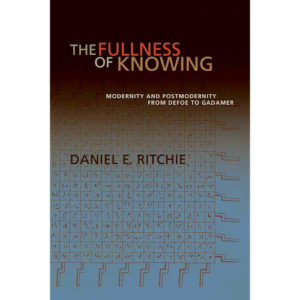
Touch’d with a coal from heav’n
Daniel Ritchie finds in the poetry of William Cowper (1731–1800) an anticipation of Michael Polanyi’s epistemology
How we know the world
Daniel Ritchie argues that poet and hymnodist William Cowper was ahead of his time in critiquing the Enlightenment's reductionist view of knowledge. (16 minutes)
William Cowper: Reconciling the Heart with the Head
Daniel E. Ritchie discusses the life and work of poet William Cowper (1731–1800), comparing his commitment to understanding reality through personal knowledge, intuition, and rigorous contemplation with the thought of Michael Polanyi. (43 minutes)
Bearing witness through poetry
Roger Lundin discusses the incarnational witness of poet Czesław Miłosz (1911–2004), exploring his service to truth and to his native tongue, Polish. (16 minutes)
Czesław Miłosz: A Poet of Luminous Things
Roger Lundin discusses the themes, breadth, and depth of poet Czesław Miłosz's work, explaining how Milosz incarnated in his life and work a sense of exile and alienation so common to modern man. (43 minutes)
Soundings of the human soul
Professor John H. Timmerman discusses the poetry of the late Jane Kenyon (1947-1995) and his visit to her home, Eagle Pond Farm. (16 minutes)
Jane Kenyon: Living and Dying at Eagle Pond Farm
Biographer John H. Timmerman discusses the life and work of poet Jane Kenyon (1947–1995). (53 minutes)