In his magisterial primer on what makes Christian ethics Christian, Resurrection and Moral Order (Eerdmans, 1988), moral philosopher Oliver O’Donovan presented a thorough and compelling account of the nature of authority. Authority, O’Donovan argued, “is what we encounter in the world which makes it meaningful for us to act. An authority, we may say, is something which, by virtue of its kind, constitutes an immediate and sufficient ground for acting.” Authority is that which authorizes our actions, because it informs us about what really is the case, and thus reliably guides us in the way that we should go. Such authorization assumes that reality itself is the work of an Author, who has given the world an intelligible and good order in which our actions can be meaningful.
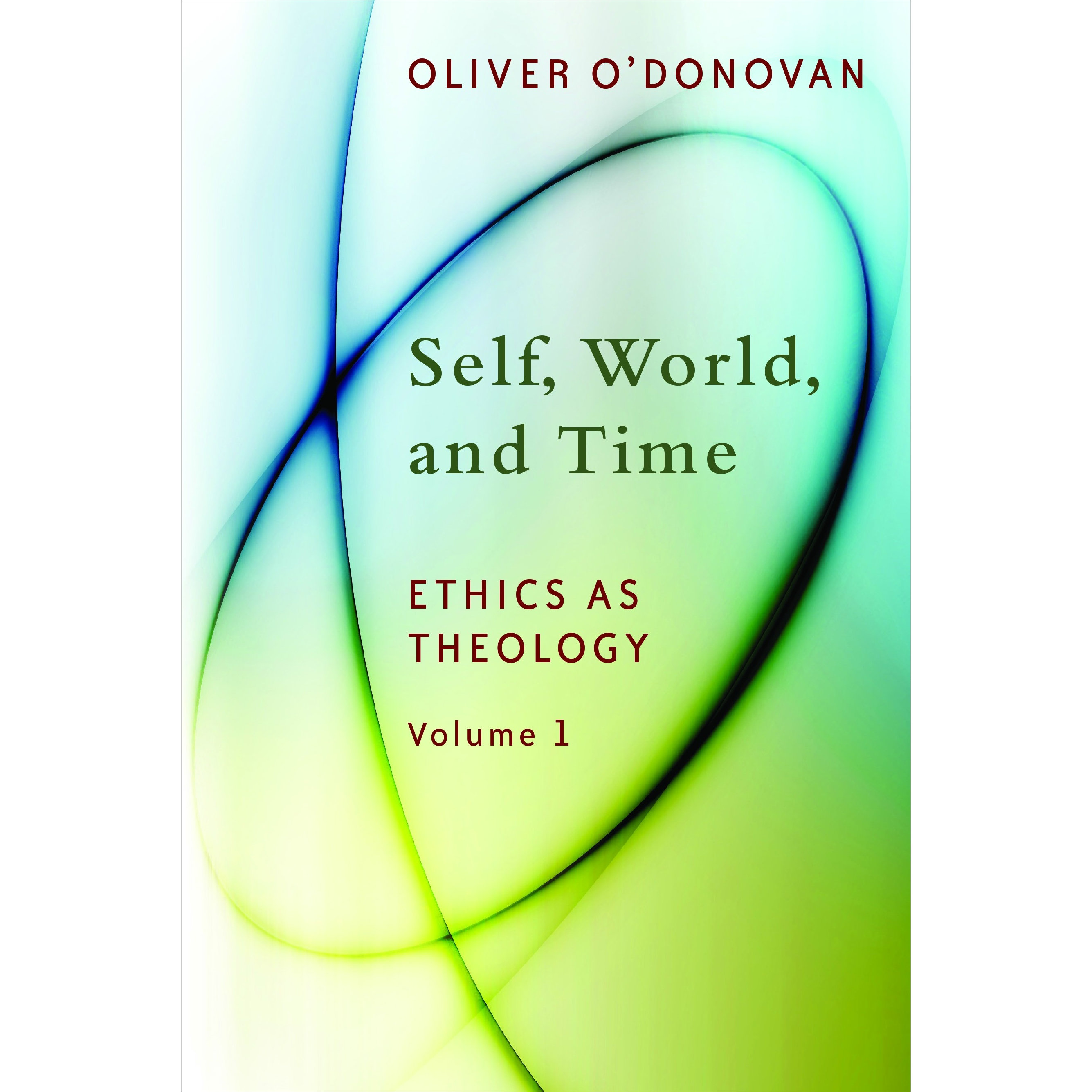
In his 2013 Self, World, and Time, O’Donovan briefly revisits the question of authority in the context of discussing the social nature of moral reflection, what was traditionally designated practical reasoning. In a chapter titled “Moral Communication,” he examines the giving of advice, the obeying of authority, and the teaching of moral principles as three forms of communication in which our role as moral actors in community is made evident.
“Authority,” he writes, “is a focused disclosure of reality, one that demands we turn our attention away from everything else and concentrate it in this one place.” When authority speaks, those under authority do well to attend. But authority doesn’t always explain or justify every word spoken. “‘There are good reasons for this, which I dimly perceive but do not fully comprehend!’ — that is the characteristic form of recognition we accord to any authoritative utterance. That is the best reason available to us in the circumstances. Faith in things unseen is always an element in practical reasonableness. The communicative framework of our practical reasoning does not allow us to take in the complete picture straight off. . . . Truth is mediated in successive moments, giving directions step by step when and as we need it. So while every authority presents reasons to act thus and not otherwise, it presents these reasons without their being wholly conspicuous. They are implicit, only partially disclosed; we must act according to a truth we have only imperfectly grasped.”
Modern societies prefer to speak of “leadership” rather than “authority,” because the latter suggests both hierarchy and a pre-existing order of things to which we should all conform our lives. But suspicion of authority is destructive of community, and its degenerative consequences are becoming more evident by the day. As O’Donovan writes, “Authority penetrates social existence and gives it cohesion. Discomfort with authority in general (as opposed to discomfort with this or that exercise of it) is discomfort with society itself. Liberal and egalitarian philosophy is perfectly clear-sighted in distrusting authority, for authority undermines the presumption that society is a contractual relation among equally self-possessed adults, a presumption which screens out, in Martha Nussbaum’s apt phrase, ‘all the times of asymmetrical or unusual dependency . . . through which all citizens pass.’”
O’Donovan notes that submission to authority in society is not an act of blind and mindless obedience. In our experience, “one exercise of authority may disclose a more extensive view than another, and it is this that makes the difference. Those whose power of speech — explaining, clarifying, making the mysterious plain — commands our believing adherence exercise ‘intellectual authority,’ the authority of wisdom. The teacher who first opens the disciple’s eyes gestures towards a wide horizon.”
And then comes a paragraph that connects with many of the motives, means, and manners of MARS HILL AUDIO. I will leave it to readers and listeners to make the connections:
“Communication is the key. Knowledge uncommunicated, however great, is socially unfruitful. (There is, it must be confessed, a slightly desperate air about the great libraries of the Western world, so full of books unread from century to century; but at least the books are there, and encourage us to hope that we may, one day, get round to reading more of them. More desperate by far are the unread bibliographies of our scholarly writings and the databases of our online bookstores, where so much intellectual labor is reduced to a minuscule electronic note!) Intellectual authority is connected with speech used to good effect, the ability to deploy language powerfully and clearly. ‘The tongue of the wise commends knowledge, but the mouths of fools poor out folly’ (Prov. 15:2). The relentless output of gabble never compensates for loss of articulate control. Acquired skill in the resources of language, its vocabulary, linguistic structures, and rhetorical organization, is essential to framing and focusing the nuanced discernment of reality. It sustains authority, and when it falls into decay, authority falls with it. Linguistic impoverishment in a community causes the most urgent expressions of concern to be dismissed as subjective opinion, and drives the structures of its government away from subtle discernment back upon the crude manipulations of power. Such is our age, which congratulates itself that language evolves, while forgetting that it devolves. Such are our great enterprises with their large budgets and tiny dictionaries, and such is our public discourse, where a leader’s incapacity to construct the simplest sentence is seen as a strong political selling point.”
— From Oliver O’Donovan, Self, World, and Time: Ethics as Theology: An Induction (Eerdmans, 2013)
Related reading and listening
- War and loving our enemy-neighbor — Oliver O’Donovan on evaluating the conduct of war in light of the evangelical command of love
- A flood of images — Oliver O’Donovan describes the distinctive character of publicity in modernity, which drowns us in a flood of ever-changing representations that do not serve the common good. (37 minutes)
- How communities remember who they are — Oliver O’Donovan on the necessity of tradition in sustaining communal identity
- Publicity and representative images in society — Oliver O’Donovan describes the nature of publicity as the force that mediates our communication with one another, creating common interests and then rapidly subsuming them into newer ones.(Lecture 3 of 3; 57 minutes)
- How common loves shape communities — Oliver O’Donovan discusses how communities mediate love and knowledge to their members and what challenges arise as a community’s traditions are confronted by sin, error, and plurality. (Lecture 2 of 3; 49 minutes)
- The “sovereign uselessness of moral reflection” — Calling on the wisdom of St. Augustine, Oliver O’Donovan reminds his listeners that all knowledge participates in the eternal Logos of God and is rooted in love, not disinterested moral judgement.(Lecture 1 of 3; 52 minutes)
- Media as agencies of order — Media theorist John Durham Peters wants us to reexamine the purposes of media and how fundamental media are. (59 minutes)
- Utopian dreams and cynicism — John Durham Peters discusses the history of the idea of communication, saying that our hopes are too high when we believe that the solution to social discord is just better communication. (49 minutes)
- Mars Hill Audio Journal, Volume 165 — FEATURED GUESTS: Jeffrey Bilbro, Daniel McInerny, Joseph Minich, Carl Elliott, Nadya Williams, and Don W. King
- How the Church promotes the cause of freedom — Oliver O’Donovan: “We discover we are free when we are commanded by that authority which commands us according to the law of our being, disclosing the secrets of the heart.”
- Power to the people — Nathan O. Hatch on the DIY spirit of early American Christianity
- “The search for shared ends” — Oliver O’Donovan examines whether and to what extent there might be the possibility of a unifying Christian perspective on political doctrine or policy. (59 minutes)
- Thinking coherently about politics — Ken Myers gives an introduction to political theologian Oliver O’Donovan, whose work has been instrumental in teaching many how to think about social and political life in light of the gospel of Christ. (57 minutes)
- The law of faith and of love — Oliver O’Donovan compares St. Augustine’s interpretation of Psalm 119 with that of others, revealing Augustine’s more nuanced understanding of the complexities of the life of faith that the psalmist explores. (64 minutes)
- “Only a real world can save us” — Oliver O’Donovan explores how the “religion” of modernity lacks a coherent world in which one may participate with full human agency and moral purpose. (Lecture 3 of 3; 61 minutes)
- Christian unity and civil society — Oliver O’Donovan introduces listeners to Dutch lay theologian Hugo Grotius, arguing that the questions he tackled relate to perennial concerns about the relationship between divine and human agency, and between civil and ecclesiastical authority. (Lecture 2 of 3; 57 minutes)
- The demoralizing effect of pagan Roman religion — Oliver O’Donovan examines St. Augustine’s critique of pagan Roman religion in Book II of his treatise City of God and asks his audience to consider what insights Augustine’s critique has for us today. (Lecture 1 of 3; 51 minutes)
- Knowing and doing the good — Oliver O’Donovan raises several key questions and complications involved in the task of taking concrete and practical action toward a recognized moral good. (Lecture 3 of 3; 63 minutes)
- Moral knowledge of reality — Oliver O’Donovan argues that admiration is the fundamental form of knowing the world, as we cannot know fully those elements of reality (“bare facts”) that contain no significance for us. (Lecture 2 of 3; 55 minutes)
- Attentiveness to the world, the self, and time — Oliver O’Donovan uses the metaphor of waking to discuss the concept of moral sensibility as attention to the world, the self, and time. (Lecture 1 of 3; 60 minutes)
- Antagonism or fruitfulness? — FROM VOL. 108 Jean Porter describes how natural law justifies legal and moral authority within the life of the human person. (17 minutes)
- The hatred of logos — D. C. Schindler draws on Plato to argue that in its very form, social media evidences a general contempt for logos — reason and language — which defines man. (26 minutes)
- Governments officially committed to ignorance — In this lecture, D. C. Schindler explains why authority, properly understood, is essential to genuinely human life. (39 minutes)
- How social media truncates relationships — In this lecture, Felicia Wu Song explains how social media industrializes and monetizes our relationships, forming us in modes of relationships and identity that are detrimental to ourselves and to society. (41 minutes)
- Excluding cranks and dabblers — Drusilla Scott on Michael Polanyi’s insistence that the “community of science” required authority
- Steward of knowledge vs. autonomous knower — FROM VOL. 66 Esther Lightcap Meek challenges the modernist view of knowledge, which prefers the figure of the autonomous knower to the figure of a steward of knowledge acquired in part from others. (15 minutes)
- Against hacking babies — Oliver O’Donovan raises questions about IVF and the technologically ordered motive for efficiency
- Impact of “infotainment” on community — Neil Gabler and C. John Sommerville discuss how the mentalities conveyed by our experience with communications media work against the nurturing of community. (36 minutes)
- On the Degeneration of Attentiveness — Critic Nicholas Carr talks about how technology-driven trends affect our cultural and personal lives. (56 minutes)
- Sensory overload — FROM VOL. 59 Todd Gitlin discusses the effects of media saturation on our mental and emotional lives. (14 minutes)
- Voluntarily silencing ourselves — FROM VOL. 39 John L. Locke discusses the value of personal communication and how technology is displacing it. (12 minutes)
- Submission to mathematical truth — In this lecture, Carlo Lancellotti argues that integration of the moral, cognitive, and aesthetic aspects of mathematics is needed in a robust liberal arts mathematics curriculum. (25 minutes)
- The fatal polytheism of late liberalism — Oliver O’Donovan on the failure that leads to social collapse, marked by conflict, suspicion, and violence
- The Decline of Formal Speech and Why It Matters — John McWhorter examines the reasons behind the decline in articulate speech and writing in the late 20th century, and the implications of this change across many areas of culture. (55 minutes)
- Multi-leveled language and active spiritual engagement — FROM VOL. 95 Eugene Peterson talks about how Jesus spent most of his time speaking normally and conversationally, and how the Spirit infused this normal speech. (14 minutes)
- The recovery of true authority for societal flourishing — Michael Hanby addresses a confusion at the heart of our current cultural crisis: a conflation of the concepts of authority and power. (52 minutes)
- Faith as the pathway to knowledge — Lesslie Newbigin on authority and the Author of all being
- Insisting that political leaders are incapable of obeying Christ — Oliver O’Donovan on the unintended consequences of the First Amendment to the U.S. Constitution.
- When is civil disobedience necessary? — Douglas Farrow examines the relation between “the kings of the earth” and the law of Christ, particularly when governmental law is exercised without reference to natural or divine law. (49 minutes)
- The gift of objective reality — Moral philosopher Oliver O’Donovan makes an argument for the consistency of the idea of law when it is conceived in a theological context. (40 minutes)
- Freedom as conformity to reality — W. Bradford Littlejohn summarizes the definitions of liberty offered by Richard Bauckham and Oliver O’Donovan
- Renewal of authentic political authority — Brad Littlejohn builds a case for the idea that authority makes free action possible, illustrating how that occurs within the forms of political and epistemic authority, properly understood and wisely practiced. (45 minutes)
- The sovereignty of love — In this 2022 lecture, Oliver O’Donovan explains the historical background — and present consequences — of the assertion by Jesus of two great commands. (67 minutes)
- O’Donovan, Oliver — FROM THE GUEST PAGE: Oliver O’Donovan held teaching posts at Wycliffe Hall, Oxford and Wycliffe College Toronto before becoming Regius Professor of Moral & Pastoral Theology and Canon of Christ Church at the University of Oxford in 1982.
- Why kings are compelling — Historian Francis Oakley describes how the modern idea of “secular” politics is a striking departure in human history. (32 minutes)
- The Symbol of Authority — In the second of two lectures given by D. C. Schindler, he explores the nature of authority with reference to the transcendental dance of Truth, Goodness, and Beauty. (60 minutes)
- The Authority of the Symbol — In this lecture presented at the CiRCE Institute national conference, D. C. Schindler presents a metaphysical description of what symbols are. (54 Minutes)
- Conscience seared with a red-hot iron — Oliver O’Donovan on the convicting role of a good conscience
- Culture in light of Easter — Oliver O’Donovan rejects a gnostic reading of redemption
- Rehabilitating authority — Authority, argues David Koyzis, is an aspect of the image of God, exercised to fulfill human vocations. (30 minutes)