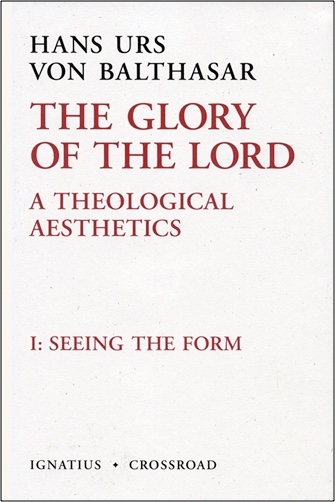
“At first, the science of art may appear to be a material collection of those things that generally pass for beautiful, while the subjective judgment of taste on what is beautiful seems subject to the most extreme variations. The young especially experience this subjective aspect with particular intensity and tend to generalise it. Since they have not yet acquired objective criteria for the evaluation of works of art, and because they have not yet learned to distinguish by seeing and listening, they compensate with the ‘enthusiasm’ proper to their age. They find themselves in or transport themselves to a state of mind, an interior ‘vibration’, which transfigures nature, art, friendship and love in their sight, and which communicates the experience of the beautiful like a drug whose effect, as experience shows, quickly disappears. People who cling to this view of the subjective nature of taste’s judgment have remained immature adolescents. By developing his soul according to the images of the objectively beautiful, the maturing person gradually learns to acquire the art of discrimination, that is, the art of perceiving what is beautiful in itself. In the process of their development, the subjective elements of perception (which, doubtless, include state of mind and fantasy) more and more pass into the service of objective perception. Even in the case of a masterpiece, the mature observer of art can without difficulty give an objective and largely conceptual basis for his judgment.”
— from Hans Urs von Balthasar, The Glory of the Lord: A Theological Aesthetics. I. Seeing the Form
This post was originally published on January 25, 2021.
Ted Prescott describes the turn that the role of art in the West took in the 19th century in response to the weight of the “canons” and philosophy of beauty developed during the 17th and 18th centuries. (23 minutes)
A sampling of newly published lectures — Ken Myers introduces listeners to four recently released lectures, courtesy of our Partners. The lecturers are Jennifer Frey, Gary Saul Morson, N. T. Wright, and Andrew Kern. (27 minutes)
Mars Hill Audio Journal, Volume 166 — FEATURED GUESTS: William Cavanaugh, Kent Burreson, Beth Hoeltke, Jeffrey Barbeau, Jason Baxter, John Betz, and Bruce Herman
Art that witnesses, consoles, and strengthens — Artist Margaret Adams Parker explores the human need to lament and reveals how various “arts of lament” console, strengthen, bear witness to those who engage with them. (51 minutes)
David Paul Baird discusses some of the films on the Vatican’s list of recommended films. (25 minutes)
Mars Hill Audio Journal, Volume 165 — FEATURED GUESTS: Jeffrey Bilbro, Daniel McInerny, Joseph Minich, Carl Elliott, Nadya Williams, and Don W. King
“The greatest works of art are endless” — Daniel McInerny argues that more robust reflection about how we attend to art enables us to discover deeper meaning in it and to experience greater sensory and intellectual joy. (16 minutes)
Beauty, Spirit, & Embodiment: A Christian View of Art — Adrienne Chaplin explains why a Christian approach to art must involve various levels of inquiry and not be limited to discussions of worldview or meaning alone. (46 minutes)
The troubled marriage of art and democracy — Historian David Smith explains the idealistic (and naïve) political motivations behind the establishing of the National Endowment for the Arts, founded in 1965. (52 minutes)
From culture war to culture care — In this 2016 lecture, artist Makoto Fujimura asks what would it look like for Christians to be stewards of beauty and human flourishing in all areas of life and culture. (48 minutes)
Painter Ed Knippers discusses how he attempts to capture the reality and mystery of the human body without reducing it to a wooden object or exalting it to the status of an idol. (7 minutes)
Michael J. Lewis explores the effects of the Body Worlds exhibits on the moral imagination of the viewer, who encounters human cadavers in a mechanistic way erased of all moral context. (26 minutes)
Ted Prescott explains the history of portraying the nude human body in art and contrasts it with the way the naked human form is often used in advertising. (9 minutes)
Science’s need for philosophy and revelation — D. Stephen Long explores a consistent theme in the work of theologian Hans Urs von Balthasar: the relationship between Christianity, modernity, and secularity. (46 minutes)
The abolition of the fine arts — In this lecture, R. V. Young examines why people are increasingly unable to discriminate between base and fine art, arguing why this issue is of particular concern to Christians. (41 minutes)
Developing a Christian aesthetic — In the inaugural lecture for the Eliot Society, titled “Faithful Imaginations in a Meaningful Creation,” Ken Myers addresses the question of the relationship between the arts and the Church. (59 minutes)
The negation of transcendence — Michael Hanby argues that our current civilizational crisis can be understood as a “new totalitarianism” that negates or disallows every form of transcendence. (32 minutes)
Mars Hill Audio Journal, Volume 161 — FEATURED GUESTS: Andrew Wilson, Kyle Edward Williams, Andrew James Spencer, Landon Loftin, Esther Lightcap Meek, Andrew Davison
Volume 1 revisited — In August of 1992, Mars Hill Audio released the pilot edition of what became known as the MARS HILL Tapes. In celebration of this anniversary, we recycle three interviews heard in that distant era, with Ted Prescott, Edward Mendelson, and Peter Kreeft. (30 minutes)
Words of truth, words of Life — Hans Urs von Balthasar on the primitive (but now largely lost) unity of theology and sanctity
Sneaking past watchful dragons — Junius Johnson describes how Hans Urs von Balthasar’s understanding of Creation resonates with that of C. S. Lewis and Bonaventure, all three of whom served as mentors in his thinking about beauty. (18 minutes)
The theology of Hans Urs von Balthasar — Theologian Rodney Howsare unpacks the dense but important theology of Hans Urs von Balthazar, revealing how the “God question” is implicit or explicit in all human questions. (14 minutes)
Mars Hill Audio Journal, Volume 149 — FEATURED GUESTS:
Dru Johnson, Steven L. Porter, Reinhard Hütter, Matthew Levering, David Lyle Jeffrey, and Christopher Phillips
The Cross in artistic expression — Richard Viladesau examines how the Passion of the Christ has been depicted artistically and aesthetically throughout Church history. (21 minutes)
Roger Scruton: Music as an Art — Philosopher Roger Scruton explains why there are some things — music in particular and art in general — which one can’t rightly or fully perceive without making judgments. (32 minutes)
Mars Hill Audio Journal, Volume 109 — FEATURED GUESTS: Douglas Coupland, Charles Mathewes, William T. Cavanaugh, William Dyrness, Steven Guthrie, and Susannah Clements
Mars Hill Audio Journal, Volume 102 — FEATURED GUESTS: Daniel M. Bell, Jr., Lew Daly, Adam K. Webb, Stratford Caldecott, James Matthew Wilson, and Thomas Hibbs
Mars Hill Audio Journal, Volume 100 — FEATURED GUESTS: Jennifer Burns, Christian Smith, Dallas Willard, Peter Kreeft, P. D. James, James Davison Hunter, Paul McHugh, Ted Prescott, Ed Knippers, Martha Bayles, Dominic Aquila, Gilbert Meilaender, Neil Postman, and Alan Jacobs
Mars Hill Audio Journal, Volume 96 — FEATURED GUESTS: David A. Smith, Kiku Adatto, Elvin T. Lim, David Naugle, Richard Stivers, and John Betz
Mars Hill Audio Journal, Volume 90 — FEATURED GUESTS: J. Mark Bertrand, Michael P. Schutt, Michael Ward, Dana Gioia, Makoto Fujimura, Gregory Edward Reynolds, Catherine Prescott, and Eugene Peterson
Mars Hill Audio Journal, Volume 59 — FEATURED GUESTS: Ron Hansen, Bernard Lewis, Alan Jacobs, Adrienne Chaplin, Todd Gitlin, and Quentin Schultze
Mars Hill Audio Journal, Volume 58 — FEATURED GUESTS: Hubert Dreyfus, Francis Fukuyama, Gordon Preece, Gijs van Hensbergen, Ted Prescott, and Bradley J. Birzer
Mars Hill Audio Journal, Volume 50 — FEATURED GUESTS: Stanley Carlson-Thies, Bruce S. Thornton, A. J. Conyers, Stanton L. Jones, Arthur F. Holmes, Carson Holloway, Ted Prescott, and Glenn Arbery
Mars Hill Audio Journal, Volume 20 — FEATURED GUESTS: Elizabeth Fox-Genovese, Robert D. Richardson, Jr., Roger Lundin, Wilfred McClay, Andrew A. Tadie, Robert Jenson, Ted Prescott, and Ted Libbey