PREVIEW
The player for this Journal volume is only available to current members or listeners with a legacy account. If you have an active membership, log in here. If you’d like to become a member — with access to all our audio programs — sign up here.
Guests heard on Volume 20
Elizabeth Fox-Genovese, author of Feminism without Illusions: A Critique of Individualism, on the benefits of single-sex education, and the confusion of “elite” feminism
Robert D. Richardson, Jr., author of Emerson: The Mind on Fire, on why the work of Ralph Waldo Emerson continues to attract certain religious seekers (Archive Feature available)
Roger Lundin, author of The Culture of Interpretation: Christian Faith and the Postmodern World, on Emerson’s assertion of alternatives to Christianity, and how they have seeped under the American cultural skin (Archive Feature available)
Wilfred McClay, author of The Masterless: Self and Society in Modern America, on individualism and collectivism in American society
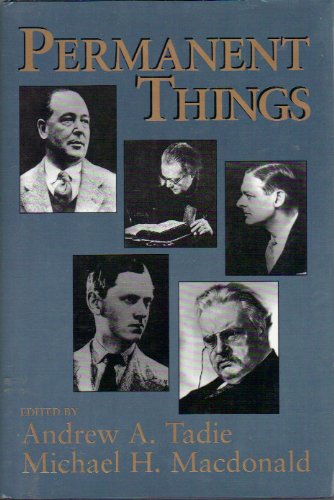
Andrew A. Tadie, co-editor of Permanent Things, on learning to love and learn from G. K. Chesterton
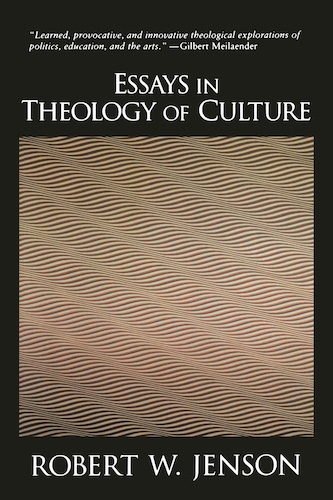
Robert Jenson, author of Essays in Theology of Culture, on why the life of the mind matters to the Church, and how it should take shape in the world
Ted Prescott on why artists have been attracted to abstraction, and what viewers should look for in abstract art
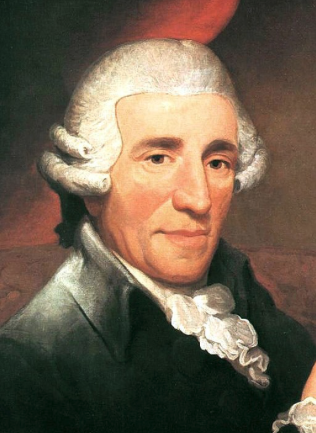
Ted Libbey on Joseph Haydn’s The Creation
Related reading and listening
- The contested idea of beauty in art — FROM VOL.58 Ted Prescott describes the turn that the role of art in the West took in the 19th century in response to the weight of the “canons” and philosophy of beauty developed during the 17th and 18th centuries. (23 minutes)
- A sampling of newly published lectures — Ken Myers introduces listeners to four recently released lectures, courtesy of our Partners. The lecturers are Jennifer Frey, Gary Saul Morson, N. T. Wright, and Andrew Kern. (27 minutes)
- God also was a Cave-man — G. K. Chesterton on the convergence of omnipotence and impotence in Bethlehem
- The beauty of truth and goodness — FROM VOL. 141 James Matthew Wilson talks about how cultivating the desire to perceive the interior life of things sustains the basic human capacity for recognizing truth, pursuing wisdom, and contemplating beauty. (23 minutes)
- The primacy of the Body of Christ — FROM VOL. 134 Philip Turner reflects on how Christian ethics is misplaced if it has as its central concern individual moral behavior or social justice. (28 minutes)
- Mars Hill Audio Journal, Volume 166 — FEATURED GUESTS: William Cavanaugh, Kent Burreson, Beth Hoeltke, Jeffrey Barbeau, Jason Baxter, John Betz, and Bruce Herman
- Art that witnesses, consoles, and strengthens — Artist Margaret Adams Parker explores the human need to lament and reveals how various “arts of lament” console, strengthen, bear witness to those who engage with them. (51 minutes)
- Films that lead to contemplation — FROM VOL. 162 David Paul Baird discusses some of the films on the Vatican’s list of recommended films. (25 minutes)
- Life more abundantly — Jeanne Schindler advocates for a return to an understanding and prioritizing of sensory experience — real engagement with the real world — as foundational to learning and living. (35 minutes)
- Mystery novels with theological concerns — In these interviews from 1993, mystery author P. D. James speaks about the philosophical and theological issues woven into her novels, and Alan Jacobs discusses James’s novel The Children of Men. (23 minutes)
- Alert to the magic in the world — Junius Johnson discusses the importance of teaching stories, particularly fairy stories, in classical education. (25 minutes)
- Money, status, and satisfaction — FROM VOL. 44 David Myers and Robert Frank discuss the tenuous relationship between wealth and happiness. (22 minutes)
- Students as arbiters of knowledge — FROM VOL. 94 Tim Clydesdale discusses the experience of freshmen year at college, suggesting that by that time students have been effectively inoculated against a love of knowledge. (21 minutes)
- Helping boys become virtuous men — Teacher and chaplain Mark Perkins describes forms of formation that take the body seriously 50 minutes
- Showing as meaning — Daniel McInerny on how the arts convey meaning
- Mars Hill Audio Journal, Volume 165 — FEATURED GUESTS: Jeffrey Bilbro, Daniel McInerny, Joseph Minich, Carl Elliott, Nadya Williams, and Don W. King
- Shared Practices, Strong Communities — Christine Pohl reflects on why a deliberate commitment to certain shared practices is necessary for the sustaining of community. (57 minutes)
- “The greatest works of art are endless” — Daniel McInerny argues that more robust reflection about how we attend to art enables us to discover deeper meaning in it and to experience greater sensory and intellectual joy. (16 minutes)
- From enthusiasm to discernment — Hans Urs von Balthasar on how the assumption that taste is entirely subjective is a function of immaturity
- Abstraction, immanence, & the cultural landscape — Artist, philosopher, and art historian discuss the tension between self-expression, transcendence, and the material world.
- Only religion can save the arts — Camille Paglia: “For the fine arts to revive, they must recover their spiritual center.”
- Art and whateverism — Jed Perl on why great art is triumphantly intolerant
- Nervousness about the shape of religion in America — Thomas Albert Howard discusses European perspectives of eighteenth-century American religious life. (21 minutes)
- How paintings convey meaning — FROM VOL. 121 Theologian Walter Hansen and painter Bruce Herman question contemporary conceptions of meaning that confine it to the verbal or consider visual and verbal meaning to be completely exclusive. (20 minutes)
- The vocation of the life of the mind — FROM VOL. 117 Jeffry Davis and Philip Ryken explain why the liberal arts ought to be recognized as a calling that enriches Christian living. (26 minutes)
- Postmodern culture and the gospel — FROM VOL. 6 Roger Lundin discusses the ethical and theological consequences of our postmodern culture. (9 minutes)
- Beauty, Spirit, & Embodiment: A Christian View of Art — Adrienne Chaplin explains why a Christian approach to art must involve various levels of inquiry and not be limited to discussions of worldview or meaning alone. (46 minutes)
- The troubled marriage of art and democracy — Historian David Smith explains the idealistic (and naïve) political motivations behind the establishing of the National Endowment for the Arts, founded in 1965. (52 minutes)
- The collapse of public life — FROM VOL. 154 D. C. Schindler explains how liberalism sought to make way for individuals to function together without any orientation to an explicit common good. (37 minutes)
- “The Emersonian elixir” — FROM VOL. 20 Robert Richardson and Roger Lundin discuss how Ralph Waldo Emerson’s legacy lingers in American culture. (18 minutes)
- The primacy of imagination — FROM VOL. 51 Literary critic Roger Lundin situates William Blake as a descendant of the radical Protestant movement of the 17th century and as a forerunner of the late 19th and early 20th century movements that put theology and the human spirit in opposition to the natural, fragmented, fallen world. (11 minutes)
- Dickinson and modern malaise — FROM VOL. 36 Roger Lundin explains how Emily Dickinson’s understanding of love, nature, religion, and mortality are modern in content. (11 minutes)
- Mars Hill Audio Journal, Volume 164 — FEATURED GUESTS: Dana Gioia, Brady Stiller, Robert Royal, Richard DeClue, Tiffany Schubert, and Joonas Sildre
- From culture war to culture care — In this 2016 lecture, artist Makoto Fujimura asks what would it look like for Christians to be stewards of beauty and human flourishing in all areas of life and culture. (48 minutes)
- St. Thomas the anthropologist — G. K. Chesterton on Aquinas’s complete Science of Man
- Metaphysical impulses beneath techno-utopianism — FROM VOL. 38 Erik Davis describes his research on how humans’ fascination with technology is permeated with “mythic energy” and gnostic aspirations. (11 minutes)
- The theological significance of current events — FROM VOL. 65 George Marsden discusses how Jonathan Edwards (1703–1758) understood world history and the American experience. (14 minutes)
- Countering American apathy toward history — FROM VOL. 124 Historian John Fea discusses how American and Protestant individualism continues to influence our orientation toward the past. (22 minutes)
- “Detachment as a whole way of life” — FROM VOL. 85 Professor Christopher Shannon discusses how early twentieth-century social scientists encouraged the American idea that individual identity works against communal membership. (17 minutes)
- Alchemy, astrology, energy, and gnosticism — FROM VOL. 85 Catherine Albanese describes the varieties of “metaphysical religion” popular in early American history and draws connections with the more recent New Age movement. (14 minutes)
- The fraught marriage of liberty and equality — In this essay, Patrick Deneen examines Alexis de Tocqueville’s complex and insightful portrait of “democratic man” living in the context of perpetual societal tension between the excesses of liberty and equality. (39 minutes)
- Education that counters alienation — In this lecture, Jeanne Schindler explores how digital technologies warp not only education but our experience of being human. (30 minutes)
- Education vs. conditioning — Education necessarily involves metaphysical and theological preconditions, and Michael Hanby argues that our current education crisis is a result of society rejecting these preconditions. (41 minutes)
- Knowing by heart — D. C. Schindler reflects on Plato’s idea of “conversion” in education, assuming the symbol of the heart as the center of man. (39 minutes)
- Education as a pilgrimage and a mystery — In this lecture, James Matthew Wilson gives a compelling argument for understanding the role of a literary or poetic education as an immersion of the whole being in truth and beauty. (43 minutes)
- Submission to mathematical truth — In this lecture, Carlo Lancellotti argues that integration of the moral, cognitive, and aesthetic aspects of mathematics is needed in a robust liberal arts mathematics curriculum. (25 minutes)
- The need for robust Christian intellectual life — In this lecture, Robert Benne surveys the contemporary landscape in which Christian scholars attempt to integrate their faith and their intellectual life. (43 minutes)
- Treating Truth with sovereign respect — Henri de Lubac on the urgency of intellectual activity
- The (super)natural theology of fairy-tales — Alison Milbank describes Chesterton’s belief that story-telling is an affirmation of transcendent meaning
- The powerful presence of the body — FROM VOL. 9 Painter Ed Knippers discusses how he attempts to capture the reality and mystery of the human body without reducing it to a wooden object or exalting it to the status of an idol. (7 minutes)
Tags:
ArtArt—MeaningChesterton, G. K.EducationEmerson, Ralph WaldoFeminismFox-Genovese, ElizabethHaydn, JosephIndividualismIntellectual lifeJenson, RobertLibbey, TedLundin, RogerMcClay, WilfredPrescott, TedReligionRichardson, Jr., Robert D.Tadie, Andrew A.