PREVIEW
The player for this Journal volume is only available to current members or listeners with a legacy account. If you have an active membership, log in here. If you’d like to become a member — with access to all our audio programs — sign up here.
Guests heard on Volume 50
Stanley Carlson-Thies on the theology of “charitable choice”
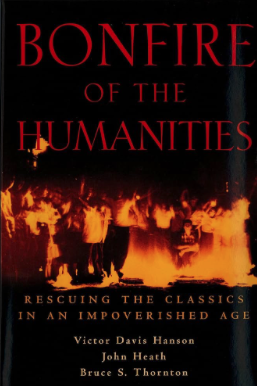
Bruce S. Thornton, contributor to Bonfire of the Humanities: Rescuing the Classics in an Impoverished Age, on the loss of ends and the exultation of appetite in the academy
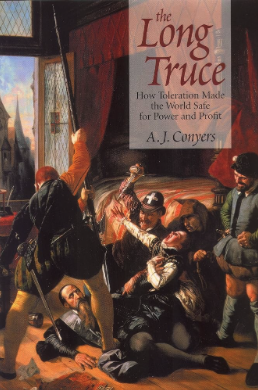
A. J. Conyers, author of The Long Truce: How Toleration Made the World Safe for Power and Profit, on the origins of the modern view of tolerance (and of Big Government)
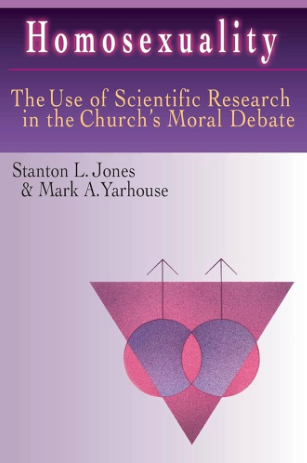
Stanton L. Jones, co-author of Homosexuality: The Use of Scientific Research in the Church’s Moral Debate, on various configurations of science, morality, and homosexuality
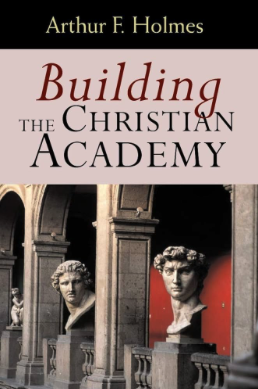
Arthur F. Holmes, author of Building the Christian Academy, on the history of Christianity and education in the liberal arts
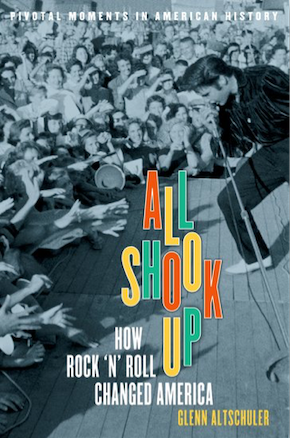
Carson Holloway, author of All Shook Up: Music, Passion, and Politics, on music, passion, and politics

Ted Prescott on the popular paintings and prophetic claims of Thomas Kinkade
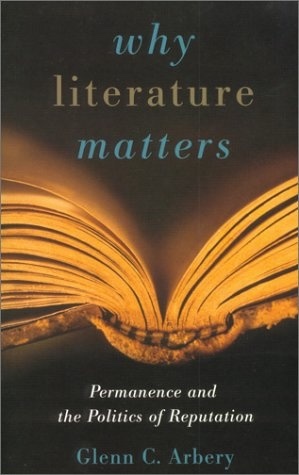
Glenn C. Arbery, author of Why Literature Matters: Permanence and the Politics of Reputation, on the achievement of form in literature
Glenn C. Arbery on Tom Wolfe and what makes a work “literature” (extended interview)
Related reading and listening
- The contested idea of beauty in art — FROM VOL.58 Ted Prescott describes the turn that the role of art in the West took in the 19th century in response to the weight of the “canons” and philosophy of beauty developed during the 17th and 18th centuries. (23 minutes)
- A sampling of newly published lectures — Ken Myers introduces listeners to four recently released lectures, courtesy of our Partners. The lecturers are Jennifer Frey, Gary Saul Morson, N. T. Wright, and Andrew Kern. (27 minutes)
- In defense of peace and justice — Arthur F. Holmes summarizes the evolution of the just war tradition
- Grace and Christian realism — Jennifer Frey explores Thomist elements in Flannery O’Connor’s theology and writing, with a particular emphasis on a Thomist understanding of art. (39 minutes)
- Rose without thorns — Ken Myers introduces various settings of “Ther is no rose of swych vertu,” a medieval carol that uses imagery of a rosebush to describe the Virgin Mary. (29 minutes)
- A “cosmological omnibus” — George Grant recounts the fascinating history of Hernando Colón’s attempt in the 16th century to curate a universal library of the world’s knowledge. (41 minutes)
- “Investigations of divine works” — Greg Wilbur explains how closely connected music is to the order of the cosmos and how it even reveals attributes of God. (56 minutes)
- Buying and selling holidays, identities, and ourselves — We present four interviews on American consumerism, with Leigh Eric Schmidt, David Lyon, Thomas Frank, and Sam Van Eman. (46 minutes)
- The experience of a “real presence” in sacred music — FROM VOL. 126 Jonathan Arnold explores why people of no religious commitment pay money to hear specifically sacred music. (22 minutes)
- How music blesses and teaches — FROM VOL. 64 Theologian and musician Jeremy Begbie explores what we learn about time, theology, and the structure of Creation from the experience of music. (28 minutes)
- Mars Hill Audio Journal, Volume 166 — FEATURED GUESTS: William Cavanaugh, Kent Burreson, Beth Hoeltke, Jeffrey Barbeau, Jason Baxter, John Betz, and Bruce Herman
- The pathos of sin — FROM VOL. 15 Poet Robert Pinsky discusses his translation of Dante’s Inferno. (9 minutes)
- Existential preparation for reading literature — FROM VOL. 128 Rod Dreher recounts how he thought he was reading Dante’s Commedia, when in reality the poem was reading him. (18 minutes)
- An icon of the whole world — Jason Baxter explains how Dante includes a panoply of characters and creatures in his Comedia, offering a prismatic view of all of Creation in its glory. (20 minutes)
- Art that witnesses, consoles, and strengthens — Artist Margaret Adams Parker explores the human need to lament and reveals how various “arts of lament” console, strengthen, bear witness to those who engage with them. (51 minutes)
- The soul’s awakening — FROM VOL. 145 Jason Baxter discusses the great psychological subtlety in Dante’s Divine Comedy. (20 minutes)
- How literature shaped Lewis — FROM VOL. 155 Jason Baxter explains how reading medieval literature enabled C. S. Lewis to become a “naturalized citizen of the Middle Ages.” (25 minutes)
- Politics and idolatry — FROM VOL. 109 Theologian William Cavanaugh explains how the modern state is a unique kind of political entity, inviting a new kind of idolatry. (26 minutes)
- The modern invention of “religion” — FROM VOL. 101 Theologian William Cavanaugh examines the emptiness of the myth of religious violence. (22 minutes)
- Films that lead to contemplation — FROM VOL. 162 David Paul Baird discusses some of the films on the Vatican’s list of recommended films. (25 minutes)
- Life more abundantly — Jeanne Schindler advocates for a return to an understanding and prioritizing of sensory experience — real engagement with the real world — as foundational to learning and living. (35 minutes)
- Ontology and reality in fiction — Katy Carl discusses Catholic novelist Graham Greene’s skill in portraying the struggle between spiritual belief and doubt. (27 minutes)
- Sacred and Profane Love: Graham Greene and the Catholic Imagination — Katy Carl discusses novelist Graham Greene’s fiction and spiritual struggles in light of the concept of the Catholic imagination. (49 minutes)
- The founding of a choral ensemble — FROM VOL. 119 Founder Peter Phillips recounts the history of his choral ensemble The Tallis Scholars. (23 minutes)
- Alert to the magic in the world — Junius Johnson discusses the importance of teaching stories, particularly fairy stories, in classical education. (25 minutes)
- A beautiful human geometry — Musicologist Leopold Brauneiss compares Arvo Pärt’s compositional technique with Jungian archetypes
- A bridge between yesterday and today — Composer Arvo Pärt describes how he came to appropriate the mysteries of polyphony
- From the heart of silence — Conductor Paul Hillier on the sources of Arvo Pärt’s distinctive musical expression
- Prayer and complexity in Arvo Pärt’s music — In honor of Estonian composer Arvo Pärt’s 90th birthday, Ken Myers talks with Peter Bouteneff, about the singular qualities of Pärt’s music. (19 minutes)
- How to illustrate music and mystery — FROM VOL. 164 Illustrator Joonas Sildre discusses his graphic biography of Estonian composer Arvo Pärt. (19 minutes)
- Rand’s influence on conservatism — FROM VOL. 100 History professor Jennifer Burns discusses the life and legacy of “goddess of the market” Ayn Rand. (17 minutes)
- The de(con)struction of the humanities (and of truth) — Historian Gertrude Himmelfarb on the skeptical tendencies of the postmodern academy
- Universities as the hosts of reciprocating speech — Robert Jenson on how the Christian understanding of Truth in a personal Word shaped the Western university
- University or “utiliversity”? — In this essay, Reinhard Hütter examines in depth John Henry Newman’s The Idea of a University and argues that its insights and prescriptions are urgently relevant to the current status of higher education. (87 minutes)
- The “scandal” of theology in the university — Edward T. Oakes, S.J. explains why John Henry Newman’s eloquent defense of the nature of university education, The Idea of a University, continues to inspire, challenge, and even frustrate its sympathizers. (24 minutes)
- Setting the liberal arts free — In addressing the state of liberal arts education in the U.S., Gilbert Meilaender raises some core questions and makes some surprising proposals. (28 minutes)
- The establishment of nonbelief — FROM VOL. 10 George Marsden explains how and why American universities became places where religious concerns are excluded. (10 minutes)
- Students as arbiters of knowledge — FROM VOL. 94 Tim Clydesdale discusses the experience of freshmen year at college, suggesting that by that time students have been effectively inoculated against a love of knowledge. (21 minutes)
- Helping boys become virtuous men — Teacher and chaplain Mark Perkins describes forms of formation that take the body seriously 50 minutes
- Mars Hill Audio Journal, Volume 165 — FEATURED GUESTS: Jeffrey Bilbro, Daniel McInerny, Joseph Minich, Carl Elliott, Nadya Williams, and Don W. King
- What are students for? — FROM VOL. 140 Drawing from Wendell Berry’s works, Jack Baker and Jeffrey Bilbro discuss a vision of higher education that respects a multidimensional notion of place. (23 minutes)
- The avant garde of secularization — FROM VOL. 38 Alvin Kernan explains sweeping changes in American university education since the 19th century. (11 minutes)
- Christ-animated learning — FROM VOL. 142 Perry L. Glanzer and Nathan F. Alleman discuss the fragmentation of modern higher education and why we need theology to unify universities. 26 minutes)
- “The greatest works of art are endless” — Daniel McInerny argues that more robust reflection about how we attend to art enables us to discover deeper meaning in it and to experience greater sensory and intellectual joy. (16 minutes)
- From enthusiasm to discernment — Hans Urs von Balthasar on how the assumption that taste is entirely subjective is a function of immaturity
- Abstraction, immanence, & the cultural landscape — Artist, philosopher, and art historian discuss the tension between self-expression, transcendence, and the material world.
- Only religion can save the arts — Camille Paglia: “For the fine arts to revive, they must recover their spiritual center.”
- Art and whateverism — Jed Perl on why great art is triumphantly intolerant
- How the Church promotes the cause of freedom — Oliver O’Donovan: “We discover we are free when we are commanded by that authority which commands us according to the law of our being, disclosing the secrets of the heart.”
- Power to the people — Nathan O. Hatch on the DIY spirit of early American Christianity