PREVIEW
You are unauthorized to view this page.
Guests heard on Volume 41
Harry Blamires, author of The Post-Christian Mind: Exposing Its Destructive Agenda, on the Christian mind & resisting secularism
David Healy, author of The Antidepressant Era, on depression and the changing perception of disease and health
Paul Gutjahr, author of An American Bible: A History of the Good Book in the United States, 1777 to 1880, on the changing place of the Bible in American culture
Christine Pohl, author of Making Room: Recovering Hospitality as a Christian Tradition, on modern challenges to the practice of Christian hospitality
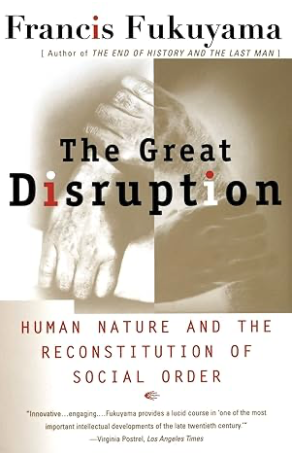
Francis Fukuyama, author of The Great Disruption: Human Nature and the Reconstitution of Social Order, on human nature, social order, and the shape of community
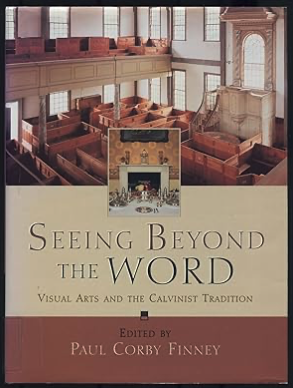
Paul Corby Finney, editor of Seeing Beyond the Word: Visual Arts and the Calvinist Tradition, on visual arts and the Calvinist tradition
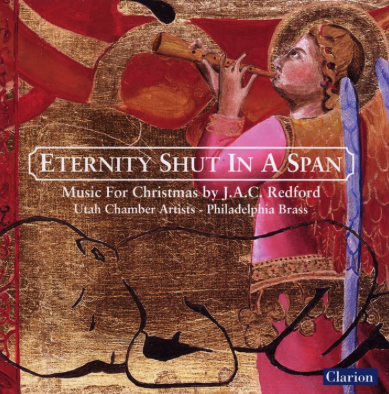
J. A. C. Redford, composer of “Welcome All Wonders” on music of the Nativity and Incarnation
Related reading and listening
- We are not “stochastic parrots” — In this essay, Talbot Brewer argues that our understanding of the nature of words and their relationship to human nature is “teetering” due to artificial intelligence chatbot systems and large language models (LLMs). (42 minutes)
- The strengths of Christian scholarship —
FROM VOL. 25 George Marsden explores the culture of suspicion in academia toward Christian scholarship and argues for its inclusion as intellectually viable and coherent with regard to reality. (11 minutes) - Mid-20th century intellectual consensus —
FROM VOL. 122 George Marsden discusses the influence of public intellectuals in America during the 1950s and their concerns for national moral consensus. (22 minutes) - The reclaiming of authentic liberalism — John Médaille examines the Christian roots of liberalism and how liberalism might be recovered from the heresy of secularism. (51 minutes)
- Catechesis in “Screentopia” — In this lecture, Brad East builds a case for why he believes digital technology is the greatest threat facing American Christians today. (57 minutes)
- Truth lives in language — Craig Gay reflects on how language is not merely a tool for humans to use, but is a part of our very being as creatures made in the image of the God who is the living Word. (52 minutes)
- How tech is making us less human — Christine Rosen argues that we must reckon with serious moral and ethical questions raised by the acceleration of “artificial intelligence” into almost every area of life. (31 minutes)
- Human beings as “word-bearers” — In this lecture, D. C. Schindler argues that misology — hatred for reason and contempt for language — is a deep cause of our current cultural crisis. (56 minutes)
- St. Thomas the anthropologist — G. K. Chesterton on Aquinas’s complete Science of Man
- Knowing and living our metaphysical totality — Clyde Kilby on the power of myth to bring together “the slender hints of the knowable”
- Modernity’s crisis of place — Craig Bartholomew reflects on the importance of place to our humanity. (58 minutes)
- Reason and the love of truth —
FROM VOL. 97 James Peters discusses historical understandings of reason and rationality and how they differ from the modern notion of rationality. (21 minutes) - The inward eye, cosmic truth, and making well — Andrew Kern takes his listeners along an “interlinear” reading of a portion of St. Augustine’s Confessions that explores the differences between how God makes and how we create. (38 minutes)
- Divine love and human sexuality — Paul Tyson argues that views about sexuality are downstream from theological — or at least metaphysical — assumptions about human nature. (16 minutes)
- The roots of J. S. Bach’s fruitfulness — Music historian Markus Rathey explains why and how J. S. Bach composed his choral works as he did. (54 minutes)
- Celebrating Christmas with Bach (through Epiphany) — Ken Myers offers a detailed introduction to J. S. Bach’s Christmas Oratorio, a work composed to be sung on six occasions from Dec. 25th to Jan. 6th
- Rose without thorns — Ken Myers introduces various settings of “Ther is no rose of swych vertu,” a medieval carol that uses imagery of a rosebush to describe the Virgin Mary. (29 minutes)
- Anticipation and festivity — Tova Leigh-Choate on the earliest forms of musical celebration during Advent and Christmas
- In tune with the muses of Zion — Ken Myers on the Christmas music of Michael Praetorius
- Christmas music from Luther to Bach — Tova Leigh-Choate on the roots of Bach’s Christmas Oratorio
- The cost of “killing” God — In this October 2023 lecture, Carl Trueman explores the concept of “desecration” as a frame for understanding the nature of modernity in our time. (42 minutes)
- “Investigations of divine works” — Greg Wilbur explains how closely connected music is to the order of the cosmos and how it even reveals attributes of God. (56 minutes)
- “Subtraction stories” and a longing for transcendence — In this lecture, James K. A. Smith explores key elements of Charles Taylor’s understanding of what it means to live in a secular age. (43 minutes)
- The beauty of truth and goodness —
FROM VOL. 141 James Matthew Wilson talks about how cultivating the desire to perceive the interior life of things sustains the basic human capacity for recognizing truth, pursuing wisdom, and contemplating beauty. (23 minutes) - The primacy of the Body of Christ —
FROM VOL. 134 Philip Turner reflects on how Christian ethics is misplaced if it has as its central concern individual moral behavior or social justice. (28 minutes) - The experience of a “real presence” in sacred music —
FROM VOL. 126 Jonathan Arnold explores why people of no religious commitment pay money to hear specifically sacred music. (22 minutes) - How music blesses and teaches —
FROM VOL. 64 Theologian and musician Jeremy Begbie explores what we learn about time, theology, and the structure of Creation from the experience of music. (28 minutes) - The implausibility of belief —
FROM VOL. 123 James K. A. Smith discusses the evangelical and ecclesial ramifications for Christians living within Charles Taylor’s third wave of secularism. (25 minutes) - How communities remember who they are — Oliver O’Donovan on the necessity of tradition in sustaining communal identity
- How common loves shape communities — Oliver O’Donovan discusses how communities mediate love and knowledge to their members and what challenges arise as a community’s traditions are confronted by sin, error, and plurality. (Lecture 2 of 3; 49 minutes)
- Cosmic realities in the built world — Christopher and Christine Perrin discuss the implications of architect Christopher Alexander’s (1936–2022) discovery of patterns of building that cohere with the the created cosmos and with ourselves as human creatures. (59 minutes)
- The “book” of Creation — Alan Noble explains why the modern world makes it profoundly difficult to experience Creation as revelation, and he encourages unmediated encounters with Creation that lead to meditation. (52 minutes)
- The founding of a choral ensemble —
FROM VOL. 119 Founder Peter Phillips recounts the history of his choral ensemble The Tallis Scholars. (23 minutes) - A beautiful human geometry — Musicologist Leopold Brauneiss compares Arvo Pärt’s compositional technique with Jungian archetypes
- A bridge between yesterday and today — Composer Arvo Pärt describes how he came to appropriate the mysteries of polyphony
- From the heart of silence — Conductor Paul Hillier on the sources of Arvo Pärt’s distinctive musical expression
- Prayer and complexity in Arvo Pärt’s music — In honor of Estonian composer Arvo Pärt’s 90th birthday, Ken Myers talks with Peter Bouteneff, about the singular qualities of Pärt’s music. (19 minutes)
- How to illustrate music and mystery —
FROM VOL. 164 Illustrator Joonas Sildre discusses his graphic biography of Estonian composer Arvo Pärt. (19 minutes) - Money, status, and satisfaction —
FROM VOL. 44 David Myers and Robert Frank discuss the tenuous relationship between wealth and happiness. (22 minutes) - Landscape and living memory —
FROM VOL. 44 Gayle Brandow Samuels examines the ways in which trees have served as anchor-points for memory and identity in American culture. (9 minutes) - Utopian dreams and cynicism — John Durham Peters discusses the history of the idea of communication, saying that our hopes are too high when we believe that the solution to social discord is just better communication. (49 minutes)
- Thinking Together — Alan Jacobs discusses some principles he’s compiled to help us think well (and charitably) in our cultural context, and he warns us to be attentive to the ways technology displaces previously fixed communities. (53 minutes)
- Man as “both mystic and hobbit” — D. C. Schindler explores how building is a quintessential human activity and an expression of our view of the meaning of reality. (47 minutes)
- Setting the liberal arts free — In addressing the state of liberal arts education in the U.S., Gilbert Meilaender raises some core questions and makes some surprising proposals. (28 minutes)
- Mars Hill Audio Journal, Volume 165 — FEATURED GUESTS: Jeffrey Bilbro, Daniel McInerny, Joseph Minich, Carl Elliott, Nadya Williams, and Don W. King
- Still connected to the land — Nadya Williams on the inescapably earthy character of human flourishing
- Pathologizing personalities —
FROM VOL. 41 David Healy discusses how definitions of health are shaped not just by medical science, but also by intertwining social, cultural, and economic forces. (16 minutes) - What are students for? —
FROM VOL. 140 Drawing from Wendell Berry’s works, Jack Baker and Jeffrey Bilbro discuss a vision of higher education that respects a multidimensional notion of place. (23 minutes) - Real Food, Real Communities — Corby Kummer extols the virtues of the Slow Food movement, which seeks to honor, protect, and sustain traditional foods and ingredients from specific cultures and regions. (48 minutes)
- Cross my heart — Christine Pohl on cultivating the practice of promise-keeping