
PREVIEW
Guests heard on Volume 82
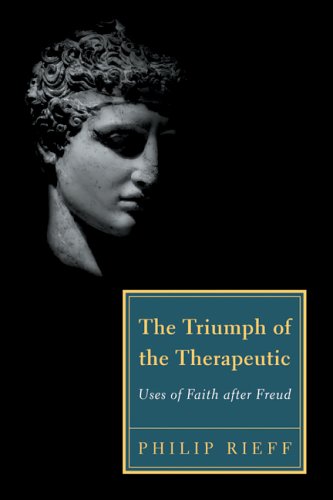
Stephen Gardner, on Philip Rieff and Freud, and on how modern culture weakens religion and establishes a new definition of the public
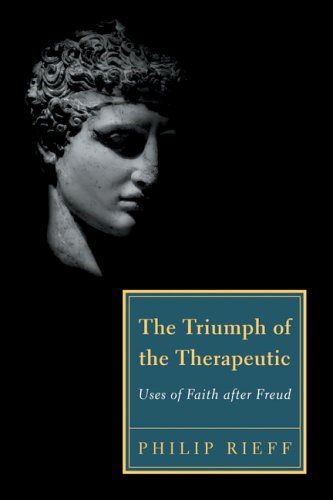
Elisabeth Lasch-Quinn, on Tom Wolfe and Philip Rieff’s diagnosis of cultural disorder
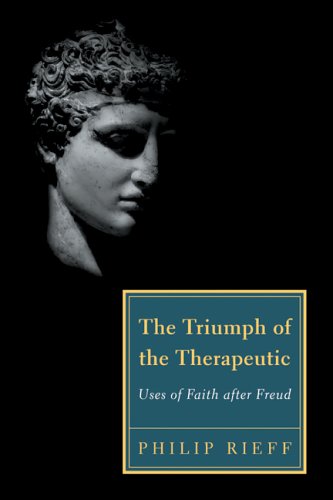
Wilfred McClay, on how Philip Rieff’s brilliant critique of modern disorder kept him from realizing a way out of our dilemma
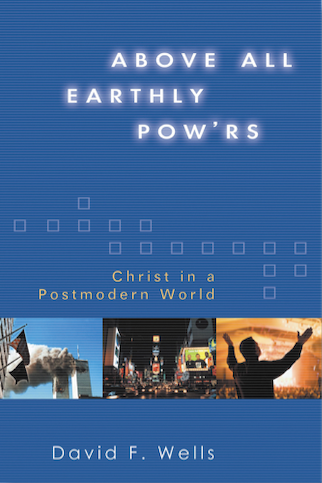
David Wells, author of Above All Earthly Pow’rs: Christ in a Postmodern World. on how Western culture has eclipsed fundamental assumptions about human nature and God
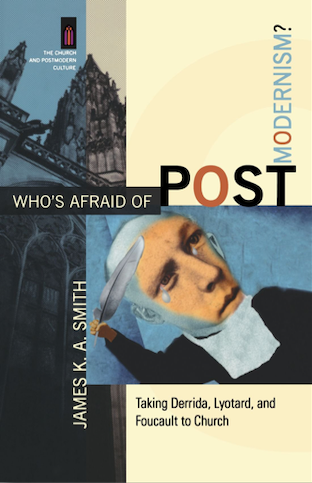
James K. A. Smith, author of Who’s Afraid of Postmodernism: Taking Derrida, Lyotard, and Foucault to Church, on the postmodern insight that our experience in the world requires interpretation (and that some interpretations are better than others)
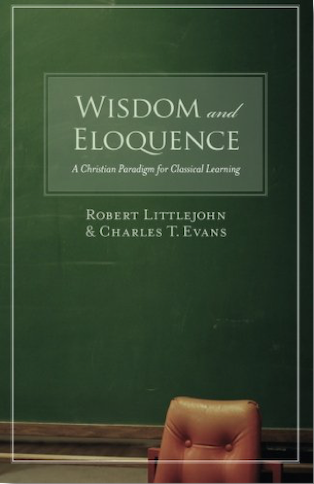
Robert Littlejohn, co-author of Wisdom and Eloquence: A Christian Paradigm for Classical Learning, on how education should encourage wisdom and eloquence in students, and why these are Christian virtues.
Bonus: James K. A. Smith, author of author of Who’s Afraid of Postmodernism: Taking Derrida, Lyotard, and Foucault to Church, on the relationship between ideas and cultural change
Related reading and listening
- Knowing and living our metaphysical totality — Clyde Kilby on the power of myth to bring together “the slender hints of the knowable”
- “A Myth Retold” — Literary critic Thomas Howard explains why he considers C. S. Lewis’s Till We Have Faces to be one of the author’s richest and most rewarding works. (18 minutes)
- Christian culture and the myth of the secular — Ken Myers draws on T. S. Eliot to argue that Western civilization has broken down, not into a multiplicity of cultures, but into a “post-culture.” (47 minutes)
- Modernity’s crisis of place — Craig Bartholomew reflects on the importance of place to our humanity. (58 minutes)
- The inward eye, cosmic truth, and making well — Andrew Kern takes his listeners along an “interlinear” reading of a portion of St. Augustine’s Confessions that explores the differences between how God makes and how we create. (38 minutes)
- The epistemology of love — In this lecture, N. T. Wright examines the epistemology of love and how it counters the reductionism of Enlightenment and Epicurean ways of knowing. (63 minutes)
- A “cosmological omnibus” — George Grant recounts the fascinating history of Hernando Colón’s attempt in the 16th century to curate a universal library of the world’s knowledge. (41 minutes)
- The cost of “killing” God — In this October 2023 lecture, Carl Trueman explores the concept of “desecration” as a frame for understanding the nature of modernity in our time. (42 minutes)
- Cultural superiority and Medieval romance literature —
FROM VOL. 164 Tiffany Schubert argues that Jane Austen’s novels subtly incorporate some medieval literary conventions in ways that enable modern readers to experience a sense of wonder, romance, and the benevolence of Providence. (30 minutes) - “Subtraction stories” and a longing for transcendence — In this lecture, James K. A. Smith explores key elements of Charles Taylor’s understanding of what it means to live in a secular age. (43 minutes)
- The beauty of truth and goodness —
FROM VOL. 141 James Matthew Wilson talks about how cultivating the desire to perceive the interior life of things sustains the basic human capacity for recognizing truth, pursuing wisdom, and contemplating beauty. (23 minutes) - How music blesses and teaches —
FROM VOL. 64 Theologian and musician Jeremy Begbie explores what we learn about time, theology, and the structure of Creation from the experience of music. (28 minutes) - The implausibility of belief —
FROM VOL. 123 James K. A. Smith discusses the evangelical and ecclesial ramifications for Christians living within Charles Taylor’s third wave of secularism. (25 minutes) - A flood of images — Oliver O’Donovan describes the distinctive character of publicity in modernity, which drowns us in a flood of ever-changing representations that do not serve the common good. (37 minutes)
- Publicity and representative images in society — Oliver O’Donovan describes the nature of publicity as the force that mediates our communication with one another, creating common interests and then rapidly subsuming them into newer ones.(Lecture 3 of 3; 57 minutes)
- Cosmic realities in the built world — Christopher and Christine Perrin discuss the implications of architect Christopher Alexander’s (1936–2022) discovery of patterns of building that cohere with the the created cosmos and with ourselves as human creatures. (59 minutes)
- Mordor versus the Shire — In this lecture, Heidi White explains how the modern project is a diabolical inversion of Christendom and calls for Christians to build lives and a culture that can counter it. (53 minutes)
- Alert to the magic in the world — Junius Johnson discusses the importance of teaching stories, particularly fairy stories, in classical education. (25 minutes)
- A false dichotomy — In this conversation from 2009, Dallas Willard (1934–2013) discusses the truth of spiritual knowledge and its epistemological validity. (63 minutes)
- Utopian dreams and cynicism — John Durham Peters discusses the history of the idea of communication, saying that our hopes are too high when we believe that the solution to social discord is just better communication. (49 minutes)
- Thinking Together — Alan Jacobs discusses some principles he’s compiled to help us think well (and charitably) in our cultural context, and he warns us to be attentive to the ways technology displaces previously fixed communities. (53 minutes)
- Man as “both mystic and hobbit” — D. C. Schindler explores how building is a quintessential human activity and an expression of our view of the meaning of reality. (47 minutes)
- Setting the liberal arts free — In addressing the state of liberal arts education in the U.S., Gilbert Meilaender raises some core questions and makes some surprising proposals. (28 minutes)
- The establishment of nonbelief —
FROM VOL. 10 George Marsden explains how and why American universities became places where religious concerns are excluded. (10 minutes) - Still connected to the land — Nadya Williams on the inescapably earthy character of human flourishing
- Nervousness about the shape of religion in America — Thomas Albert Howard discusses European perspectives of eighteenth-century American religious life. (21 minutes)
- The vocation of the life of the mind —
FROM VOL. 117 Jeffry Davis and Philip Ryken explain why the liberal arts ought to be recognized as a calling that enriches Christian living. (26 minutes) - A Christian understanding of human nature —
FROM VOL. 35 Robert C. Roberts and Mark R. Talbot discuss the need for Christian psychologists to draw from Christianity’s deep tradition of understanding human nature. (15 minutes) - Postmodern culture and the gospel —
FROM VOL. 6 Roger Lundin discusses the ethical and theological consequences of our postmodern culture. (9 minutes) - Lives of generosity — Jonathan Wilson distinguishes between two fundamental ways of viewing Creation: a true Christian account of the world and a “survival of the fittest” one. (21 minutes)
- “Only a real world can save us” — Oliver O’Donovan explores how the “religion” of modernity lacks a coherent world in which one may participate with full human agency and moral purpose. (Lecture 3 of 3; 61 minutes)
- Christian unity and civil society — Oliver O’Donovan introduces listeners to Dutch lay theologian Hugo Grotius, arguing that the questions he tackled relate to perennial concerns about the relationship between divine and human agency, and between civil and ecclesiastical authority. (Lecture 2 of 3; 57 minutes)
- The demoralizing effect of pagan Roman religion — Oliver O’Donovan examines St. Augustine’s critique of pagan Roman religion in Book II of his treatise City of God and asks his audience to consider what insights Augustine’s critique has for us today. (Lecture 1 of 3; 51 minutes)
- The recovery of an integrated ecology — In this essay, Michael Hanby unpacks the summons of Laudato si’ to an ecological way of life based on a proper understanding of creation in its fullness and integrity. (57 minutes)
- Politics and the good —
FROM VOL. 160 D. C. Schindler argues that political order cannot be disentangled from the social, and that fundamental questions of what humans are and what the good is cannot be bracketed from politics. (30 minutes) - Truth, goodness, and beauty (and why they matter) —
FROM VOL. 147 Philosopher D. C. Schindler examines how postmodernism poses a unique threat to our sense of an interior self. (28 minutes) - The profound drama of human sexuality — In this lecture, D. C. Schindler explains the cosmological significance of human sexuality and why it is paradigmatic of the relationship between nature and freedom. (32 minutes)
- A poet’s relationship to time —
FROM VOL. 57 Poet Wilmer Mills (1969–2011) discusses how his agricultural and cross-cultural childhood in Brazil shaped his imagination and his relationship with modernity. (11 minutes) - The downward spiral of all technocracies — Andrew Willard Jones explains the two paths that exist with the development of new technologies: one which leads to an expansion of the humane world and one which exploits and truncates both Creation and humanity. (65 minutes)
- To see people as people — Anthony Bradley argues that a recovery of Christian personalism is needed to counter the dehumanization, polarization, and tribalism of our day. (45 minutes)
- Dickinson and modern malaise —
FROM VOL. 36 Roger Lundin explains how Emily Dickinson’s understanding of love, nature, religion, and mortality are modern in content. (11 minutes) - Ethical issues in neurobiological interventions — William Hurlbut explores current neurobiological advancements and the ethics and dangers of biotechnology interventions that go beyond therapy. (62 minutes)
- An impoverished anthropology —
FROM VOL. 146 Mark Mitchell asks whether there is anything that truly binds Americans together beyond their commitment to self-creation. (34 minutes) - An embedded life — Following a move from one state to another, Gilbert Meilaender explores the tension between being simultaneously a sojourner and a body located in place and time. (30 minutes)
- Impact of “infotainment” on community — Neil Gabler and C. John Sommerville discuss how the mentalities conveyed by our experience with communications media work against the nurturing of community. (36 minutes)
- Modernity and the shaping of America —
FROM VOL. 48 Historian Jon Butler explains how aspects of modernity were already present and at work in colonial American life prior to 1776. (12 minutes) - Gratitude, vitalism, and the timid rationalist — In this lecture, Matthew Crawford draws a distinction between an orientation toward receiving life as gift and a timid and cramped rationalism that views man as an object to be synthetically remade. (52 minutes)
- Humans as biological hardware — In this essay, Brad Littlejohn and Clare Morell decry how modern technology tends to hack the human person in pursuit of profit. (55 minutes)
- “The system will be first” —
FROM VOL. 27 Robert Kanigel describes the transformation of work due to Frederick Winslow Taylor’s concept of scientific management. (11 minutes) - What it means to be a person —
FROM VOL. 147 Sociologist Craig Gay argues that in order to address the challenges of a technological approach to the world, we need to recover the Christian tradition’s robust theology of personhood. (24 minutes)