
PREVIEW
Guests heard on Volume 94
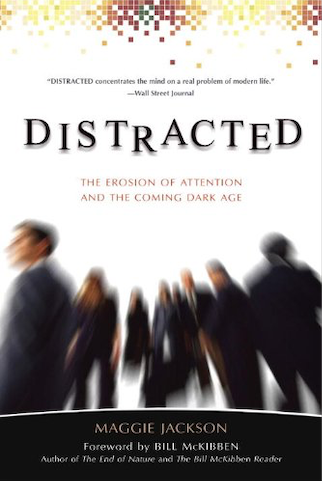
Maggie Jackson, author of Distracted: The Erosion of Attention and the Coming Dark Age, on how multitasking exalts efficiency and promises the overcoming of bodily limitations as time is restructured, and on the importance of attentiveness in sustaining personal and social order

Mark Bauerlein, author of The Dumbest Generation: How the Digital Age Stupefies Young Americans and Jeopardizes Our Future, on how technologies have rearranged the social lives of teens (and their expectations of education)
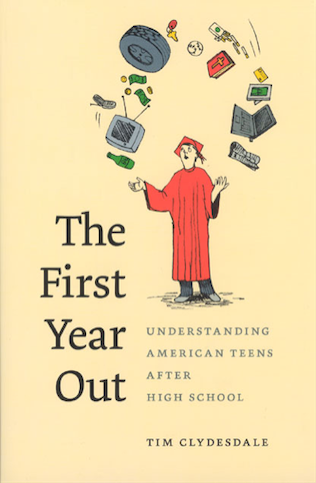
Tim Clydesdale, author of The First Year Out: Understanding American Teens After High School, on what the first year in college means for teens
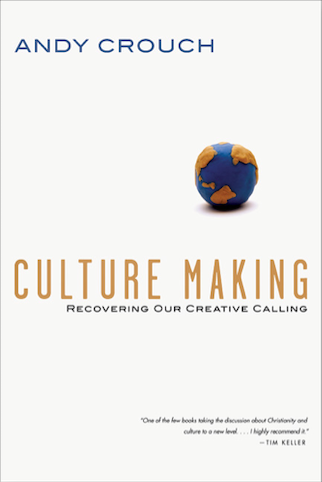
Andy Crouch, author of Culture Making: Recovering Our Creative Calling, on the physical basis of cultural life and how “culture making” is done
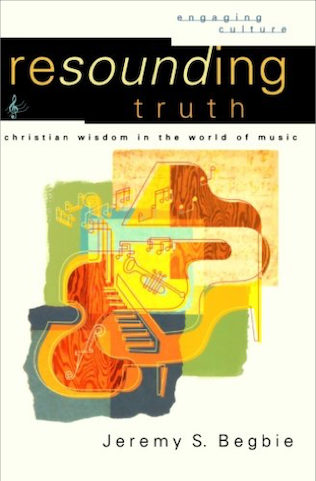
Jeremy Begbie, author of Resounding Truth: Christian Wisdom in the World of Music, on how music is a way of engaging with the order in Creation and on how writing and hearing music involves a recognition of likenesses in Creation and the exercise of “hyper-hearing”
Related reading and listening
- When myth becomes fact — In this 1976 interview, Clyde Kilby (1902–1986) discusses C. S. Lewis’s critique of scientism and rationalism, his belief in the primacy of the imagination, and his mythic vision. (37 minutes)
- “A Myth Retold” — Literary critic Thomas Howard explains why he considers C. S. Lewis’s Till We Have Faces to be one of the author’s richest and most rewarding works. (18 minutes)
- The destructive perils of speech without a real partner — Josef Pieper and Marc Barnes on how chatbots pervert the nature of conversation
- Paradoxes of “nature” and “culture” — Robert Spaemann, on the destructive consequences of a merely naturalistic understanding of nature
- Christian culture and the myth of the secular — Ken Myers draws on T. S. Eliot to argue that Western civilization has broken down, not into a multiplicity of cultures, but into a “post-culture.” (47 minutes)
- How to make war on nothingness? — David Bentley Hart argues that if it rejects Christ, the only remaining option for a post-Christian culture is conscious or “narcotic” nihilism, which takes the form of absolute, meaningless volition. (66 minutes)
- Machines and misanthropy — Nicholas Carr on how technology has transformed our understanding of progress (and people)
- Alienation and autoamputation: the price of power — Nicholas Carr on the numbing effect of technology
- Disengagement from the world — Nicholas Carr encourages us to consider how automation technologies impact our ability to engage with the world and whether — like a good tool — they present a more inviting world or close us off from that world. (30 minutes)
- Reason and the love of truth —
FROM VOL. 97 James Peters discusses historical understandings of reason and rationality and how they differ from the modern notion of rationality. (21 minutes) - A sampling of newly published lectures — Ken Myers introduces listeners to four recently released lectures, courtesy of our Partners. The lecturers are Jennifer Frey, Gary Saul Morson, N. T. Wright, and Andrew Kern. (27 minutes)
- The inward eye, cosmic truth, and making well — Andrew Kern takes his listeners along an “interlinear” reading of a portion of St. Augustine’s Confessions that explores the differences between how God makes and how we create. (38 minutes)
- Rose without thorns — Ken Myers introduces various settings of “Ther is no rose of swych vertu,” a medieval carol that uses imagery of a rosebush to describe the Virgin Mary. (29 minutes)
- “Investigations of divine works” — Greg Wilbur explains how closely connected music is to the order of the cosmos and how it even reveals attributes of God. (56 minutes)
- A letter from Ken Myers — Ken Myers examines the cultural implications of the Incarnation and the deep-seated dualism of modernity that divorces spirituality from our material experience. (22 minutes)
- The beauty of truth and goodness —
FROM VOL. 141 James Matthew Wilson talks about how cultivating the desire to perceive the interior life of things sustains the basic human capacity for recognizing truth, pursuing wisdom, and contemplating beauty. (23 minutes) - The experience of a “real presence” in sacred music —
FROM VOL. 126 Jonathan Arnold explores why people of no religious commitment pay money to hear specifically sacred music. (22 minutes) - How music blesses and teaches —
FROM VOL. 64 Theologian and musician Jeremy Begbie explores what we learn about time, theology, and the structure of Creation from the experience of music. (28 minutes) - Mars Hill Audio Journal, Volume 166 — FEATURED GUESTS: William Cavanaugh, Kent Burreson, Beth Hoeltke, Jeffrey Barbeau, Jason Baxter, John Betz, and Bruce Herman
- Creation, in harmony with the Logos — Rowan Williams on the Logos and the diverse logoi that mirror it
- An icon of the whole world — Jason Baxter explains how Dante includes a panoply of characters and creatures in his Comedia, offering a prismatic view of all of Creation in its glory. (20 minutes)
- Cosmic realities in the built world — Christopher and Christine Perrin discuss the implications of architect Christopher Alexander’s (1936–2022) discovery of patterns of building that cohere with the the created cosmos and with ourselves as human creatures. (59 minutes)
- The “book” of Creation — Alan Noble explains why the modern world makes it profoundly difficult to experience Creation as revelation, and he encourages unmediated encounters with Creation that lead to meditation. (52 minutes)
- Life more abundantly — Jeanne Schindler advocates for a return to an understanding and prioritizing of sensory experience — real engagement with the real world — as foundational to learning and living. (35 minutes)
- Technophiliac obsessions —
FROM VOL. 141 Literary and media scholar Grant Wythoff talks about the “father of science fiction,” Hugo Gernsback. (26 minutes) - Heaven and earth are full of His glory — Gerald R. McDermott examines the typological tradition of the Church, particularly through Jonathan Edwards’s thought, and he argues for a recovery of the Christian understanding of the universe as an “immense Trinitarian symbol.” (61 minutes)
- An invitation to a feast — Christina Bieber Lake explains how poetry is an invitation to experience the beauty and goodness of Creation as gift. (44 minutes)
- The founding of a choral ensemble —
FROM VOL. 119 Founder Peter Phillips recounts the history of his choral ensemble The Tallis Scholars. (23 minutes) - Alert to the magic in the world — Junius Johnson discusses the importance of teaching stories, particularly fairy stories, in classical education. (25 minutes)
- Stewarding God’s creation —
FROM VOL. 116 Fred Bahnson talks about how a Christian understanding of God’s redemptive work on the earth should influence our practices of growing and sharing food. (19 minutes) - A beautiful human geometry — Musicologist Leopold Brauneiss compares Arvo Pärt’s compositional technique with Jungian archetypes
- A bridge between yesterday and today — Composer Arvo Pärt describes how he came to appropriate the mysteries of polyphony
- From the heart of silence — Conductor Paul Hillier on the sources of Arvo Pärt’s distinctive musical expression
- Prayer and complexity in Arvo Pärt’s music — In honor of Estonian composer Arvo Pärt’s 90th birthday, Ken Myers talks with Peter Bouteneff, about the singular qualities of Pärt’s music. (19 minutes)
- How to illustrate music and mystery —
FROM VOL. 164 Illustrator Joonas Sildre discusses his graphic biography of Estonian composer Arvo Pärt. (19 minutes) - “Earth-shaking” and “heart-breaking” beauty —
FROM VOL. 151 Junius Johnson warns that the pursuit of beauty is both perilous and an experience that points to the desire for God. (25 minutes) - “Emerging adulthood” —
FROM VOL. 100 Christian Smith discusses the aimless cultural world of emerging adulthood and on how it makes the idea of objective moral order implausible. (17 minutes) - All trees, no forest — Richard Weaver on the attenuating of knowledge
- The de(con)struction of the humanities (and of truth) — Historian Gertrude Himmelfarb on the skeptical tendencies of the postmodern academy
- Universities as the hosts of reciprocating speech — Robert Jenson on how the Christian understanding of Truth in a personal Word shaped the Western university
- University or “utiliversity”? — In this essay, Reinhard Hütter examines in depth John Henry Newman’s The Idea of a University and argues that its insights and prescriptions are urgently relevant to the current status of higher education. (87 minutes)
- Media as agencies of order — Media theorist John Durham Peters wants us to reexamine the purposes of media and how fundamental media are. (59 minutes)
- Utopian dreams and cynicism — John Durham Peters discusses the history of the idea of communication, saying that our hopes are too high when we believe that the solution to social discord is just better communication. (49 minutes)
- Thinking Together — Alan Jacobs discusses some principles he’s compiled to help us think well (and charitably) in our cultural context, and he warns us to be attentive to the ways technology displaces previously fixed communities. (53 minutes)
- The “scandal” of theology in the university — Edward T. Oakes, S.J. explains why John Henry Newman’s eloquent defense of the nature of university education, The Idea of a University, continues to inspire, challenge, and even frustrate its sympathizers. (24 minutes)
- Setting the liberal arts free — In addressing the state of liberal arts education in the U.S., Gilbert Meilaender raises some core questions and makes some surprising proposals. (28 minutes)
- The establishment of nonbelief —
FROM VOL. 10 George Marsden explains how and why American universities became places where religious concerns are excluded. (10 minutes) - Students as arbiters of knowledge —
FROM VOL. 94 Tim Clydesdale discusses the experience of freshmen year at college, suggesting that by that time students have been effectively inoculated against a love of knowledge. (21 minutes) - What adolescence misses —
FROM VOL. 94 Mark Bauerlein talks about the ways of learning and living practiced by contemporary youth, how they impact the acquisition and use of knowledge and form intellectual habits, and what this means for the future of our society. (16 minutes) - Helping boys become virtuous men — Teacher and chaplain Mark Perkins describes forms of formation that take the body seriously 50 minutes