PREVIEW
The player for this Journal volume is only available to current members or listeners with a legacy account. If you have an active membership, log in here. If you’d like to become a member — with access to all our audio programs — sign up here.
Guests heard on Volume 99
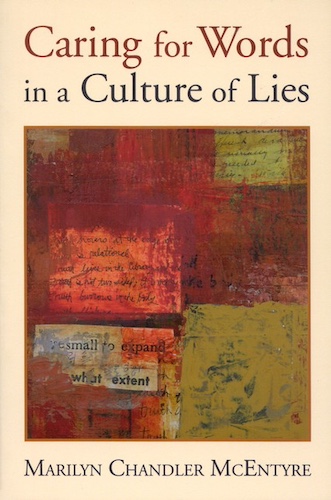
Marilyn Chandler McEntyre, author of Caring for Words in a Culture of Lies, on how the abuse of language creates distrust in the power of words and on how we can be better stewards of the gift of language
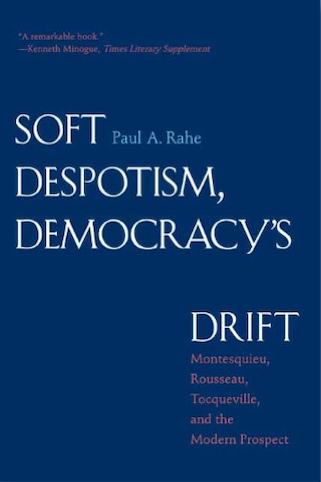
Paul A. Rahe, author of Soft Despotism, Democracy’s Drift: Montesquieu, Rousseau, Tocqueville, and the Modern Prospect, on the heresy of progressivism, which abandons vital convictions about human nature and political order and invites the advent of “soft despotism”
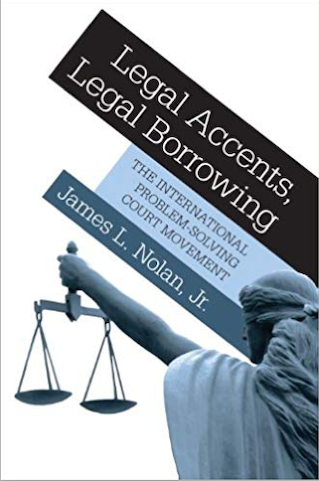
James L. Nolan, Jr., author of Legal Accents, Legal Borrowing: The International Problem-Solving Court Movement, on how European countries have adopted the American model of problem-solving courts (and what they also get in the bargain)

Andrew J. Cherlin, author of The Marriage-Go-Round: The State of Marriage and the Family in America Today, on why the twin American commitments to marriage and to expressive individualism hurt families
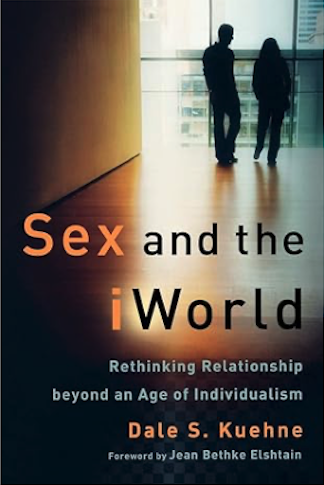
Dale Kuehne, author of Sex and the iWorld: Rethinking Relationship Beyond an Age of Individualism, on the faulty assumption that intimate relationships demand sexual involvement, and on how the essentially relational nature of the Gospel is ignored
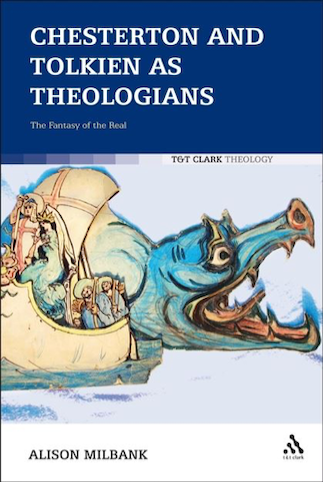
Alison Milbank, author of Chesterton and Tolkien as Theologians: The Fantasy of the Real, on how the fantasy writings of G. K. Chesterton and J. R. R. Tolkien are intended to reconnect readers with reality
Related reading and listening
- We are not “stochastic parrots” — In this essay, Talbot Brewer argues that our understanding of the nature of words and their relationship to human nature is “teetering” due to artificial intelligence chatbot systems and large language models (LLMs). (42 minutes)
- The reclaiming of authentic liberalism — John Médaille examines the Christian roots of liberalism and how liberalism might be recovered from the heresy of secularism. (51 minutes)
- Catechesis in “Screentopia” — In this lecture, Brad East builds a case for why he believes digital technology is the greatest threat facing American Christians today. (57 minutes)
- Truth lives in language — Craig Gay reflects on how language is not merely a tool for humans to use, but is a part of our very being as creatures made in the image of the God who is the living Word. (52 minutes)
- How tech is making us less human — Christine Rosen argues that we must reckon with serious moral and ethical questions raised by the acceleration of “artificial intelligence” into almost every area of life. (31 minutes)
- Turning Petrarchan love poetry on its head — Dr. Benedict Whalen examines the influence of Petrarchan love poetry on Europe, and he reveals through a close read of Romeo and Juliet how Shakespeare subverted key features of Petrarch’s love poems to rich effect. (54 minutes)
- A living tradition — In this lecture, James Matthew Wilson explores the nature of tradition as a “condition of possibility” that situates both reason and poetry. (49 minutes)
- Human beings as “word-bearers” — In this lecture, D. C. Schindler argues that misology — hatred for reason and contempt for language — is a deep cause of our current cultural crisis. (56 minutes)
- Mars Hill Audio Journal, Volume 167 — FEATURED GUESTS: Nicholas Carr, Thomas Ward, Joseph Stuart, Steven Knepper, Robert Wyllie, Ephraim Radner, and Andrew Willard Jones
- The desire for truth — In this article, Romanus Cessario, O.P., recounts the life, theology, and influence of St. Thomas Aquinas (1224/5–1274). (38 minutes)
- St. Thomas the anthropologist — G. K. Chesterton on Aquinas’s complete Science of Man
- Knowing and living our metaphysical totality — Clyde Kilby on the power of myth to bring together “the slender hints of the knowable”
- When myth becomes fact — In this 1976 interview, Clyde Kilby (1902–1986) discusses C. S. Lewis’s critique of scientism and rationalism, his belief in the primacy of the imagination, and his mythic vision. (37 minutes)
- A great Reality at the core of things — Clyde Kilby on the nature and need for myths
- Christian culture and the myth of the secular — Ken Myers draws on T. S. Eliot to argue that Western civilization has broken down, not into a multiplicity of cultures, but into a “post-culture.” (47 minutes)
- Disengagement from the world — Nicholas Carr encourages us to consider how automation technologies impact our ability to engage with the world and whether — like a good tool — they present a more inviting world or close us off from that world. (30 minutes)
- Modernity’s crisis of place — Craig Bartholomew reflects on the importance of place to our humanity. (58 minutes)
- Reason and the love of truth — FROM VOL. 97 James Peters discusses historical understandings of reason and rationality and how they differ from the modern notion of rationality. (21 minutes)
- The inward eye, cosmic truth, and making well — Andrew Kern takes his listeners along an “interlinear” reading of a portion of St. Augustine’s Confessions that explores the differences between how God makes and how we create. (38 minutes)
- Grace and Christian realism — Jennifer Frey explores Thomist elements in Flannery O’Connor’s theology and writing, with a particular emphasis on a Thomist understanding of art. (39 minutes)
- Divine love and human sexuality — Paul Tyson argues that views about sexuality are downstream from theological — or at least metaphysical — assumptions about human nature. (16 minutes)
- God also was a Cave-man — G. K. Chesterton on the convergence of omnipotence and impotence in Bethlehem
- The cost of “killing” God — In this October 2023 lecture, Carl Trueman explores the concept of “desecration” as a frame for understanding the nature of modernity in our time. (42 minutes)
- “Investigations of divine works” — Greg Wilbur explains how closely connected music is to the order of the cosmos and how it even reveals attributes of God. (56 minutes)
- To be at home in the world — D. C. Schindler examines how rituals enable us to experience time in a meaningful way — how they actually make time habitable for us. (41 minutes)
- The beauty of truth and goodness — FROM VOL. 141 James Matthew Wilson talks about how cultivating the desire to perceive the interior life of things sustains the basic human capacity for recognizing truth, pursuing wisdom, and contemplating beauty. (23 minutes)
- The primacy of the Body of Christ — FROM VOL. 134 Philip Turner reflects on how Christian ethics is misplaced if it has as its central concern individual moral behavior or social justice. (28 minutes)
- The experience of a “real presence” in sacred music — FROM VOL. 126 Jonathan Arnold explores why people of no religious commitment pay money to hear specifically sacred music. (22 minutes)
- How music blesses and teaches — FROM VOL. 64 Theologian and musician Jeremy Begbie explores what we learn about time, theology, and the structure of Creation from the experience of music. (28 minutes)
- Mars Hill Audio Journal, Volume 166 — FEATURED GUESTS: William Cavanaugh, Kent Burreson, Beth Hoeltke, Jeffrey Barbeau, Jason Baxter, John Betz, and Bruce Herman
- Cosmic realities in the built world — Christopher and Christine Perrin discuss the implications of architect Christopher Alexander’s (1936–2022) discovery of patterns of building that cohere with the the created cosmos and with ourselves as human creatures. (59 minutes)
- Life more abundantly — Jeanne Schindler advocates for a return to an understanding and prioritizing of sensory experience — real engagement with the real world — as foundational to learning and living. (35 minutes)
- An invitation to a feast — Christina Bieber Lake explains how poetry is an invitation to experience the beauty and goodness of Creation as gift. (44 minutes)
- Mordor versus the Shire — In this lecture, Heidi White explains how the modern project is a diabolical inversion of Christendom and calls for Christians to build lives and a culture that can counter it. (53 minutes)
- How to illustrate music and mystery — FROM VOL. 164 Illustrator Joonas Sildre discusses his graphic biography of Estonian composer Arvo Pärt. (19 minutes)
- Money, status, and satisfaction — FROM VOL. 44 David Myers and Robert Frank discuss the tenuous relationship between wealth and happiness. (22 minutes)
- Utopian dreams and cynicism — John Durham Peters discusses the history of the idea of communication, saying that our hopes are too high when we believe that the solution to social discord is just better communication. (49 minutes)
- Man as “both mystic and hobbit” — D. C. Schindler explores how building is a quintessential human activity and an expression of our view of the meaning of reality. (47 minutes)
- Setting the liberal arts free — In addressing the state of liberal arts education in the U.S., Gilbert Meilaender raises some core questions and makes some surprising proposals. (28 minutes)
- Secularization and anarchy — Joseph Cardinal Ratzinger on the necessary connection between law, ethics, and worship
- Still connected to the land — Nadya Williams on the inescapably earthy character of human flourishing
- Pathways of the Mind: The Joy of the Essay — Alan Jacobs thinks Christians should embrace the potential in the literary form of the essay, because of the way it corresponds to the navigation and journey of a Christian life. (48 minutes)
- Shared Practices, Strong Communities — Christine Pohl reflects on why a deliberate commitment to certain shared practices is necessary for the sustaining of community. (57 minutes)
- Power to the people — Nathan O. Hatch on the DIY spirit of early American Christianity
- Thinking coherently about politics — Ken Myers gives an introduction to political theologian Oliver O’Donovan, whose work has been instrumental in teaching many how to think about social and political life in light of the gospel of Christ. (57 minutes)
- “A man after reality” — FROM VOL. 30 Clyde Kilby discusses C. S. Lewis‘s critique of scientism and rationalism, and his belief in the primacy of the imagination. (15 minutes)
- A Christian understanding of human nature — FROM VOL. 35 Robert C. Roberts and Mark R. Talbot discuss the need for Christian psychologists to draw from Christianity’s deep tradition of understanding human nature. (15 minutes)
- Postmodern culture and the gospel — FROM VOL. 6 Roger Lundin discusses the ethical and theological consequences of our postmodern culture. (9 minutes)
- “Only a real world can save us” — Oliver O’Donovan explores how the “religion” of modernity lacks a coherent world in which one may participate with full human agency and moral purpose. (Lecture 3 of 3; 61 minutes)
- Knowing and doing the good — Oliver O’Donovan raises several key questions and complications involved in the task of taking concrete and practical action toward a recognized moral good. (Lecture 3 of 3; 63 minutes)
Tags:
Cherlin, Andrew J.Chesterton, G. K.DemocracyFantasyHuman natureIndividualismKuehne, DaleLanguageLawMarriageMcEntyre, MarilynMilbank, AlisonNolan, James L., Jr.ProgressivismRahe, Paul A.RealitySexual EthicsTocqueville, Alexis deTolkien, J. R. R.