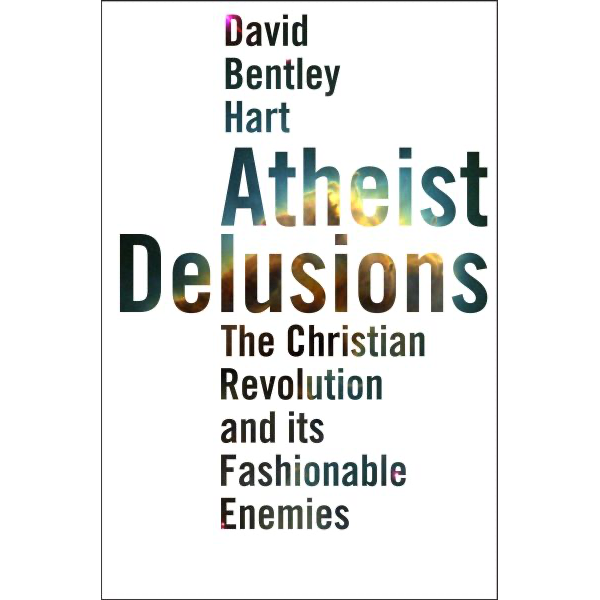
“[T]he history of modernity is the history of secularization, of the retreat of Christian belief to the private sphere; and this, for many of us, is nothing less than the history of human freedom itself, the grand adventure of the adulthood of the race (so long delayed by priestcraft and superstition and intolerance), the great revolution that liberated society and the individual alike from the crushing weight of tradition and doctrine.
“Hence modernity’s first great attempt to define itself: an ‘age of reason’ emerging from and overthrowing an ‘age of faith.’ Behind this definition lay a simple but thoroughly enchanting tale. Once upon a time, it went, Western humanity was the cosseted and incurious ward of Mother Church; during this, the age of faith, culture stagnated, science languished, wars of religion were routinely waged, witches were burned by inquisitors, and Western humanity labored in brutish subjection to dogma, superstition, and the unholy alliance of church and state. Withering blasts of fanaticism and fideism had long since scorched away the last remnants of classical learning; inquiry was stifled; the literary remains of classical antiquity had long ago been consigned to the fires of faith, and even the great achievements of ‘Greek science’ were forgotten till Islamic civilization restored them to the West. All was darkness. Then, in the wake of the ‘wars of religion’ that had torn Christendom apart, came the full flowering of the Enlightenment and with it the reign of reason and progress, the riches of scientific achievement and political liberty, and a new and revolutionary sense of human dignity. The secular nation-state arose, reduced religion to an establishment of the state or, in the course of time, to something altogether separate from the state, and thereby rescued Western humanity from the blood-steeped intolerance of religion. Now, at last, Western humanity has left its nonage and attained to its majority, in science, politics, and ethics. The story of the travails of Galileo almost invariably occupies an honored place in this narrative, as exemplary of the natural relation between ‘faith’ and ‘reason’ and as an exquisite epitome of scientific reason’s mighty struggle during the early modern period to free itself from the tyranny of religion. This is, as I say, a simple and enchanting tale, easily followed and utterly captivating in its explanatory tidiness; its sole defect is that it happens to be false in every identifiable detail.
“To be fair, serious historians do not for the most part speak in such terms. This tale of the birth of the modern world has largely disappeared from respectable academic literature and survives now principally at the level of folklore, ‘intellectual journalism,’ and vulgar legend. . . .
“Sadly, however, it is not serious historians who, for the most part, form the historical consciousness of their times; it is bad popular historians, generally speaking, and the historical hearsay they repeat or invent, and the myths they perpetuate and simplifications they promote, that tend to determine how most of us view the past. . . . And so, naturally, among the broadly educated and the broadly uneducated alike, it is the simple picture that tends to prevail, though in varying shades and intensities of color, as with any image often and cheaply reproduced; and the simple picture, in this case, is the story that Western society has been telling us about itself for centuries now.”
—from David Bentley Hart, Atheist Delusions: The Christian Revolution and Its Fashionable Enemies (New Haven: Yale University Press, 2009)
Related reading and listening
- On disposable experience — Todd Gitlin argues that we simultaneously resent and crave the experience of media saturation, and that it ultimately cheapens our lives. (33 minutes)
- From Descartes to Nietzsche — Leszek Kolakowski on Cartesian rationality and modernity’s loss of meaning
- Christian culture and the myth of the secular — Ken Myers draws on T. S. Eliot to argue that Western civilization has broken down, not into a multiplicity of cultures, but into a “post-culture.” (47 minutes)
- How to make war on nothingness? — David Bentley Hart argues that if it rejects Christ, the only remaining option for a post-Christian culture is conscious or “narcotic” nihilism, which takes the form of absolute, meaningless volition. (66 minutes)
- Modernity’s crisis of place — Craig Bartholomew reflects on the importance of place to our humanity. (58 minutes)
- A sampling of newly published lectures — Ken Myers introduces listeners to four recently released lectures, courtesy of our Partners. The lecturers are Jennifer Frey, Gary Saul Morson, N. T. Wright, and Andrew Kern. (27 minutes)
- The epistemology of love — In this lecture, N. T. Wright examines the epistemology of love and how it counters the reductionism of Enlightenment and Epicurean ways of knowing. (63 minutes)
- “If there is no God, all is permitted” — Gary Saul Morson explores the consequences of belief and disbelief in God through Russian literature. (51 minutes)
- The cost of “killing” God — In this October 2023 lecture, Carl Trueman explores the concept of “desecration” as a frame for understanding the nature of modernity in our time. (42 minutes)
- Cultural superiority and Medieval romance literature — FROM VOL. 164 Tiffany Schubert argues that Jane Austen’s novels subtly incorporate some medieval literary conventions in ways that enable modern readers to experience a sense of wonder, romance, and the benevolence of Providence. (30 minutes)
- A flood of images — Oliver O’Donovan describes the distinctive character of publicity in modernity, which drowns us in a flood of ever-changing representations that do not serve the common good. (37 minutes)
- Publicity and representative images in society — Oliver O’Donovan describes the nature of publicity as the force that mediates our communication with one another, creating common interests and then rapidly subsuming them into newer ones.(Lecture 3 of 3; 57 minutes)
- Mordor versus the Shire — In this lecture, Heidi White explains how the modern project is a diabolical inversion of Christendom and calls for Christians to build lives and a culture that can counter it. (53 minutes)
- Rand’s influence on conservatism — FROM VOL. 100 History professor Jennifer Burns discusses the life and legacy of “goddess of the market” Ayn Rand. (17 minutes)
- The establishment of nonbelief — FROM VOL. 10 George Marsden explains how and why American universities became places where religious concerns are excluded. (10 minutes)
- Secularization and anarchy — Joseph Cardinal Ratzinger on the necessary connection between law, ethics, and worship
- Mars Hill Audio Journal, Volume 165 — FEATURED GUESTS: Jeffrey Bilbro, Daniel McInerny, Joseph Minich, Carl Elliott, Nadya Williams, and Don W. King
- Living in a tool-i-fied world — Joseph Minich on how the ubiquity of technology makes atheism entirely plausible
- “Only a real world can save us” — Oliver O’Donovan explores how the “religion” of modernity lacks a coherent world in which one may participate with full human agency and moral purpose. (Lecture 3 of 3; 61 minutes)
- Natural law as “performance” — FROM VOL. 124 R. J. Snell discusses how novel ideas about natural law focus less on moral propositions and concepts and more on the thrust for meaning and value. (27 minutes)
- A poet’s relationship to time — FROM VOL. 57 Poet Wilmer Mills (1969–2011) discusses how his agricultural and cross-cultural childhood in Brazil shaped his imagination and his relationship with modernity. (11 minutes)
- Dickinson and modern malaise — FROM VOL. 36 Roger Lundin explains how Emily Dickinson’s understanding of love, nature, religion, and mortality are modern in content. (11 minutes)
- Modernity and the shaping of America — FROM VOL. 48 Historian Jon Butler explains how aspects of modernity were already present and at work in colonial American life prior to 1776. (12 minutes)
- The transforming power of false divinities — Romano Guardini on the danger of becoming like the gods we invent
- Mars Hill Audio Journal, Volume 163 — FEATURED GUESTS: Andrew Youngblood, R. J. Snell, Nicholas Denysenko, Nigel Biggar, Robert McNamara, and David Cayley
- Science’s need for philosophy and revelation — D. Stephen Long explores a consistent theme in the work of theologian Hans Urs von Balthasar: the relationship between Christianity, modernity, and secularity. (46 minutes)
- A metaphysics of realism, relationality, and personalism — John Milbank gives a survey and critique of the efforts of 20th and 21st century theologians to articulate a Trinitarian ontology that reflects reality and counters secularization. (61 minutes)
- Worldliness vs. otherworldliness — FROM VOL. 38 Sociologist Craig Gay speaks of the charge that Christianity is an otherworldly religion. (12 minutes)
- Augusto Del Noce’s critique of modernity — FROM VOL. 128 Physicist and mathematician Carlo Lancellotti discusses the life and work of twentieth-century Italian philosopher, Augusto Del Noce. (25 minutes)
- Faith as the pathway to knowledge — Lesslie Newbigin on authority and the Author of all being
- The integration of theoretical and mythic intelligence — FROM VOL. 156 William C. Hackett discusses the relationships between philosophy and theology, and of both to the meaning embedded in myth. (29 minutes)
- Christopher Hitchens vs. G. K. Chesterton — Ralph Wood compares Christopher Hitchens‘s view of the cosmos with that of G. K. Chesterton, arguing that Chesterton succeeded where Hitchens failed. (44 minutes)
- A fearful darkness in mind, heart, and spirit — Roberta Bayer draws on the work of George Parkin Grant (1918–1988) to argue that our “culture of death” must be countered with an understanding of reality based in love, redemptive suffering, and a recognition of limitations to individual control. (33 minutes)
- Insisting that political leaders are incapable of obeying Christ — Oliver O’Donovan on the unintended consequences of the First Amendment to the U.S. Constitution.
- An unwitting agent for the secularization of America — Mark Noll, Nathan Hatch, and George Marsden explain how a prominent Christian Founding Father added momentum to the secularization of America
- Cleansing sea breezes — Thomas C. Oden argues that rather than being conformed to contemporary ideological trends, we should be informed by 2000 years of the Church’s wisdom. And Darrell Amundsen corrects some false claims about the early Church’s views on suicide. (27 minutes)
- Divorcing the spirit of the age — Thomas C. Oden on overcoming the theological faddism of the late twentieth century
- Orienting reason and passions — In an essay titled “The Abolition of Mania” (Modern Age, Spring 2022), Michael Ward applies C. S. Lewis’s insights to the polarization that afflicts modern societies. (16 minutes)
- Faith and unbelief — FROM VOL. 98 This Archive Feature revisits two conversations, one with Roger Lundin and one with David Bentley Hart, on what makes Christian belief so implausible to non-believers. (39 minutes)
- Creation as beauty and gift — FROM VOL. 67 David Bentley Hart describes how the Christian understanding of Creation as beauty and gift, as the outward expression of the delight the Trinity has in itself, reveals a vision of reality different from the pagan or fatalist vision of reality. (12 minutes)
- Mechanism and the abolition of meaning — On the occasion of philosopher Daniel Dennett’s death this week, Ken Myers presents an archive interview with David Bentley Hart in which he explains how pure naturalism leads to the un-doing of rationality. (37 minutes)
- Materialism and the problem of mind — David Bentley Hart on the evasiveness implicit on all efforts to explain away human consciousness
- Dreary atheist fundamentalism — David Bentley Hart defends the naturalness of religious belief against the assertions of the Naturalists
- Lessons from Leviticus — The book of Leviticus may be assumed to be irrelevant for charting a way through the challenges of modernity. Theologian Peter J. Leithart disagrees. (22 minutes)
- The infinity of beauty in Bach — David Bentley Hart on why Johann Sebastian Bach is the greatest of Christian theologians
- Rejecting “two-tiered” Thomism — FROM VOL. 155 David Bentley Hart on how “two-tier Thomism” deviates from historic Christian understanding of the relationship between God and Creation. (42 minutes)
- An outrageous idea? — In the late 1990s, George M. Marsden and James Tunstead Burtchaell both wrote books examining the claim that it was far-fetched even to imagine that scholarly work could be an expression of Christian claims about reality. (25 minutes)
- Once there was no “secular” — Carlos Eire on the metaphysical assumptions championed in the sixteenth century
- Resituating discussion of “science” and “religion” — Peter Harrison argues that modern Western culture’s partitioning of ‘science’ and ‘religion’ into distinct spheres is a novel categorical conception in history. (58 minutes)
- Sources of wisdom (and of doubt) — Roger Lundin shares what he has appreciated about Mars Hill Audio conversations, and he discusses what makes Christian belief so implausible to non-believers. (32 minutes)