PREVIEW
The player for this Journal volume is only available to current members or listeners with a legacy account. If you have an active membership, log in here. If you’d like to become a member — with access to all our audio programs — sign up here.
Guests heard on Volume 116
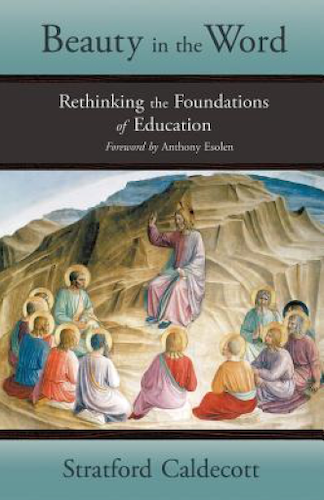
Stratford Caldecott, editor of Beauty in the Word: Rethinking the Foundations of Education, on why education should be designed with a deep and wide understanding of human nature and must sustain the unity of knowledge
Fred Bahnson, author of Making Peace with the Land: God’s Call to Reconcile with Creation, on how a Christian understanding of God’s redemptive work on the earth should influence our practices of growing and sharing food
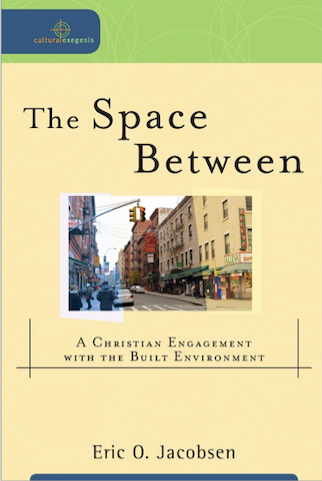
Eric O. Jacobsen, author of The Space Between: A Christian Engagement with the Built Environment, on how modernism distorted the shape of cities and how Christian reflection on the nature of neighborliness can help restore them
J. Budziszewski, author of On the Meaning of Sex, on how meaning in human life transcends a merely biological explanation of our behavior
Brian Brock, author of Christian Ethics in a Technological Age, on the various ways in which the Church has regarded its obligation to welcome the disabled
Allen Verhey, author of The Christian Art of Dying: Learning from Jesus, on the difference between a “medicalized” death and a death experienced in light of God’s cosmic work of redemption
Related reading and listening
- Creation, in harmony with the Logos — Rowan Williams on the Logos and the diverse logoi that mirror it
- We are not “stochastic parrots” — In this essay, Talbot Brewer argues that our understanding of the nature of words and their relationship to human nature is “teetering” due to artificial intelligence chatbot systems and large language models (LLMs). (42 minutes)
- Catechesis in “Screentopia” — In this lecture, Brad East builds a case for why he believes digital technology is the greatest threat facing American Christians today. (57 minutes)
- Truth lives in language — Craig Gay reflects on how language is not merely a tool for humans to use, but is a part of our very being as creatures made in the image of the God who is the living Word. (52 minutes)
- Modern isolation — FROM VOL. 150 Eric Jacobsen argues that the emblematic items of the car windshield, the television, and the cell phone — “three pieces of glass” —have led to alienation from people and the places where we live. (22 minutes)
- How tech is making us less human — Christine Rosen argues that we must reckon with serious moral and ethical questions raised by the acceleration of “artificial intelligence” into almost every area of life. (31 minutes)
- Human beings as “word-bearers” — In this lecture, D. C. Schindler argues that misology — hatred for reason and contempt for language — is a deep cause of our current cultural crisis. (56 minutes)
- Mars Hill Audio Journal, Volume 167 — FEATURED GUESTS: Nicholas Carr, Thomas Ward, Joseph Stuart, Steven Knepper, Robert Wyllie, Ephraim Radner, and Andrew Willard Jones
- Nietzsche, technology, and desire — Steven Knepper and Robert Wyllie discuss philosopher Byung-Chul Han’s thought on Nietzsche and on the effects of digital media on concepts of freedom, desire, and receptivity to others. (14 minutes)
- The collaboration of bodies and minds — F. C. Copleston on Aquinas’s confidence in the embodied nature of knowledge
- St. Thomas the anthropologist — G. K. Chesterton on Aquinas’s complete Science of Man
- Knowing and living our metaphysical totality — Clyde Kilby on the power of myth to bring together “the slender hints of the knowable”
- When myth becomes fact — In this 1976 interview, Clyde Kilby (1902–1986) discusses C. S. Lewis’s critique of scientism and rationalism, his belief in the primacy of the imagination, and his mythic vision. (37 minutes)
- The destructive perils of speech without a real partner — Josef Pieper and Marc Barnes on how chatbots pervert the nature of conversation
- Machines and misanthropy — Nicholas Carr on how technology has transformed our understanding of progress (and people)
- Alienation and autoamputation: the price of power — Nicholas Carr on the numbing effect of technology
- Disengagement from the world — Nicholas Carr encourages us to consider how automation technologies impact our ability to engage with the world and whether — like a good tool — they present a more inviting world or close us off from that world. (30 minutes)
- Modernity’s crisis of place — Craig Bartholomew reflects on the importance of place to our humanity. (58 minutes)
- A sampling of newly published lectures — Ken Myers introduces listeners to four recently released lectures, courtesy of our Partners. The lecturers are Jennifer Frey, Gary Saul Morson, N. T. Wright, and Andrew Kern. (27 minutes)
- The inward eye, cosmic truth, and making well — Andrew Kern takes his listeners along an “interlinear” reading of a portion of St. Augustine’s Confessions that explores the differences between how God makes and how we create. (38 minutes)
- Divine love and human sexuality — Paul Tyson argues that views about sexuality are downstream from theological — or at least metaphysical — assumptions about human nature. (16 minutes)
- A humanist urban vision for Chicago — Philip Bess imagines what metropolitan Chicago might look like in one hundred years if it were designed according to classical humanist principles and with an overt acknowledgement of sacred order. (93 minutes)
- The cost of “killing” God — In this October 2023 lecture, Carl Trueman explores the concept of “desecration” as a frame for understanding the nature of modernity in our time. (42 minutes)
- “Investigations of divine works” — Greg Wilbur explains how closely connected music is to the order of the cosmos and how it even reveals attributes of God. (56 minutes)
- A letter from Ken Myers — Ken Myers examines the cultural implications of the Incarnation and the deep-seated dualism of modernity that divorces spirituality from our material experience. (22 minutes)
- How music blesses and teaches — FROM VOL. 64 Theologian and musician Jeremy Begbie explores what we learn about time, theology, and the structure of Creation from the experience of music. (28 minutes)
- Mars Hill Audio Journal, Volume 166 — FEATURED GUESTS: William Cavanaugh, Kent Burreson, Beth Hoeltke, Jeffrey Barbeau, Jason Baxter, John Betz, and Bruce Herman
- An icon of the whole world — Jason Baxter explains how Dante includes a panoply of characters and creatures in his Comedia, offering a prismatic view of all of Creation in its glory. (20 minutes)
- Rehearsing the Christian story — FROM VOL. 101 Thomas Long describes how funeral practices have the capacity to convey an understanding of the meaning of discipleship and death. (16 minutes)
- The “sovereign uselessness of moral reflection” — Calling on the wisdom of St. Augustine, Oliver O’Donovan reminds his listeners that all knowledge participates in the eternal Logos of God and is rooted in love, not disinterested moral judgement.(Lecture 1 of 3; 52 minutes)
- Cosmic realities in the built world — Christopher and Christine Perrin discuss the implications of architect Christopher Alexander’s (1936–2022) discovery of patterns of building that cohere with the the created cosmos and with ourselves as human creatures. (59 minutes)
- Beyond a reasonable doubt — From a 1980 interview with Ken Myers, Mortimer J. Adler discusses his argument that belief in the existence of God is rational. (14 minutes)
- The “book” of Creation — Alan Noble explains why the modern world makes it profoundly difficult to experience Creation as revelation, and he encourages unmediated encounters with Creation that lead to meditation. (52 minutes)
- Life more abundantly — Jeanne Schindler advocates for a return to an understanding and prioritizing of sensory experience — real engagement with the real world — as foundational to learning and living. (35 minutes)
- Technophiliac obsessions — FROM VOL. 141 Literary and media scholar Grant Wythoff talks about the “father of science fiction,” Hugo Gernsback. (26 minutes)
- Heaven and earth are full of His glory — Gerald R. McDermott examines the typological tradition of the Church, particularly through Jonathan Edwards’s thought, and he argues for a recovery of the Christian understanding of the universe as an “immense Trinitarian symbol.” (61 minutes)
- An invitation to a feast — Christina Bieber Lake explains how poetry is an invitation to experience the beauty and goodness of Creation as gift. (44 minutes)
- Alert to the magic in the world — Junius Johnson discusses the importance of teaching stories, particularly fairy stories, in classical education. (25 minutes)
- Stewarding God’s creation — FROM VOL. 116 Fred Bahnson talks about how a Christian understanding of God’s redemptive work on the earth should influence our practices of growing and sharing food. (19 minutes)
- “Earth-shaking” and “heart-breaking” beauty — FROM VOL. 151 Junius Johnson warns that the pursuit of beauty is both perilous and an experience that points to the desire for God. (25 minutes)
- City of God, City of Man — Architect Philip Bess discusses how our modern-day confusion and moral illiteracy are worked out visibly in the cities and buildings our architects create. (57 minutes)
- A false dichotomy — In this conversation from 2009, Dallas Willard (1934–2013) discusses the truth of spiritual knowledge and its epistemological validity. (63 minutes)
- All trees, no forest — Richard Weaver on the attenuating of knowledge
- Christian belief as real knowledge — Dallas Willard on the modern divorce between faith and knowledge
- Humility and moral knowledge — FROM VOL. 149 Steven L. Porter discusses The Disappearance of Moral Knowledge, an unfinished manuscript (which he helped to complete) by the late philosopher Dallas Willard. (22 minutes)
- Harbinger of disorder — Mark Mitchell on Michael Polanyi’s recognition of the dangerous dead-end of materialistic reductionism
- Universities as the hosts of reciprocating speech — Robert Jenson on how the Christian understanding of Truth in a personal Word shaped the Western university
- The vice of curiosity — Stanley Hauerwas on the warning from Paul Griffiths about desiring to own knowledge
- University or “utiliversity”? — In this essay, Reinhard Hütter examines in depth John Henry Newman’s The Idea of a University and argues that its insights and prescriptions are urgently relevant to the current status of higher education. (87 minutes)
- Utopian dreams and cynicism — John Durham Peters discusses the history of the idea of communication, saying that our hopes are too high when we believe that the solution to social discord is just better communication. (49 minutes)