PREVIEW
You are unauthorized to view this page.
Guests heard on Volume 46
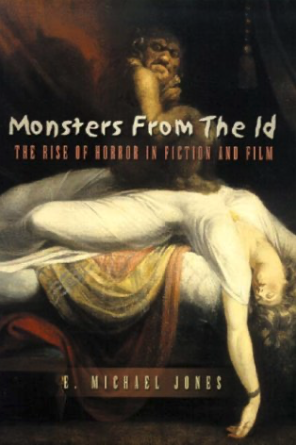
E. Michael Jones, author of Monsters from the Id: The Rise of Horror in Fiction and Film, on how horror films combat the assumptions of the Enlightenment
D. G. Hart, on The University Gets Religion: Religious Studies in American Higher Education
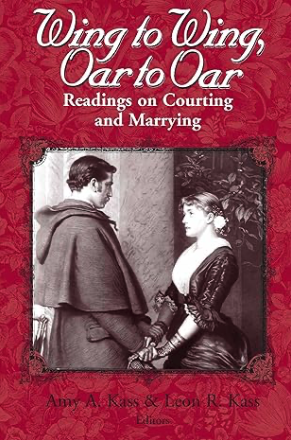
Amy & Leon Kass, editors of the anthology Wing to Wing, Oar to Oar: Readings on Courting and Marrying, on training young people to imagine what love looks like
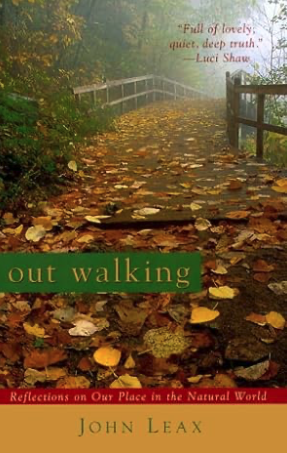
John Leax, author of essays and poems in Out Walking: Reflections on Our Place in the Natural World, on the challenges of wise “caretaking” in a fallen world
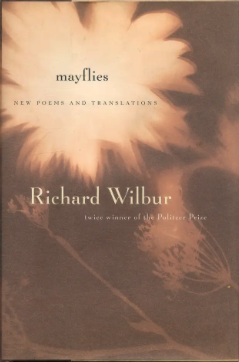
Richard Wilbur, author of Mayflies, on the ways in which words add “articulateness” to experience (longer Friday Feature available)

Roger Lundin, on Richard Wilbur’s commitment to the reality of creation (Friday Feature available)
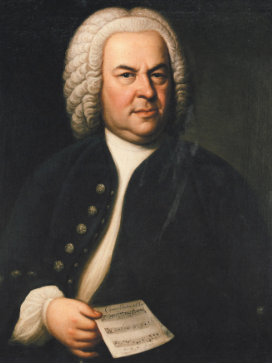
Ted Libbey, on the intricate, theologically inspired structure of Bach’s B Minor Mass
Related reading and listening
- Quiet misanthropy vs. Christian humanism — Bishop Robert Barron explores the misanthropic and inherently unstable anthropology at the heart of the modern university and offers an alternative for human flourishing. (46 minutes)
- “We become what we behold” — Peter Crawford explores how a sacramental education involves helping students to behold a world saturated with signs that point to Christ — and then to act as faithful stewards. (68 minutes)
- Excerpts from Volume 112 — Hear excerpts from interviews with Christian Smith, David L. Schindler, Sara Anson Vaux, Melvyn Bragg, Timothy Larsen, and Ralph C. Wood. (34 minutes)
- The nature of things — In this 2026 lecture, Mary Harrington explores modernity’s “Thomophobic epistemological straitjacket” that bans serious inquiry into the nature of things. (41 minutes)
- A very figurative and metaphorical God — David Lyle Jeffrey on the poetic character of the voice of God
- The story of the demotion of stories — Malcolm Guite on the Enlightenment’s rash dismissal of poetic knowledge
- The desires of the heart, the constraints of creation — Roger Lundin describes how Richard Wilbur’s poetry connects aesthetic experience to life in the world.
- Poetry and attention — Poet Scott Cairns reflects on the beauty of language and the power of words. (18 minutes)
- Creation, in harmony with the Logos — Rowan Williams on the Logos and the diverse logoi that mirror it
- We are not “stochastic parrots” — In this essay, Talbot Brewer argues that our understanding of the nature of words and their relationship to human nature is “teetering” due to artificial intelligence chatbot systems and large language models (LLMs). (42 minutes)
- The strengths of Christian scholarship —
FROM VOL. 25 George Marsden explores the culture of suspicion in academia toward Christian scholarship and argues for its inclusion as intellectually viable and coherent with regard to reality. (11 minutes) - God at the center of all — George Marsden discusses the unique philosophical and theological insights Jonathan Edwards (1703–1758) had into his own era. (35 minutes)
- Necessary introspection — Ken Myers introduces listeners to liturgical music for traditional Holy Week services, music that encourages deep introspection and contemplation of sorrow. (27 minutes)
- How tech is making us less human — Christine Rosen argues that we must reckon with serious moral and ethical questions raised by the acceleration of “artificial intelligence” into almost every area of life. (31 minutes)
- Turning Petrarchan love poetry on its head — Dr. Benedict Whalen examines the influence of Petrarchan love poetry on Europe, and he reveals through a close read of Romeo and Juliet how Shakespeare subverted key features of Petrarch’s love poems to rich effect. (54 minutes)
- A living tradition — In this lecture, James Matthew Wilson explores the nature of tradition as a “condition of possibility” that situates both reason and poetry. (49 minutes)
- Mars Hill Audio Journal, Volume 167 — FEATURED GUESTS: Nicholas Carr, Thomas Ward, Joseph Stuart, Steven Knepper, Robert Wyllie, Ephraim Radner, and Andrew Willard Jones
- The desire for truth — In this article, Romanus Cessario, O.P., recounts the life, theology, and influence of St. Thomas Aquinas (1224/5–1274). (38 minutes)
- A brief for “prophetic Thomism” — David Decosimo on assuming a charitable posture toward pagan virtue
- When myth becomes fact — In this 1976 interview, Clyde Kilby (1902–1986) discusses C. S. Lewis’s critique of scientism and rationalism, his belief in the primacy of the imagination, and his mythic vision. (37 minutes)
- A great Reality at the core of things — Clyde Kilby on the nature and need for myths
- Christian culture and the myth of the secular — Ken Myers draws on T. S. Eliot to argue that Western civilization has broken down, not into a multiplicity of cultures, but into a “post-culture.” (47 minutes)
- Disengagement from the world — Nicholas Carr encourages us to consider how automation technologies impact our ability to engage with the world and whether — like a good tool — they present a more inviting world or close us off from that world. (30 minutes)
- Modernity’s crisis of place — Craig Bartholomew reflects on the importance of place to our humanity. (58 minutes)
- Reason and the love of truth —
FROM VOL. 97 James Peters discusses historical understandings of reason and rationality and how they differ from the modern notion of rationality. (21 minutes) - A sampling of newly published lectures — Ken Myers introduces listeners to four recently released lectures, courtesy of our Partners. The lecturers are Jennifer Frey, Gary Saul Morson, N. T. Wright, and Andrew Kern. (27 minutes)
- The inward eye, cosmic truth, and making well — Andrew Kern takes his listeners along an “interlinear” reading of a portion of St. Augustine’s Confessions that explores the differences between how God makes and how we create. (38 minutes)
- The just war tradition and whole-life discipleship — Daniel M. Bell, Jr. discusses the just war tradition, a tradition which is often invoked by figures who, upon closer inspection, tend to lack a robust understanding of its history and criteria. (57 minutes)
- The epistemology of love — In this lecture, N. T. Wright examines the epistemology of love and how it counters the reductionism of Enlightenment and Epicurean ways of knowing. (63 minutes)
- Grace and Christian realism — Jennifer Frey explores Thomist elements in Flannery O’Connor’s theology and writing, with a particular emphasis on a Thomist understanding of art. (39 minutes)
- Divine love and human sexuality — Paul Tyson argues that views about sexuality are downstream from theological — or at least metaphysical — assumptions about human nature. (16 minutes)
- The roots of J. S. Bach’s fruitfulness — Music historian Markus Rathey explains why and how J. S. Bach composed his choral works as he did. (54 minutes)
- Celebrating Christmas with Bach (through Epiphany) — Ken Myers offers a detailed introduction to J. S. Bach’s Christmas Oratorio, a work composed to be sung on six occasions from Dec. 25th to Jan. 6th
- In tune with the muses of Zion — Ken Myers on the Christmas music of Michael Praetorius
- Christmas music from Luther to Bach — Tova Leigh-Choate on the roots of Bach’s Christmas Oratorio
- “Investigations of divine works” — Greg Wilbur explains how closely connected music is to the order of the cosmos and how it even reveals attributes of God. (56 minutes)
- To be at home in the world — D. C. Schindler examines how rituals enable us to experience time in a meaningful way — how they actually make time habitable for us. (41 minutes)
- Nun komm der Heiden Heiland — Ken Myers looks at the history of an Advent hymn written by St. Ambrose in the fourth century, adapted by Martin Luther in the sixteenth century, and transformed by J. S. Bach and many others in the years since. (21 minutes)
- A letter from Ken Myers — Ken Myers examines the cultural implications of the Incarnation and the deep-seated dualism of modernity that divorces spirituality from our material experience. (22 minutes)
- The beauty of truth and goodness —
FROM VOL. 141 James Matthew Wilson talks about how cultivating the desire to perceive the interior life of things sustains the basic human capacity for recognizing truth, pursuing wisdom, and contemplating beauty. (23 minutes) - The experience of a “real presence” in sacred music —
FROM VOL. 126 Jonathan Arnold explores why people of no religious commitment pay money to hear specifically sacred music. (22 minutes) - How music blesses and teaches —
FROM VOL. 64 Theologian and musician Jeremy Begbie explores what we learn about time, theology, and the structure of Creation from the experience of music. (28 minutes) - Mars Hill Audio Journal, Volume 166 — FEATURED GUESTS: William Cavanaugh, Kent Burreson, Beth Hoeltke, Jeffrey Barbeau, Jason Baxter, John Betz, and Bruce Herman
- The pathos of sin —
FROM VOL. 15 Poet Robert Pinsky discusses his translation of Dante’s Inferno. (9 minutes) - Existential preparation for reading literature —
FROM VOL. 128 Rod Dreher recounts how he thought he was reading Dante’s Commedia, when in reality the poem was reading him. (18 minutes) - An icon of the whole world — Jason Baxter explains how Dante includes a panoply of characters and creatures in his Comedia, offering a prismatic view of all of Creation in its glory. (20 minutes)
- Films that lead to contemplation —
FROM VOL. 162 David Paul Baird discusses some of the films on the Vatican’s list of recommended films. (25 minutes) - Cosmic realities in the built world — Christopher and Christine Perrin discuss the implications of architect Christopher Alexander’s (1936–2022) discovery of patterns of building that cohere with the the created cosmos and with ourselves as human creatures. (59 minutes)
- The “book” of Creation — Alan Noble explains why the modern world makes it profoundly difficult to experience Creation as revelation, and he encourages unmediated encounters with Creation that lead to meditation. (52 minutes)
- Life more abundantly — Jeanne Schindler advocates for a return to an understanding and prioritizing of sensory experience — real engagement with the real world — as foundational to learning and living. (35 minutes)