Skip to content
Mars Hill Audio
Sound. Thinking.
Mars Hill Audio
  • Home
  • About
    • Why MHA?
    • Who we are
    • What’s new?
    • Meet our Guests
    • Meet our Partners
    • News from Partners
    • Listen for free
    • Help
  • Sound Thinking
  • Indexes
    • Topic Index
    • Guest Index
    • Author Index
  • Catalog
    • Journals
    • Friday Features
    • Archive Features
    • Bonus Features
    • Conversations
    • Anthologies
    • Areopagus Lectures
    • Reports
    • Audio Reprints
    • Audiobooks
  • Contribute
  • Gift
  • Sign Up
  • Log In
Search:
Search
  • Home
  • About
    • Why MHA?
    • Who we are
    • What’s new?
    • Meet our Guests
    • Meet our Partners
    • News from Partners
    • Listen for free
    • Help
  • Sound Thinking
  • Indexes
    • Topic Index
    • Guest Index
    • Author Index
  • Catalog
    • Journals
    • Friday Features
    • Archive Features
    • Bonus Features
    • Conversations
    • Anthologies
    • Areopagus Lectures
    • Reports
    • Audio Reprints
    • Audiobooks
  • Contribute
  • Gift
  • Sign Up
  • Log In

Book excerpt

Universalizing Dr. Faustus

Book excerptBy Ken MyersOctober 24, 2014
Eugene Peterson on the normalization of prideful ambition

Cultural participation in reconciliation

Book excerptBy Ken MyersSeptember 22, 2014
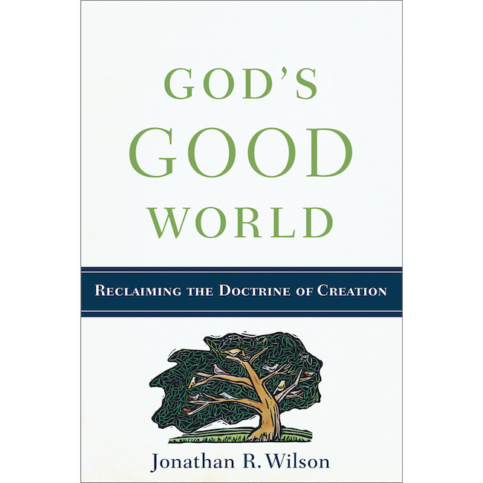
Jonathan Wilson on faithfully representing Creation in the culture of the Church

The witness of goodness and beauty to truth

Book excerptBy Ken MyersSeptember 11, 2014
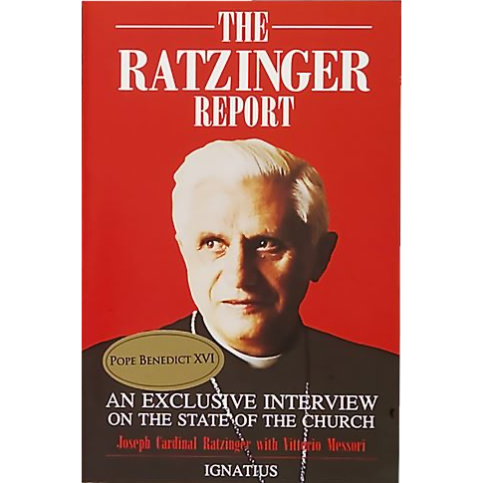
Joseph Cardinal Ratzinger on the apologetic necessity of holiness and great art

The publicly inert Christ of modernity

Book excerptBy Ken MyersSeptember 11, 2014
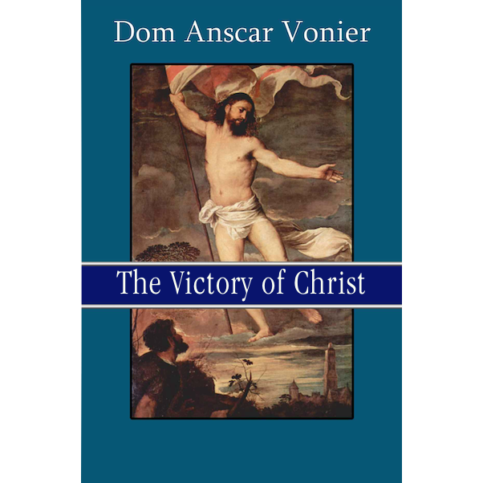
Dom Anscer Vonier on secularism’s confidence in its freedom from Christ

Which story is ours?

Book excerptBy Ken MyersAugust 7, 2014
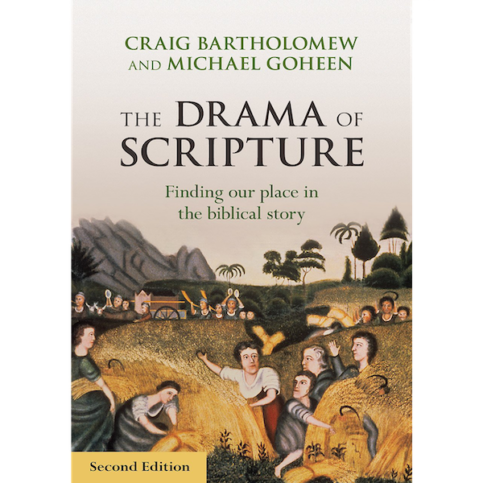
“Instead of allowing the Bible to shape us, we may in fact be allowing our culture to shape the Bible for us.”

The reasonableness of love

Book excerptBy Ken MyersJuly 14, 2014
Terry Eagleton on the myth of the disinterested pursuit of truth

The dead-end of privatized faith

Book excerptBy Ken MyersJuly 11, 2014
T. S. Eliot on the Church’s duty to interfere with the World

From logos to ethos

Book excerptBy Ken MyersJuly 11, 2014
Romano Guardini on how the modern worship of the will led to the demotion of reason

True transcendence, true immanence

Book excerptBy Ken MyersJuly 8, 2014
D. C. Schindler on how believers can be practical atheists

Modernity’s fateful encounter with weird, wayward sisters

Book excerptBy Ken MyersJune 13, 2014
Richard Weaver describes the cultural consequences of a decisive metaphysical mistake

Against the machine

Book excerptBy Ken MyersJune 4, 2014
How careless use of mechanistic metaphors obscures the mystery of life

The danger of a self-marginalizing religion

Book excerptBy Ken MyersMay 31, 2014
Alasdair MacIntyre on how the task of religion is to help see the secular as the sacred, the world as under God.
←1
234567891011121314151617181920212223242526
…2728293031→
MENU:
  • Home
  • Help
  • About Mars Hill Audio
  • Legacy Library
  • Give a membership
  • Sign up
  • Privacy Policy
  • Contact us


Since 1993 — with the help of hundreds of interviewees — we’ve been exploring the complex factors that have given modern Western culture its distinctive (and often disturbing) character. We also try to describe what cultural life — its practices, beliefs, and artifacts — might look like if it was the product of thoughtful Christian imaginations. We hope our growing treasury of conversations and commentary provides resources for faithfulness in an often perplexing moment.

Keep me informed

* indicates required
Mars Hill Audio
Go to Top

Hope for the Wasteland


Poet Malcolm Guite discusses Merlin’s Isle: An Arthuriad, his epic ballad cycle in four volumes. He summarizes the significance of the Wasteland in the Arthurian legend and its connection with the Holy Grail. Guite brings out the story’s clear Christian symbolism and reveals the hope that is given right upon the heels of the “dolorous stroke” that wounds the Fisher King and plunges the land into ruin. He also discusses the character of King Arthur as a symbol of national hope and recovery for England, and he shares his particular intention that his retelling would be an epic of place, not of race. Guite ends with his hope even for lands like America, that a diversity of peoples in one land might learn to “begin to belong to the same story.” The first two volumes of the Arthuriad are Galahad and the Grail and The Coming of Arthur(both from Rabbit Room Press, 2026). 

This Feature includes a portion of a much longer Conversation with Malcolm Guite, which is available to members here.

Conversations from 2020


Every volume of the Journal produced since November 1999 (Volume 40) is now available to members in our catalog, and on the first Friday of each month, we will highlight one of these archived collections of interviews. The entire highlighted volume will be available for one month to members and to anyone who signs up for a free Visitor’s Pass.* 

Volume 146 of the Journal, produced in February 2020, is this month’s free sample volume. In this Friday Feature you will hear excerpts from interviews with Mark Mitchell about why the modern denigration of tradition has rendered political life so volatile; with Hans Boersma about how the ultimate end of seeing God should inform how we live now; with Henry Edmondson, III, about political ideas in Flannery O’Connor’s work; with Brian Clayton and Douglas Kries about integrating faith and reason; with Conor Sweeney about wrestling with the ‘death of God’ with the help of hobbit wisdom; and with Carole Vanderhoof about Dorothy L. Sayers. 

*Follow the instructions on our “Listen for free” page to sign up for a free Visitor’s Pass. With this Pass, you can download these audio files to our app on your mobile device. NB: We don’t sell or share our listeners’ information with anyone else. No one who signs up for any of our memberships, free or paid, need fear that their contact information will be sold or shared with any other entity.

Antón Barba-Kay on the shape of the virtues in the digital age


What virtues do we need to live well in our digital age, and how might those virtues be best formed, not only individually but as communities? In this March 2026 lecture, Antón Barba-Kay examines the notion of virtue ethics, a concept that has become increasingly alien to many. He then discusses how digital technology actively deforms, disassociates, and disembeds our lives and experiences. Barba-Kay proposes key principles that educational institutions can embody in order to help form virtuous human beings and communities in light of what we are; and he articulates three “interlocking” virtues that relate to those principles. Throughout the lecture, he offers reflections on these issues from his teaching experience at Deep Springs College, a unique school that forms students through academics, self-government, and manual labor.