
PREVIEW
You are unauthorized to view this page.
Guests heard on Volume 65
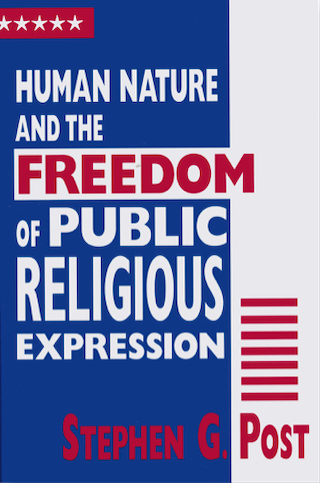
Stephen G. Post, author of Human Nature and the Freedom of Public Religious Expression, on why there should be more room for public forms of religious expression
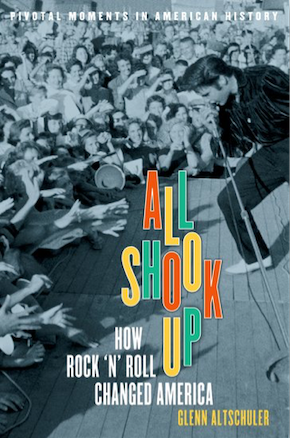
Glenn C. Altschuler, author of All Shook Up: How Rock ’n’ Roll Changed America, on the advent of rock ’n’ roll, and the various fears it created
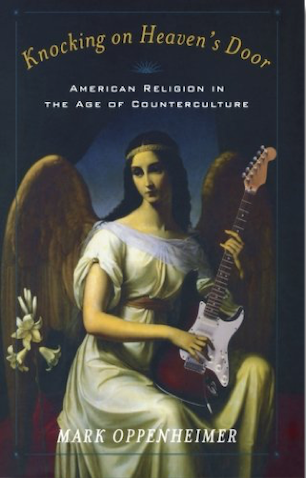
Mark Oppenheimer, author of Knocking on Heaven’s Door: American Religion in the Age of Counterculture, on the importance of style and the rise of radical informality
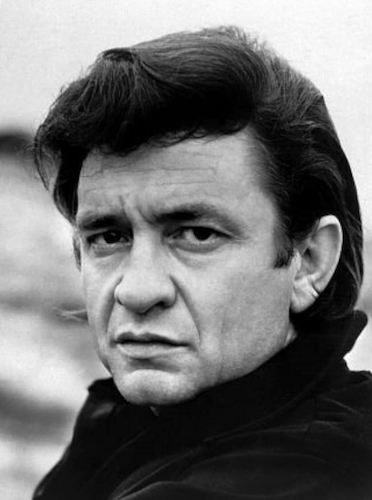
Johnny Cash, on faith, vocation, the Incarnation, and the Last Supper
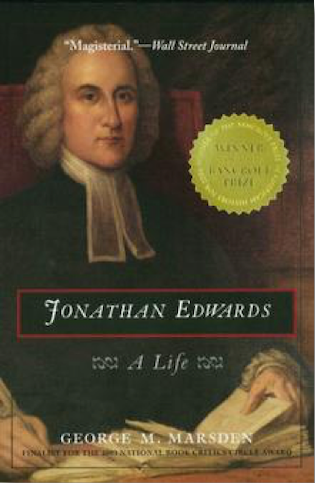
George Marsden, author of Jonathan Edwards: A Life, on how Jonathan Edwards understood world history and the American experience
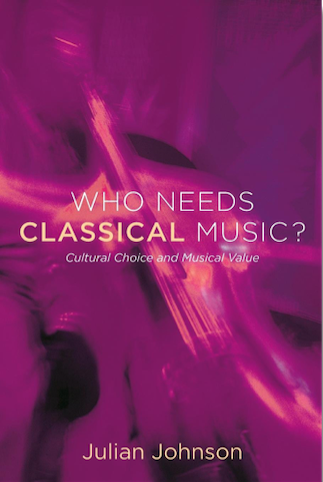
Julian Johnson, on various misunderstandings about classical music, and the differences between music as art and music as commodity
Julian Johnson, on expectations of immediate gratification in music (extended interview)
Related reading and listening
- “If there is no God, all is permitted” — Gary Saul Morson explores the consequences of belief and disbelief in God through Russian literature. (51 minutes)
- Rose without thorns — Ken Myers introduces various settings of “Ther is no rose of swych vertu,” a medieval carol that uses imagery of a rosebush to describe the Virgin Mary. (29 minutes)
- Heaven and earth are full of His glory — Gerald R. McDermott examines the typological tradition of the Church, particularly through Jonathan Edwards’s thought, and he argues for a recovery of the Christian understanding of the universe as an “immense Trinitarian symbol.” (61 minutes)
- A false dichotomy — In this conversation from 2009, Dallas Willard (1934–2013) discusses the truth of spiritual knowledge and its epistemological validity. (63 minutes)
- Christian belief as real knowledge — Dallas Willard on the modern divorce between faith and knowledge
- The establishment of nonbelief —
FROM VOL. 10 George Marsden explains how and why American universities became places where religious concerns are excluded. (10 minutes) - What adolescence misses —
FROM VOL. 94 Mark Bauerlein talks about the ways of learning and living practiced by contemporary youth, how they impact the acquisition and use of knowledge and form intellectual habits, and what this means for the future of our society. (16 minutes) - Nervousness about the shape of religion in America — Thomas Albert Howard discusses European perspectives of eighteenth-century American religious life. (21 minutes)
- The law of faith and of love — Oliver O’Donovan compares St. Augustine’s interpretation of Psalm 119 with that of others, revealing Augustine’s more nuanced understanding of the complexities of the life of faith that the psalmist explores. (64 minutes)
- Christian unity and civil society — Oliver O’Donovan introduces listeners to Dutch lay theologian Hugo Grotius, arguing that the questions he tackled relate to perennial concerns about the relationship between divine and human agency, and between civil and ecclesiastical authority. (Lecture 2 of 3; 57 minutes)
- The demoralizing effect of pagan Roman religion — Oliver O’Donovan examines St. Augustine’s critique of pagan Roman religion in Book II of his treatise City of God and asks his audience to consider what insights Augustine’s critique has for us today. (Lecture 1 of 3; 51 minutes)
- The moral complicity of movie audiences — Film critic David Thomson explains why Alfred Hitchcock’s film Psycho achieves a kind of unique synergy with American culture, raising unsettling questions about alienation and identity. (33 minutes)
- Joy & sorrow, destitution & abundance — In this poetry reading and talk, poet Christian Wiman discusses his own faith journey and how his struggles worked themselves into his poems. (40 minutes)
- America as the Republic of Entertainment — Neal Gabler on the modern devotion to pleasure
- The theological significance of current events —
FROM VOL. 65 George Marsden discusses how Jonathan Edwards (1703–1758) understood world history and the American experience. (14 minutes) - Music, silence, and the order of Creation — In this lecture, Ken Myers explains how it is that our participation in harmonic beauty in music is a kind of participation in the life of God, in Whom all order and beauty coheres and is sustained. (61 minutes)
- “The angels sang, and the shepherds too” — Ken Myers introduces listeners to the Christmas musical compositions of French composer Marc-Antoine Charpentier (c.1645–1704). (19 minutes)
- Is American culture now story-less? — From our archives, Michael Kammen compares popular and mass culture, and Philip Fisher analyzes the idea that new cultural forms inevitably dissolve old ones. (26 minutes)
- Mars Hill Audio Journal, Volume 162 — FEATURED GUESTS: Mark Noll, R. Jared Staudt, Paul Weston, William C. Hackett, Hans Boersma, and David Paul Baird
- Sports in America —
FROM VOL. 21 Robert Higgs looks at the history of sports in American experience and at how organized religion has interacted with that history. (12 minutes) - No neutral view of the cosmos — Ken Myers argues that Christians need to recover a “whole-earth discipleship” that enables them to think Christianly about all areas of life, including public life. (50 minutes)
- An unwitting agent for the secularization of America — Mark Noll, Nathan Hatch, and George Marsden explain how a prominent Christian Founding Father added momentum to the secularization of America
- St. Irenaeus against the Gnostics — In this reading of an essay by theologian Khaled Anatolios, St. Irenaeus is remembered for his synthesis of faith and reason. (52 minutes)
- “Reading Lewis with blinders on” — Chris Armstrong explains how C. S. Lewis’s work is grounded deeply in the Christian humanist tradition. (45 minutes)
- Nihilism in popular culture —
FROM VOL. 44 Thomas Hibbs, author of Shows about Nothing, discusses the nihilism that runs through films and television shows in recent American popular culture. (9 minutes) - A theology of active beauty — In a 2010 lecture, George Marsden examines a few ways in which the distorting effects of Enlightenment rationalism were resisted in the work of Jonathan Edwards. (64 minutes)
- “I buy, therefore I am” — As counterpoint to the spirit of Black Friday, excerpts from the work of sociologist Craig Gay about the secularizing effects of modern economic habits are followed by an interview with Vincent Miller, author of Consuming Religion: Christian Faith and Practice in a Consumer Culture. (28 minutes)
- An outrageous idea? — In the late 1990s, George M. Marsden and James Tunstead Burtchaell both wrote books examining the claim that it was far-fetched even to imagine that scholarly work could be an expression of Christian claims about reality. (25 minutes)
- Mars Hill Audio Journal, Volume 159 — FEATURED GUESTS: Kirk Farney, Andrew Willard Jones, James L. Nolan, Jr., Andrew Kaethler, Peter Ramey, and Kathryn Wehr
- Hole in our soul —
FROM VOL. 10 Martha Bayles describes the development of “introverted” modernism, a movement that disconnected art from any accountability to reality, preferring to celebrate art for art’s sake. (12 minutes) - Remembering Johnny Cash —
FROM VOL. 65 This 1972 interview with a country music legend was the first interview Ken Myers ever did. When Johnny Cash died in 2003, he dug the tape out of his archives to share with Mars Hill Audio listeners. (8 minutes) - Music without emotivism — Julian Johnson discusses how novel, historically speaking, is the idea of complete relativism in musical judgment. (33 minutes)
- Parsing the intellectual vocation — Norman Klassen and Jens Zimmermann demonstrate that some form of humanism has always been central to the purposes of higher education, and insist that the recovery of a rich, Christocentric Christian humanism is the only way for the university to recover a coherent purpose. (39 minutes)
- Is religious belief really true? — Joseph Cardinal Ratzinger asks if Christian faith is just lovely subjective consolation, a kind of make-believe world side by side with the real world
- “Broken Bodies Redeemed” — Today’s Feature presents a reading of a 2007 article by Gilbert Meilaender that explores the significance for bioethics of the mystery of human being as body and soul. (39 minutes)
- The mysteries and glory of Christmas and its music — Ken Myers presents examples of music from five centuries that captures some sense of the astonishing fact of the Nativity of our Lord. (26 minutes)
- Don’t feel bad — James Twitchell discusses a few of the themes in his book about the confusing state of the evolution of shame and shamelessness. (20 minutes)
- The role of hymns in building faith — Darryl Tippens reminds us of Scriptural texts in which a person is moving closer to God when music breaks out (such as Mary’s Magnificat, and he discusses the history of music in the church. (23 minutes)
- The Incarnation presented in music — Composer J.A.C. Redford talks about the theme of the Incarnation as musically presented in his choral symphony for Christmas entitled “Welcome All Wonders.” (23 minutes)
- Religious pluralism & the calling of Christian intellectuals — From our archives, Robert Wilken talks about religious pluralism in Christian history, and Robert Jenson discusses his essay on the calling of Christian intellectuals. (25 minutes)
- Mars Hill Audio Journal, Volume 148 — FEATURED GUESTS: Steven D. Smith, Willem Vanderburg, Jeffrey Bilbro, Emma Mason, Alison Milbank, and Timothy Larsen
- Why culture won’t prevent anarchy — James Matthew Wilson explains how T. S. Eliot presented a compelling alternative to Matthew Arnold’s belief that the arts and literature could sufficiently replace religion’s function in modern society. (11 minutes)
- Recovering the meaning of “faith” — Andrew Root asserts that a Church co-opted by the ethics of “authenticity” has lost its ability to speak of the transcendent and its understanding of what it means to be in Christ. (18 minutes)
- Mars Hill Audio Journal, Volume 141 — FEATURED GUESTS: Grant Wythoff, Susanna Lee, Gerald R. McDermott, Carlos Eire, Kelly Kapic, and James Matthew Wilson
- Mars Hill Audio Journal, Volume 133 — FEATURED GUESTS: Darío Fernández-Morera, Francis Oakley, Oliver O’Donovan, Thomas Storck, John Safranek, Brian Brock, and George Marsden
- Mars Hill Audio Journal, Volume 130 — FEATURED GUESTS: Jacob Silverman, Carson Holloway, Joseph Atkinson, Greg Peters, Antonio López, and Julian Johnson
- Word becomes flesh, Reality becomes fact — Henri de Lubac on the Incarnation and history
- Mars Hill Audio Journal, Volume 125 — FEATURED GUESTS: Brent Hull, David Koyzis, Steve Wilkens, Roger Lundin, Craig Bernthal, and Kerry McCarthy
- Mars Hill Audio Journal, Volume 122 — FEATURED GUESTS: N. T. Wright, George Marsden, Makoto Fujimura, David Bentley Hart, and Thomas Lessl
- Mars Hill Audio Journal, Volume 114 — FEATURED GUESTS: Susan Cain, Brad S. Gregory, David Sehat, Augustine Thompson, O.P., Gerald R. McDermott, and Marilyn Chandler McEntyre