
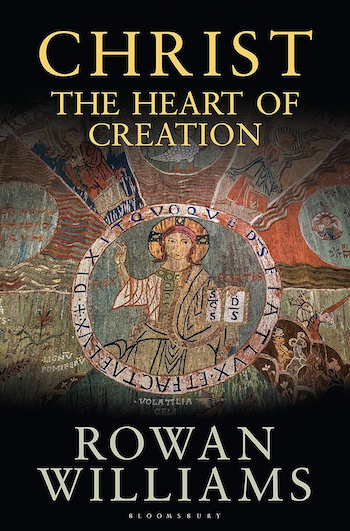
“Maximus [the Confessor] explores in depth the relation between the eternal Logos and the logoi of finite substances, between the eternal life of God as active and creative intelligence and the diverse structures of intelligible life that make up the finite universe, the sum total of finite natures. The logos of any particular nature is its participation in the life of the eternal Word; every finite kind reflects one way in which the eternal Logos’s life can be imitated or rather expressed in finite intelligible form. But this means that the more a created nature moves towards its optimal actuality, the closer it is to the Creator; and the harmonious diversity of the finite order when it is acting as it should is in its entirety a reflection of the unity of the eternal Logos in whom exist inseparably all the multiple modes in which eternal being and intelligibility can be mirrored. Thus for humanity to be fully human is not only for it to be aligned with its own natural logos but also for it to exist in optimal relation with the Logos. This is of course true of all finite creatures; but what makes humanity unique in creation is that it is created with the capacity to mediate the Logos’s own unifying agency within creation. Humanity’s vocation is not simply to be optimally human in the sense of exemplifying its natural qualities as perfectly as possible, but to be actively engaged in the harmonizing of the created order as part of a ‘liturgical’ service offered to God. We could put this more loosely by saying that humanity’s calling is to be freely active in a certain way, to be more than ‘just’ natural. And where this vocation has been refused and overlaid by human sin, what has to be restored is the capacity of finite human agency to choose and act as it should.”
— from Rowan Williams, Christ the Heart of Creation (Bloomsbury Continuum, 2018)
This post was originally published on November 15, 2025.
Click on the tags below for listings of related readings or audio features.